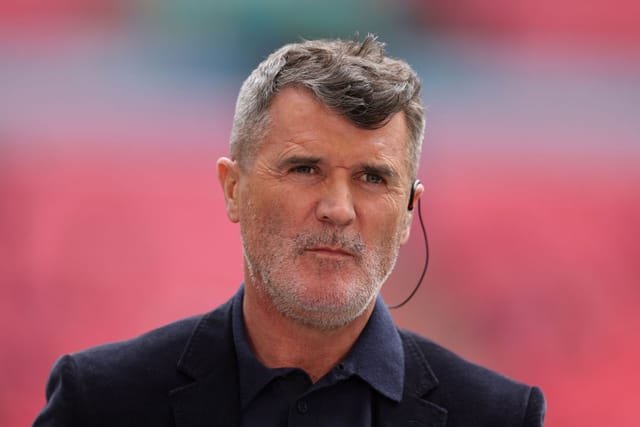
After England’s 1-0 friendly win over New Zealand, Roy Keane cut through the noise around omitted players with the kind of direct, accountability-first statement that has made him one of the most respected, and occasionally feared, voices in football punditry.
The Debate That Surrounds Every England Tournament
England’s World Cup squads generate more debate, column inches, and social media heat than almost any other nation’s selections. It is a function of the country’s depth of Premier League talent, the size and passion of the footballing public, and the cultural habit, decades in the making, of treating non-selection as an injustice rather than a consequence. Every tournament cycle, a familiar pattern emerges: the squad is announced, names that did not make it are discussed at length, and the conversation around those absent players frequently drowns out analysis of the ones who actually made it.
Roy Keane has heard enough of that conversation. Speaking on ITV Football after England’s 1-0 win over New Zealand in Tampa on June 6, the former Manchester United captain and Republic of Ireland international addressed the omission debate with the bluntness that has defined his entire punditry career.
His message was simple. His delivery was characteristically uncompromising. And his argument was, by any honest assessment, difficult to disagree with.
What Keane Said: No Excuses, No Sympathy
“Every time we do an England game, we speak a lot about players who have been left out or in terms of the squad are left out of the starting XI. But I think if you can’t get into a squad of 26, that’s on you.”
Roy Keane, ITV Football
“That is on the player, you’ve not done enough to convince that manager and there will always be uproar with England for players that are left out if they play for certain clubs, but that’s on you, if you can’t make a squad of 26, that’s on you, don’t blame anyone else.”
Roy Keane, ITV Football
The phrase “certain clubs” is the most revealing detail in Keane’s statement. He is not speaking in abstractions. He is pointing directly at a very specific dynamic in English football punditry: the tendency for debates around non-selection to become proxies for club allegiances, where the argument that a player deserved to be included is frequently driven not by objective performance analysis but by the size and profile of their employer. Manchester United players, Arsenal players, Liverpool players, any club with a large national following, attract disproportionate volume when their representatives are left out of England squads, regardless of whether the omission is defensible on its merits.
Keane is dismissing all of that noise. He is saying, with complete clarity, that in a squad of 26 players selected from one of the world’s most professionally developed football nations, the sole reason a player does not make the list is that they did not do enough to convince the manager. Not politics. Not club bias. Not favouritism. Performance. Preparation. Persuasion on the training ground and on the pitch.
The Accountability Argument: Why Keane Is Right
Keane’s position is not just rhetorically satisfying. It is analytically correct, and it is worth building out the reasoning behind it.
Thomas Tuchel is managing England’s preparations for a tournament that the country has not won since 1966. He is a manager of exceptional competence and clear tactical preferences who has assembled a squad of 26 players from the largest pool of professional Premier League talent in the competition’s history. The idea that any particular omission from that squad reflects something other than a football judgment, a personal vendetta, a club bias, a political calculation within the FA, requires substantial evidence to be credible. In most cases, that evidence does not exist.
What does exist, for every player who was not selected, is a recent performance record. Form, fitness, tactical fit with Tuchel’s specific system, and contribution during the qualifying campaign all feed into the selection calculus. A player who cannot make a compelling case on any of those dimensions against the 26 who were chosen has, by definition, not done enough. Keane’s formulation, “you’ve not done enough to convince that manager,” is the accurate description of what non-selection means at this level.
There is also a broader principle at work here about the culture of accountability in professional sport. The tendency to externalise responsibility, to locate the cause of non-selection in the manager’s choices rather than in one’s own performances, is one of the most damaging habits a professional athlete can develop. It redirects energy from improvement toward grievance, and it prevents the honest self-assessment that genuine development requires. Keane’s intervention cuts against that tendency with surgical directness.
England’s Depth: Why the Squad of 26 Argument Is Especially Valid in 2026
The specific context of England’s 2026 World Cup squad makes Keane’s argument particularly compelling. The depth of attacking and midfield talent available to Tuchel from the Premier League and top European leagues means that selection into a squad of 26 represents a genuine competitive achievement. The players who made it are not there because of a shortage of options. They are there because they outperformed their competition in the period that mattered.
| England 2026 World Cup Group Schedule | Opponent | Date |
|---|---|---|
| Group I, Game 1 | Croatia | June 17, 2026 |
| Group I, Game 2 | Ghana | June 23, 2026 |
| Group I, Game 3 | Panama | June 27, 2026 |
| Final pre-tournament friendly | Costa Rica | June 10, 2026 |
That competitive quality also means that the conversation about omissions, while understandable from a fan perspective, is ultimately less useful than the conversation about what the 26 selected players can deliver. England’s tournament begins against Croatia on June 17, a fixture with significant historical stakes given the 2018 semi-final and 2021 final defeats. The energy directed at analysing absent players is energy not being directed at understanding the squad that is actually going to Tampa, Dallas, and beyond.
Tuchel’s Parallel Frustration: The Theme of Accountability Runs Through England’s Camp
Keane’s public accountability message on Saturday evening arrived in the same news cycle as Tuchel’s own frustration with his players’ first-half performance against New Zealand. The England manager was critical of tactical indiscipline, positional disobedience, and the execution of training patterns in a match environment.
Both men are, in their own way, making the same argument. Keane is making it about the players who are absent: you did not do enough, that is your responsibility. Tuchel is making it about the players who are present: you have been told what to do, now execute it properly.
Together, the two statements paint a picture of an England environment where standards are being enforced and excuses are not being accepted at any level. That is, broadly, the culture that successful tournament teams require. The willingness of a manager and a respected pundit to publicly hold players to account, rather than protect them from scrutiny, is a healthy sign for a squad that has historically struggled with the soft collective failures that undermine technically capable teams.
The 1966 Question: When Does England’s Drought End?
The backdrop to every England World Cup conversation is the sixty-year gap since their only international trophy, the 1966 World Cup on home soil. That gap has survived generations of talented players, several near-misses at major tournaments, and the accumulated weight of expectation that defines English football’s relationship with the game it invented.
The 2026 squad, under Tuchel’s management, is widely regarded as one of the stronger England groups to enter a World Cup in recent memory. Kane remains one of the world’s best strikers. The midfield options are varied and technically accomplished. The tactical organisation, when it is implemented as Tuchel intends, is capable of competing with the best teams in the draw.
Whether this is finally the tournament that ends the wait will depend on execution in the matches, not on the debate about who is missing from the squad. Keane’s contribution to that conversation, direct and uncomfortable as it is for some audiences, is ultimately a useful one: it redirects attention from the absent to the present, from grievance to responsibility, and from noise to substance.
Conclusion: Keane’s Message Is Uncomfortable Because It Is True
Roy Keane has never been a pundit who says what audiences want to hear. His value as a football commentator has always been rooted in his willingness to say what he actually thinks, with the authority of someone whose entire career was built on exactly the kind of personal accountability he is now demanding from others.
The England players who did not make the squad of 26 have, by Keane’s standard, not done enough to overcome Tuchel’s football judgment. That standard may feel harsh in individual cases. It may not account for every complexity of a manager’s selection process. But as a general principle for how professional athletes should understand non-selection, it is sound, it is fair, and it is the kind of honesty that the England football conversation does not receive often enough.
England face Costa Rica on June 10 in their final preparation match before Croatia on June 17. The squad is set. The debate about who is absent is, by Keane’s entirely reasonable standard, over. What matters now is what the 26 selected players do with the opportunity in front of them.
Roy Keane has spoken. The focus now belongs entirely to the players who made it, not the ones who did not.
For breaking news and live news updates, like us on Facebook or follow us on Twitter and Instagram. Read more on Latest Sports on thefoxdaily.com.






COMMENTS 0