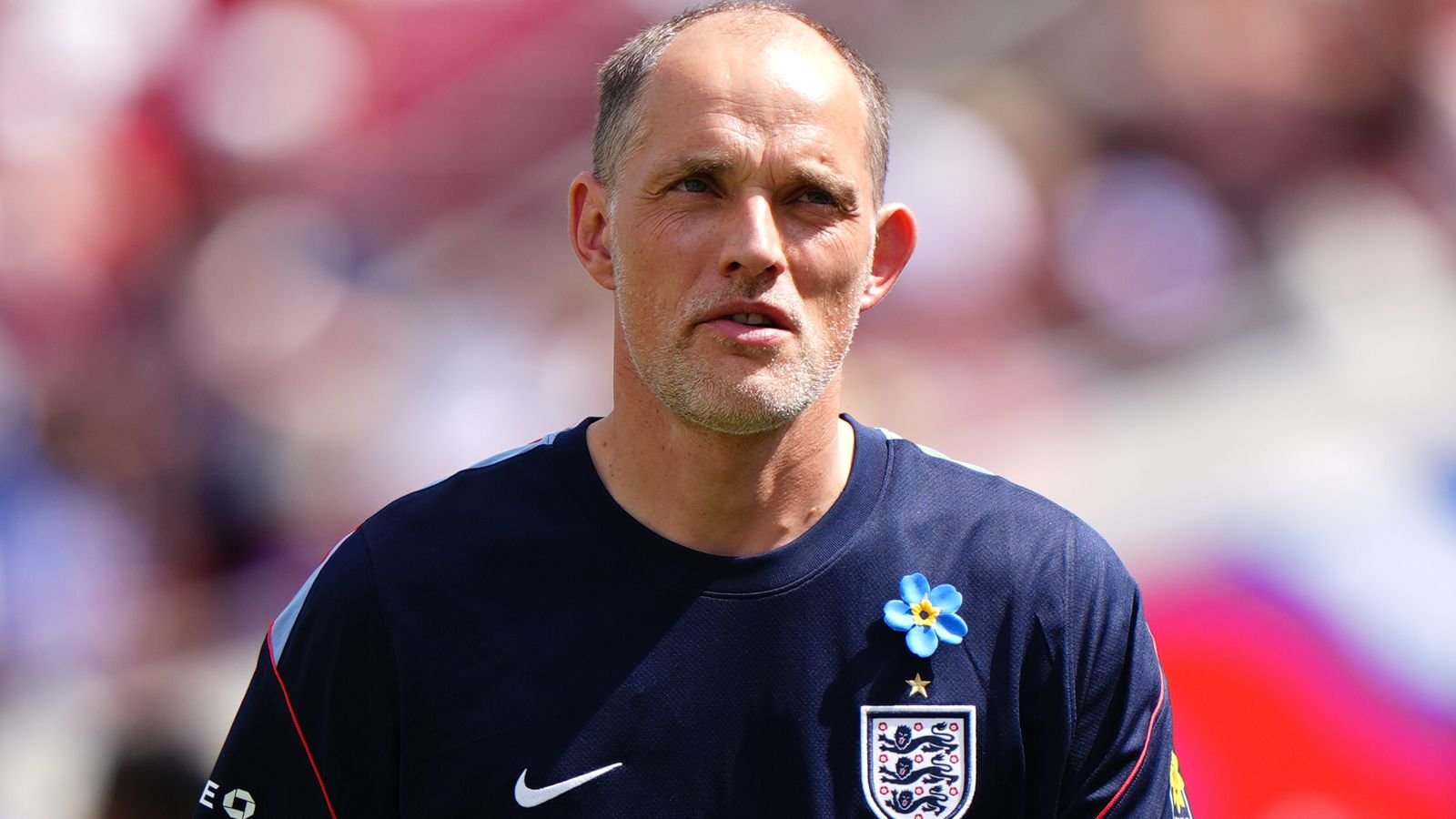
England beat New Zealand 1-0 in Tampa. Thomas Tuchel was not impressed. The Germany-born manager’s post-match comments reveal a coaching staff worried about positional indiscipline at the worst possible time, with the tournament opening against Croatia just days away.
A Win That Raised More Questions Than It Answered
In international Football‘s peculiar pre-tournament calendar, friendly matches serve a dual purpose. They are rehearsals, opportunities to sharpen structures, test combinations, and build the collective muscle memory that major tournaments demand. They are also, unavoidably, the last public evidence of a team’s readiness before the competitive reality begins.
England’s 1-0 victory over New Zealand in Tampa, secured by a Harry Kane stoppage-time goal at the end of the first half, looks fine on the results sheet. It does not look fine in the post-match press conference transcript. Thomas Tuchel, one of the most tactically sophisticated managers in world football, used his public platform not to celebrate the win but to issue a pointed challenge to his players: what happened in that first half was not acceptable, and it needs to be fixed before June 17.
With Croatia, Ghana, and Panama awaiting England in Group I, the clarity and urgency of Tuchel’s critique demands careful examination.
Tuchel’s Assessment: The Story of the Match in His Own Words
“I’m not super-happy about it. I like the second half more than the first half. We played more from our positions and that’s why we played with more speed and off the ball we played with a bit more bite. The first half we were out of positions and it was a bit too much freestyle. That slowed our game down and made it difficult for the counterpress because we were not in the positions that we wanted to be when we started attacking. That’s basically the story of the match.”
Thomas Tuchel, post-match press conference
The phrase “a bit too much freestyle” is the kind of diplomatically calibrated criticism that professional managers deploy when what they actually want to say is considerably stronger. In Tuchel’s tactical vocabulary, playing from your positions is not a preference. It is a structural requirement on which everything else depends. Counterpressing, the foundation of his entire system, only functions if players are in the right areas when a team transitions from attack to defence. A team that goes “freestyle,” drifting from their designated zones to pursue individual ideas, breaks the geometric logic of the press and allows opponents to escape with the ball into dangerous spaces.
“We were lacking width so players were coming inside and narrowing ourselves down and slowing ourselves down and changing positions for too long. We were taking crosses, a lot of long-range shots, normally not our style of play. We played a lot of long balls, we played a lot of long passes. That was not part of training in the last four days.”
Thomas Tuchel, post-match press conference
This second quote is the most alarming part of Tuchel’s press conference, and it deserves to be read carefully. He is not saying the players were unable to execute the training patterns. He is saying they chose not to. The long balls, the long passes, the excessive crossing and long-range attempts were, by his account, not what had been drilled in the four training days immediately preceding the match. Players were reverting to instinctive patterns rather than implementing the structured approach the coaching staff had prepared.
That gap between training execution and match execution, days before a World Cup, is not a minor coaching concern. It is a red flag.
Why Positional Discipline Is Non-Negotiable in Tuchel’s System
To fully appreciate why Tuchel’s criticism carries the weight it does, it helps to understand what his tactical system actually requires from every player on the pitch. Tuchel’s football is built around structured positional play combined with high-intensity pressing. The two elements are interdependent: the press works because players are in specific zones that create specific pressing angles. Remove the positional discipline and the press becomes ineffective, the team loses the ability to win the ball in the opponent’s half, and the system reverts to something far more ordinary.
Width, specifically, is central to how Tuchel creates the spaces his attackers operate in. When wide players drift inside, as he observed happening in the first half against New Zealand, the pitch narrows, central defenders have less to worry about, and the team’s offensive patterns become predictable and congested. That congestion is precisely what led to the long balls and the long-range shots he criticised: when the structured attacking patterns break down, players revert to direct or speculative approaches because the designed options are no longer available.
The good news is that the second half, by Tuchel’s own assessment, was considerably better. Players returned to their positions, the pace of play improved, the counterpressing had more bite. The structure was there when they chose to use it. The question is why it took a half-time conversation to activate it, and whether that conversation will need to happen again in the knockout rounds of a World Cup where there is no half-time to recover from a poor opening 45 minutes.
The Ivan Toney Revelation: A Tactical Weapon with a Specific Purpose
Amid the critical assessment of the first-half performance, Tuchel also shed light on a specific tactical plan that adds a compelling layer to England’s attacking options at the World Cup. His comments on Ivan Toney’s role in the squad, via Henry Winter on X, reveal a carefully thought-through deployment strategy for the Al-Ahli attacker.
“Ivan was very impressive in training, and he plays a special role in our team. He gives us the possibility if we dominate and if we have a lot of functions in and around the box, he gives us a chance to play with Harry (Kane) and take attention off of central defenders (and create space for Kane).”
Thomas Tuchel, via Henry Winter on X
The tactical logic here is elegant. Kane, as England’s primary goal-scoring threat, attracts the most intense defensive attention of any player in the squad. Central defenders work hard to deny him space, time, and service. Toney, operating alongside or near Kane, creates a secondary threat that forces defensive decision-making in the box. If defenders track Toney, Kane gets more space. If they stay on Kane, Toney has opportunities. It is the classic dual-striker dilemma, executed by two players with complementary profiles: Kane’s movement and finishing, Toney’s physicality and hold-up play.
The specific framing of Toney as an option “when we dominate” is also revealing. Tuchel is not planning to use him as a starting centre-forward against every opponent. He is positioning him as a game-management and game-breaking weapon for situations where England have control of a match and need to convert territorial pressure into goals. In tournament football, where the ability to close out games matters as much as winning them open, that is a genuinely valuable tactical option to have.
England’s World Cup Group: The Road Ahead
| Match | Opponent | Date | Context |
|---|---|---|---|
| Group I, Game 1 | Croatia | June 17, 2026 | Difficult opener; 2018 and 2021 history |
| Group I, Game 2 | Ghana | June 23, 2026 | Dangerous African opposition |
| Group I, Game 3 | Panama | June 27, 2026 | Most manageable group fixture |
| Pre-tournament friendly | New Zealand (won 1-0) | June 7, 2026 | Kane goal; Tuchel critical of first half |
The fixture list gives England a realistic path through the group stage, but it opens with the most challenging of the three opponents. Croatia have beaten England when it mattered before. They have tournament experience, a defensive organisation that is difficult to break down, and the historical record of two significant results against this England generation in 2018 and 2021. Against a Croatian defensive block, the kind of narrowing and position-switching that Tuchel criticised against New Zealand will be punished not by an absence of goals but by an active exploitation of the spaces England leave when their structure breaks down.
If England’s first-half performance against New Zealand is a reliable indicator of what happens when the structure is not enforced, Croatia’s first press in Tampa would have been considerably more threatening than New Zealand’s. The disciplinary correction Tuchel is demanding is not optional for the group stage. Against Croatia, it is existential.
What Tuchel’s Public Criticism Actually Signals
International managers rarely criticise their players as publicly or specifically as Tuchel did after the New Zealand match. The conventional wisdom in pre-tournament management is to project unity and confidence, address tactical concerns in private, and present a coherent front to the media and the opposition. Tuchel has deliberately chosen a different approach.
There are two possible interpretations of that choice. The first is that the issues he observed were serious enough that he felt public accountability was necessary to drive the message home in a way that private conversations had not. Players who know their manager is willing to criticise them publicly in the press conference are aware that the standards will be enforced visibly, and that awareness sometimes produces a sharper performance response than any amount of tactical meetings can generate.
The second interpretation is that Tuchel is managing expectations and pressure: by publicly identifying the problems before the tournament, he creates a narrative framework where the second half of the New Zealand match, which he praised, becomes the standard rather than the first. England’s tournament preparations then become a story of a team that identified its problems, corrected them, and arrived at the World Cup in better shape than the friendly result suggested.
Either way, the message to the squad is clear: the tactical framework exists, it works when implemented correctly, and the coaching staff will not accept anything less than full implementation when the competitive matches begin.
Conclusion: The Friendly Revealed the Problem. The World Cup Will Reveal Whether It Has Been Solved.
England go to the 2026 FIFA World Cup with one of the most complete squads in the tournament, genuine goal-scoring quality in Kane and his supporting cast, and a manager whose tactical intelligence is among the best available in world football. The framework for success is there.
Thomas Tuchel’s frustration after the New Zealand win is not a crisis. It is a coaching response to an execution problem that has been identified, named publicly, and, based on the improvement in the second half, at least partially corrected within the same match. That ability to self-correct mid-game is itself an encouraging sign.
But the Croatia fixture on June 17 is not a friendly. There is no second half adjustment available when the structural price has already been paid in the first. England need to start that match playing from their positions, with the width Tuchel demands, with the counterpressing energy his system requires, and without the freestyle tendencies that frustrated their manager in Tampa.
Whether they do will be the first real answer to the question Tuchel’s press conference has raised: have England actually listened?
England face Croatia on June 17 in their World Cup opener. Thomas Tuchel has told his players exactly what needs to change. The only question left is whether they deliver it when the tournament begins.
For breaking news and live news updates, like us on Facebook or follow us on Twitter and Instagram. Read more on Latest Sports on thefoxdaily.com.






COMMENTS 0