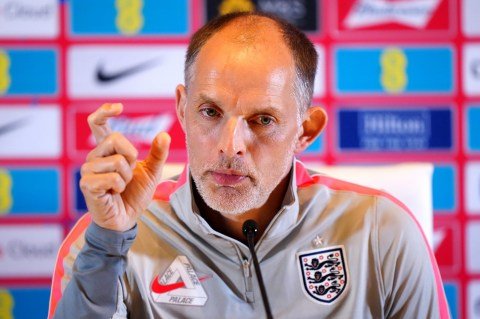
A heated debate has emerged around England’s 2026 FIFA World Cup squad after former Aston Villa striker Gabriel Agbonlahor suggested that Bukayo Saka could be dropped due to ongoing injury concerns.
The discussion has intensified just days before the tournament, with England manager Thomas Tuchel now facing one of his most difficult selection dilemmas — balancing player fitness, form, and squad depth in a team already stacked with attacking talent.
While Saka remains one of England’s most important players, his recent injury struggles have opened the door for questions about whether alternatives like Phil Foden or Cole Palmer might offer more reliability in a high-pressure World Cup environment.
Saka’s Injury Concerns: Why Fitness Has Become a Key Issue
Bukayo Saka’s 2025–26 season was disrupted by recurring fitness problems, including an Achilles issue that forced him to miss multiple matches for Arsenal.
Although he still managed to contribute goals and assists across competitions, his availability remained inconsistent throughout the campaign.
Even after returning for major fixtures towards the end of the season, questions remained about whether he had fully regained match fitness ahead of the World Cup.
England’s coaching staff have reportedly been monitoring his workload closely, highlighting the importance of managing his minutes during the tournament preparation phase.
Agbonlahor’s Argument: “Too Much Talent to Take a Risk”
Gabriel Agbonlahor’s comments have added fuel to the debate, as he questioned whether England can afford to include a player who may not be physically ready to handle full tournament intensity.
He argued that England possess enough attacking depth to replace Saka if needed, pointing toward alternatives such as Phil Foden and Cole Palmer.
His central argument focuses on reliability — suggesting that tournament Football requires players who can consistently train, recover, and perform at full intensity every few days.
This viewpoint reflects a growing trend in modern football selection: fitness consistency is now almost as important as technical ability.
Why Saka Still Remains Crucial for England
Despite the criticism, Bukayo Saka remains one of England’s most influential attacking players under Thomas Tuchel.
His ability to operate on the wing, cut inside, and create chances makes him a key tactical asset in breaking down defensive teams.
Saka’s international record also highlights his importance, with strong contributions across previous major tournaments, including the 2022 FIFA World Cup.
For England, removing a player of his quality would not be a simple tactical swap — it would fundamentally alter their attacking structure.
England’s Attacking Depth: A Selection Problem, Not a Shortage
One of England’s biggest strengths heading into the tournament is their overwhelming attacking depth.
Players like Phil Foden, Cole Palmer, Bukayo Saka, Marcus Rashford, Bukayo Saka, and Eberechi Eze all compete for similar attacking roles, giving Tuchel multiple tactical options.
However, this depth also creates difficult selection dilemmas, especially when form and fitness vary across the squad.
Unlike previous tournaments where England lacked creative options, the 2026 squad faces the opposite problem — choosing who to leave out.
Tactical Impact: What England Lose Without Saka
Saka’s role in the England system goes beyond goals and assists. He provides balance, width, and consistent defensive tracking on the right flank.
His chemistry with overlapping full-backs and midfield rotations makes him an important structural component rather than just an attacking outlet.
Replacing him would require not only a like-for-like winger but also adjustments in England’s build-up patterns and attacking transitions.
Comparison: Saka vs Alternatives in England Setup
| Attribute | Bukayo Saka | Phil Foden | Cole Palmer |
|---|---|---|---|
| Natural position | Right winger | Central / winger hybrid | Attacking midfielder / winger |
| Defensive contribution | High | Moderate | Low to moderate |
| Consistency | High when fit | Very high | Rising |
| Injury concerns | Recent Achilles issue | Low | Low |
Tuchel’s Dilemma: Risk vs Stability
Thomas Tuchel now faces one of the most complex decisions of his England tenure: should he prioritize fitness reliability or proven big-match impact?
Tournament football often rewards teams that maintain squad stability, but it also punishes those who carry unfit or partially fit players into key matches.
Saka’s situation sits exactly in this grey area, where his quality is unquestionable but his physical condition remains under observation.
Why This Debate Is Bigger Than One Player
The Saka discussion reflects a broader evolution in international football selection strategy.
Modern national teams increasingly rely on squad rotation, physical monitoring, and tactical flexibility due to congested schedules and higher intensity tournaments.
This means selection decisions are no longer based solely on reputation or past performance but on current physical readiness and tactical suitability.
England’s Immediate Focus Before the Tournament
Before any final squad decisions are locked in, England still have preparation matches and training sessions to assess player readiness.
These sessions will play a key role in determining whether Saka can maintain intensity across multiple games or whether Tuchel needs to adjust his attacking structure.
The coaching staff will also closely monitor recovery rates, sprint output, and match sharpness before finalizing their tactical blueprint.
Conclusion: A Tough Call That Could Define England’s World Cup
The debate over Bukayo Saka’s place in England’s World Cup squad highlights the fine margins that define elite tournament football.
While injury concerns have raised legitimate questions, his quality and importance to England’s system cannot be ignored.
Ultimately, Thomas Tuchel’s decision will come down to risk management — choosing between a slightly uncertain but world-class talent and fully fit alternatives who may lack the same level of influence.
Whatever decision is made, it could significantly shape England’s attacking identity and determine how far they progress in the 2026 FIFA World Cup.
For breaking news and live news updates, like us on Facebook or follow us on Twitter and Instagram. Read more on Latest Sports on thefoxdaily.com.






COMMENTS 0