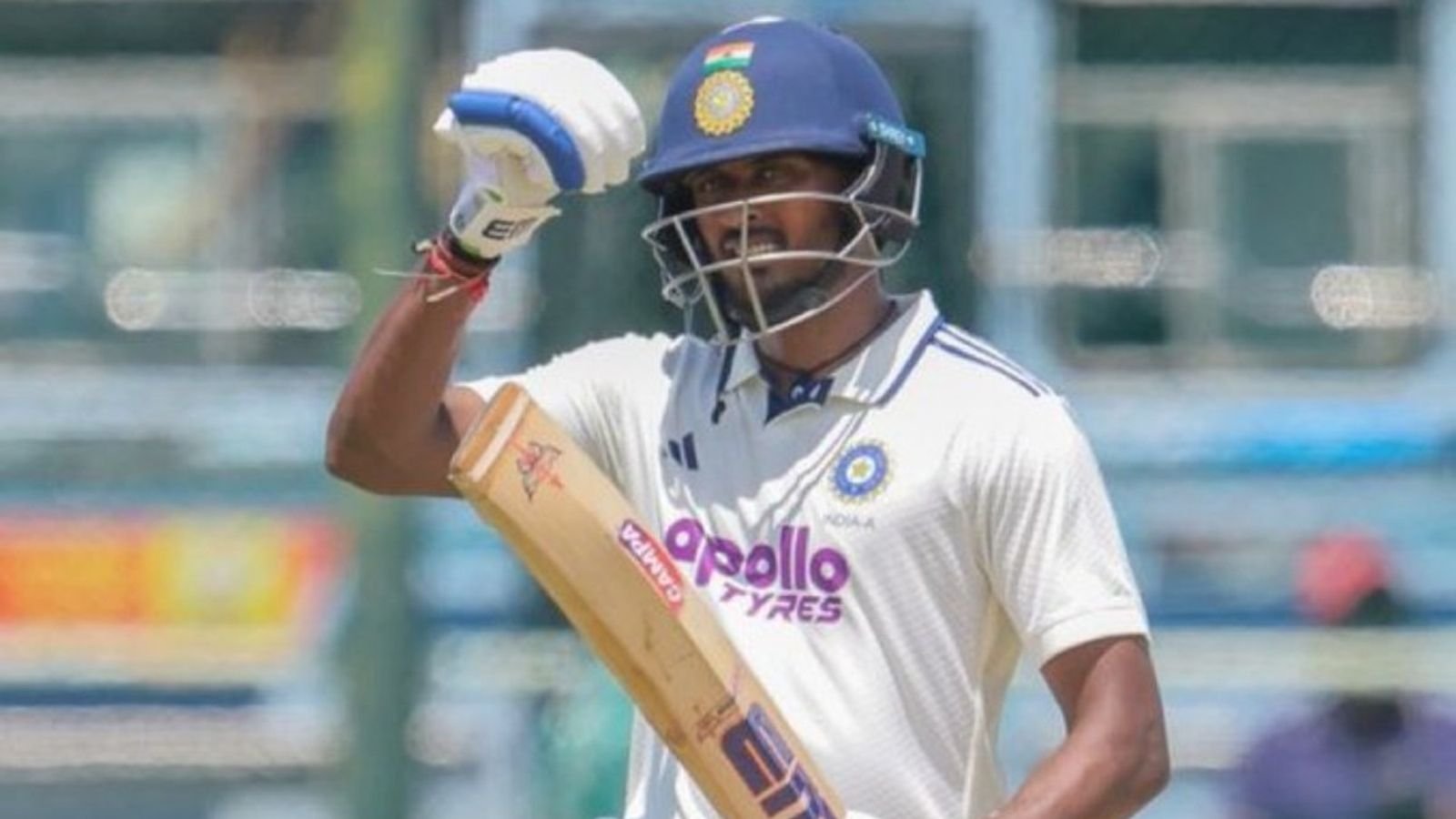
The India A vs Sri Lanka A unofficial Test witnessed a significant shift in momentum on Day 2 as India A produced a commanding response to Sri Lanka A’s first-innings total of 366. Led by a magnificent unbeaten century from Sai Sudharsan and a composed knock from Devdutt Padikkal, India A closed the day at 247/1, reducing the deficit to just 119 runs and putting themselves in a strong position heading into Day 3.
While the scoreboard reflects India’s dominance, the bigger story lies in the continued emergence of a new generation of red-ball talent. With India preparing for future World Test Championship cycles and long-term succession planning, performances from players like Sudharsan and Padikkal could have implications far beyond this unofficial Test match.
India A’s Response Highlights the Strength of the Talent Pipeline
Unofficial Tests are often viewed as development matches, but their importance within modern cricket cannot be overstated. These games frequently serve as auditions for future international careers.
India A’s performance in Galle demonstrated why the country’s talent pipeline remains one of the strongest in world cricket. After conceding 366, the visitors needed a disciplined and technically sound batting display. Instead of merely surviving, they seized control of the contest.
The batting approach combined patience with calculated aggression, showcasing the adaptability required to succeed in longer formats.
Sai Sudharsan Delivers Another Statement Performance
The standout performer of the day was undoubtedly Sai Sudharsan, whose unbeaten 104 reinforced his growing reputation as one of India’s most promising red-ball batters.
What made the innings particularly impressive was not just the century itself, but the manner in which it was constructed. Sudharsan demonstrated:
- Strong defensive technique against spin
- Excellent shot selection
- Patience during quieter phases
- Ability to rotate strike consistently
- Composure under pressure
These qualities are often regarded as essential for success in Test cricket, making his innings especially encouraging for Indian selectors and coaches.
Why Sudharsan’s Century Matters Beyond This Match
Indian cricket is entering an important transition period. While established stars continue to lead the national side, attention is increasingly shifting toward the next generation of batters capable of succeeding across conditions.
Sudharsan’s hundred arrives at a crucial moment.
Unlike many modern batters who build their reputation primarily in T20 cricket, Sudharsan has consistently shown an ability to adapt across formats. His success in longer innings suggests he possesses the temperament required for first-class and potentially Test cricket.
For selectors monitoring future options, innings like this carry significant weight.
Devdutt Padikkal Shows His Red-Ball Credentials
While Sudharsan grabbed the headlines with a century, Devdutt Padikkal’s unbeaten 94 was equally valuable.
The left-hander displayed remarkable discipline throughout his innings, resisting the temptation to force the pace despite scoring opportunities.
His partnership with Sudharsan effectively neutralized Sri Lanka A’s bowling attack and transformed the complexion of the match.
Padikkal’s knock also served as a reminder that his game extends well beyond white-ball cricket. Known primarily for his elegant stroke play, he showcased the patience and concentration necessary for success in longer formats.
The Match-Changing Partnership
The unbeaten 181-run stand between Sudharsan and Padikkal was the defining phase of the day.
After Aman Mokhade’s dismissal, Sri Lanka A sensed an opportunity to build pressure. Instead, the two left-handers completely took control.
| Partnership Detail | Performance |
|---|---|
| Runs Added | 181* |
| Wickets Lost During Stand | 0 |
| Sai Sudharsan | 104* |
| Devdutt Padikkal | 94* |
| India A Score at Stumps | 247/1 |
The partnership combined technical quality with excellent game awareness, allowing India A to steadily chip away at the deficit without exposing themselves to unnecessary risks.
Gurnoor Brar and Saransh Jain Set Up the Platform
Before the batting heroics, India’s bowlers played a critical role in restricting Sri Lanka A.
Gurnoor Brar and Saransh Jain were instrumental in preventing the hosts from building a significantly larger total.
The pair consistently applied pressure and ensured Sri Lanka A could not capitalize on their overnight position.
Most importantly, they triggered a dramatic lower-order collapse that limited the hosts to 366.
Without that bowling effort, India A may have faced a much steeper challenge with the bat.
Sri Lanka A Missed a Major Opportunity
From a Sri Lankan perspective, Day 2 represented a missed opportunity.
Beginning the morning at 288/5, the hosts were well positioned to push beyond 425 and potentially dominate the match.
Instead, they added only 78 more runs before losing their final five wickets.
The collapse shifted momentum entirely toward India A and exposed concerns regarding lower-order resilience.
At this level, allowing a strong batting side back into the contest can prove costly.
What Makes Galle an Important Test for Young Batters?
Galle remains one of Asia’s most challenging venues for developing batters.
The surface typically rewards patience, concentration, and quality footwork against spin.
Success in these conditions often serves as a strong indicator of a batter’s long-format potential.
Both Sudharsan and Padikkal demonstrated an ability to adapt their games effectively, which will likely attract attention from India’s red-ball decision-makers.
India A’s Long-Term Significance
The India A system has historically played a vital role in producing international stars.
Several of India’s greatest cricketers used A-team tours as stepping stones before establishing themselves at the highest level.
These matches allow players to:
- Experience overseas conditions
- Develop against quality opposition
- Build consistency in longer formats
- Handle pressure situations
- Prepare for international cricket
The performances in Galle highlight why the structure continues to be one of Indian cricket’s most effective talent development pathways.
A Key Insight: India’s Next Test Core Is Already Emerging
One of the most interesting takeaways from this match is how clearly India’s next generation is beginning to establish itself.
While discussions often focus on current international stars, performances like Sudharsan’s century and Padikkal’s near-hundred suggest the transition process may already be underway.
India’s strength has long been its ability to prepare future players before they are needed at the highest level.
Matches such as this provide valuable evidence that the next wave of talent is progressing in the right direction.
What to Expect on Day 3
India A will enter Day 3 with several objectives:
- Erase the remaining first-innings deficit
- Allow Padikkal to complete his century
- Build a substantial lead
- Bat Sri Lanka A out of the contest
Sri Lanka A, meanwhile, must find an early breakthrough to prevent India from completely taking control.
The first session could ultimately determine whether the hosts can remain competitive or whether India A moves decisively toward victory.
Conclusion
The India A vs Sri Lanka A unofficial Test swung firmly in the visitors’ favor on Day 2 thanks to an outstanding unbeaten century from Sai Sudharsan and a composed 94 from Devdutt Padikkal.
Beyond the immediate match situation, the performances offered a glimpse into the future of Indian red-ball cricket. Both batters showcased the technical quality, temperament, and adaptability required for success at higher levels.
With India A trailing by only 119 runs and nine wickets still intact, the visitors are now strongly positioned to seize control of the contest. More importantly, they may have uncovered further evidence that India’s next generation of Test talent is ready to make its mark.
For breaking news and live news updates, like us on Facebook or follow us on Twitter and Instagram. Read more on Latest Sports on thefoxdaily.com.




COMMENTS 0