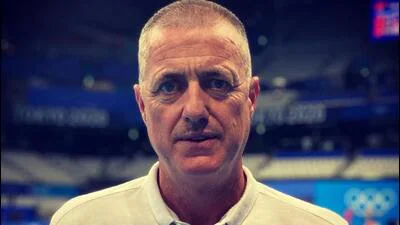
India swimming development has received a major push from experienced coach Sean Kelly, who believes the country can make significant progress if it creates a dedicated national performance centre and brings its best swimmers together for high-level training.
Kelly, who has worked with elite swimmers in Australia, England and Spain, is currently in Ahmedabad for a 45-day coaching camp involving some of India’s leading swimmers ahead of the Asian Games.
Sean Kelly impressed by Ahmedabad swimming facilities
Kelly has returned to India with extensive international coaching experience. He spent 26 years with Stockport Metro in Manchester before later working as the technical director of Spanish swimming.
During his time at Stockport, the club operated with a relatively modest swimming facility, yet four Olympic medals emerged from that environment.
Kelly believes India’s newly revamped Veer Savarkar Sports Complex pool in Ahmedabad provides an excellent foundation for the country’s swimming ambitions.
Describing the facility as being among the best pools he has worked in anywhere in the world, Kelly believes India now needs to ensure that such infrastructure is supported by an equally strong athlete-development system.
National performance centre is the missing piece
According to Kelly, one of the biggest weaknesses in India’s current swimming structure is the absence of a proper national performance centre.
He pointed to countries that consistently produce world-class swimmers and highlighted the role played by high-performance centres in developing elite athletes.
Kelly believes India could establish regional centres that identify promising young swimmers before moving the best athletes into one national-level programme.
He cited Spain’s development model as an example. When he moved there, the country had one high-performance centre in Barcelona. The system was later expanded into three regional centres.
Australia, meanwhile, has several high-performance centres across its states, creating stronger environments for elite swimmers to train and compete against one another.
Training together could help Indian swimmers improve
Kelly believes India’s club-based swimming structure has limitations when it comes to producing elite athletes.
Many of the country’s leading swimmers currently train separately at their own clubs or individual setups. Kelly argues that this can reduce competition during training, particularly when one swimmer is clearly the strongest athlete in a particular group.
A national performance centre could bring several top swimmers together and create a more competitive daily training environment.
Kelly suggested that having around eight to 12 swimmers in a training group could provide the right balance, allowing athletes to challenge one another regularly without making the group excessively large.
Indian swimmers are already showing progress
Kelly has been working with a group of nine boys during his coaching camp in Ahmedabad. He has introduced them to new ideas while also increasing the intensity of their training sessions.
The coach has been encouraged by the response from the swimmers and the team atmosphere developing within the group.
Kelly believes stronger domestic training groups could also reduce the need for India’s best young swimmers to travel overseas simply to find high-quality competition and coaching environments.
Young Indian swimmers such as Aryan Nehra and Rishabh Das have trained abroad, highlighting the desire among promising athletes to access stronger international training systems.
Performance centre could also develop Indian coaches
The proposed national performance centre would not only benefit elite swimmers. Kelly believes it could become an education hub for coaches as well.
Experienced international-level coaches could work alongside India’s emerging coaches, helping transfer knowledge and modern training methods to the domestic system.
Over time, this could help India develop a larger pool of highly qualified coaches capable of working with swimmers across different age groups and levels.
India needs more elite swimmers
Kelly does not believe a lack of talent is India’s biggest problem. Instead, he believes the country needs to identify and develop a much larger number of promising swimmers.
He argued that having only a handful of senior swimmers in a particular event or training group is not enough to create the competitive environment required for sustained improvement.
According to Kelly, between eight and 12 swimmers in a strong training group can create the competition necessary to push athletes to improve every day.
Scouting young talent will be crucial
Another major challenge will be identifying talented swimmers at a young age. Kelly believes India needs a nationwide scouting system capable of finding athletes who may eventually compete for major international medals.
He said coaches should look beyond basic race times when identifying young talent. Technical ability, movement efficiency, adaptability and the ability to learn new skills can all provide important clues about a swimmer’s long-term potential.
Kelly believes young swimmers who appear effortless in the water and use fewer strokes efficiently can possess qualities that may help them develop into successful elite athletes.
2030 Commonwealth Games is the immediate target
For Kelly, India’s immediate objective should be the 2030 Commonwealth Games in Ahmedabad.
The coach believes winning a Commonwealth Games swimming medal would represent a major breakthrough for Indian swimming and could inspire millions of young people to take up the sport.
India has yet to win a Commonwealth Games medal in swimming, making the prospect of achieving that milestone on home soil particularly significant.
A successful performance in Ahmedabad could also create a wider sporting impact by giving young swimmers visible role models and encouraging greater participation in the sport.
India has infrastructure but needs a stronger system
Kelly believes India already possesses several important ingredients required to improve its swimming standards. The country has modern facilities, access to advanced technology and strong expertise in areas such as data analysis.
The next step is creating an integrated system that connects infrastructure, coaching, talent identification and elite training.
The Swimming Federation of India has reportedly held discussions with the sports ministry and the Sports Authority of India regarding the creation of a dedicated training centre.
Kelly has also discussed the possibility of taking up a longer-term role with Indian swimming if the proposed plans move forward.
Why the next few years matter for Indian swimming
The 2030 Commonwealth Games may still be several years away, but Kelly believes preparations need to begin immediately. Establishing high-performance centres, identifying young talent and developing stronger training groups are processes that require time.
India’s challenge is therefore not simply about building better swimming pools. It is about creating an ecosystem in which talented swimmers can train together, receive elite coaching, access performance data and compete regularly against strong opposition.
If those elements come together, the 2030 Commonwealth Games could provide Indian swimming with an opportunity to achieve its first major Commonwealth breakthrough and build momentum for future Olympic success.
For breaking news and live news updates, like us on Facebook or follow us on Twitter and Instagram. Read more on Latest Sports on thefoxdaily.com.

COMMENTS 0