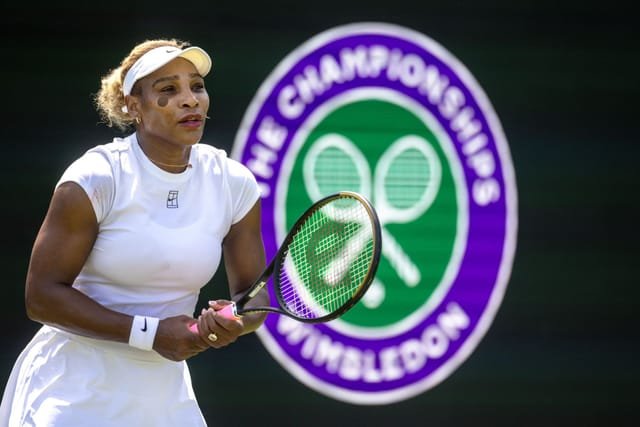
Serena Williams Wimbledon 2026 return has captured global attention after the tennis icon revealed the emotional reason behind accepting a wildcard entry for the singles tournament. After initially planning only a doubles appearance with her sister Venus Williams, Serena received a singles wildcard from the All England Club, giving fans the chance to watch one of the sport’s greatest champions return to the Wimbledon stage.
The decision was not simple for Williams. After years away from professional singles competition, the seven-time Wimbledon champion admitted she questioned whether returning was the right choice. But the opportunity felt too special to ignore, especially because Wimbledon has played such an important role in her legendary career.
Her comeback is not only about winning matches. It represents a rare moment where a sporting icon chooses to reconnect with the place where she created some of her greatest memories.
Why Serena Williams accepted the Wimbledon wildcard
Serena Williams explained that the opportunity itself convinced her to return. A Wimbledon wildcard is not something offered every day, and for a player with her history at the tournament, the moment carried special meaning.
The former World No. 1 understood that this could potentially be her final chance to compete at the grass-court Grand Slam. Instead of focusing only on doubts surrounding her fitness or preparation, Williams decided to embrace the opportunity.
“I thought not every day Wimbledon holds a wild card for someone. I happened to be one of those people. I thought I should really take this opportunity.”
Her comments reflected the mindset of an athlete who understands that opportunities at the highest level can disappear quickly. Wimbledon has been a defining part of her career, and returning to the tournament allows her to write another chapter.
Serena Williams and Wimbledon: A historic connection
Serena Williams is one of Wimbledon’s most successful modern champions. Her powerful serve, aggressive baseline game, and mental strength helped her dominate the grass courts of London for more than two decades.
Her seven Wimbledon singles titles place her among the greatest players in the tournament’s history. Each victory added to a legacy built on consistency, resilience, and the ability to perform under enormous pressure.
The significance of her return goes beyond rankings or statistics. Wimbledon represents a stage where Serena has experienced some of the most important moments of her career.
A comeback after four years: The challenge ahead
Returning to professional tennis after a long absence is one of the biggest challenges in sport. Unlike exhibition matches, Grand Slam competition demands physical endurance, mental focus, and the ability to handle intense pressure over multiple rounds.
Serena Williams’ comeback story is different because she is not a player searching for recognition. She has already achieved everything possible in tennis. The challenge now is competing against a younger generation while managing the demands of professional sport.
| Challenge | What Serena Williams Faces |
|---|---|
| Physical Preparation | Maintaining speed, movement, and endurance after time away |
| Match Rhythm | Adjusting to the intensity of competitive tennis again |
| Young Competition | Facing players who compete at a high pace every week |
| Expectations | Handling global attention because of her legendary status |
The mental side of Serena’s Wimbledon comeback
One of the most interesting parts of Serena Williams’ return is the psychological element. Many athletes struggle after stepping away because the routine and pressure of professional competition are difficult to recreate.
For Serena, the decision appears to be driven by passion rather than unfinished business. She does not need to prove her place in tennis history. Her return is about experiencing the sport she has dedicated much of her life to.
This creates a different type of pressure. Instead of chasing validation, she is playing with the freedom of someone who already understands what success feels like.
Serena Williams opens up about anti-doping system concerns
Alongside discussing her comeback, Williams also spoke about the challenges of returning to the professional circuit, particularly the requirements around anti-doping procedures.
She explained that the system requiring players to provide daily whereabouts information for possible testing was one of the factors that made a return more complicated for her.
Williams highlighted the difficulty of managing professional responsibilities, business commitments, travel, and family life while meeting the demands expected from active athletes.
Why the anti-doping discussion created debate
Serena’s comments sparked reactions because professional tennis players are required to follow strict anti-doping rules designed to protect fairness in the sport.
Supporters argue that established athletes returning after long breaks may face unique logistical challenges. Critics believe every player, regardless of reputation or achievements, must follow the same system to maintain trust in competition.
The discussion highlights a larger question in modern sports: how can governing bodies maintain strict standards while considering the changing lifestyles of elite athletes?
Serena Williams vs the new generation of tennis players
The tennis landscape has changed significantly since Serena last competed regularly. A new generation of players has emerged, bringing different playing styles, improved athletic preparation, and new tactical approaches.
Players today rely heavily on speed, movement, and aggressive returning. Grass-court tennis has also evolved, with many competitors becoming more comfortable playing fast-paced attacking games.
However, Serena’s experience remains a unique advantage. Few players understand big-match pressure, crowd expectations, and championship moments like she does.
Comparison: Serena’s comeback and other legendary returns
| Player | Return Story | Key Factor |
|---|---|---|
| Serena Williams | Returning to Wimbledon after a long break | Experience and legacy |
| Roger Federer | Returned after injury setbacks | Adaptation and patience |
| Rafael Nadal | Multiple injury comebacks | Mental toughness |
What Serena Williams’ return means for Wimbledon 2026
Serena’s presence adds another layer of excitement to Wimbledon 2026. Grand Slam tournaments are not only about current rankings; they are also about history, emotion, and unforgettable moments.
Her comeback attracts attention from both longtime tennis fans and a new audience that wants to witness a legendary athlete compete again.
Even if the result does not match her previous dominance, her return itself is a significant sporting event.
Future outlook: Is this the start of a longer comeback?
The biggest question is whether Wimbledon 2026 represents a one-time appearance or the beginning of a longer competitive return.
Serena Williams has not confirmed long-term plans, and her comments suggest that the decision was based on enjoying a rare opportunity rather than making immediate career commitments.
Her focus appears to be on embracing the moment, competing at one of tennis’ most iconic venues, and seeing where the journey takes her.
Conclusion: Serena Williams’ Wimbledon return is about more than tennis
Serena Williams Wimbledon 2026 comeback represents much more than a player returning after time away. It is a story about legacy, passion, and the desire to compete at the highest level one more time.
The 23-time Grand Slam champion accepted the wildcard because she understood the value of the moment. Wimbledon gave her a rare opportunity, and she chose to take it.
Whether this return produces another historic victory or simply another memorable appearance, Serena Williams has already reminded the sporting world why her name remains one of the most powerful in tennis history.
For breaking news and live news updates, like us on Facebook or follow us on Twitter and Instagram. Read more on Latest Sports on thefoxdaily.com.






COMMENTS 0