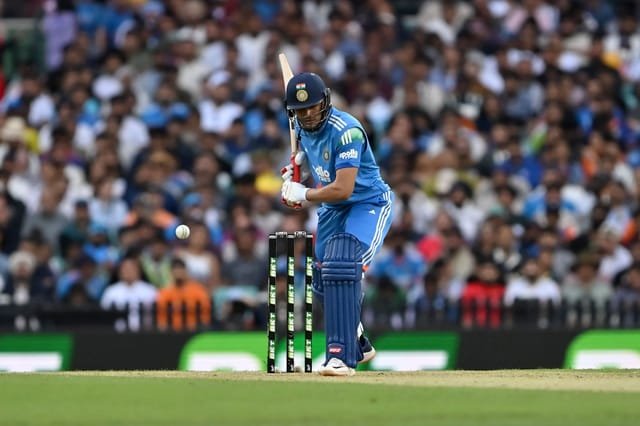
Shubman Gill‘s unbeaten 84 against Afghanistan in the first ODI of the three-match series was more than just another impressive score. It was a statement innings that highlighted the transformation of one of India’s most gifted batters from a naturally talented stroke-maker into a mature match-winner capable of controlling the tempo of a chase.
India secured a comfortable seven-wicket victory in the rain-shortened 25-over contest at the HPCA Stadium in Dharamshala, taking a 1-0 lead in the series. While several batters contributed valuable runs, it was Gill’s calm presence at the crease that ultimately shaped the outcome.
The innings also prompted former India cricketer Manoj Tiwary to praise Gill’s growth, pointing out a significant improvement in the young captain’s game management and decision-making under pressure.
Shubman Gill’s Innings Was About More Than Runs
In modern ODI cricket, flashy stroke-play often grabs headlines, but successful run chases are built on calculated decision-making and situational awareness. Gill’s unbeaten 84 from 66 deliveries demonstrated exactly that.
After India lost Rohit Sharma early through an unfortunate run-out, Gill recognized the need to anchor the innings. Instead of chasing personal milestones or accelerating recklessly, he focused on controlling the chase and ensuring India remained ahead of the required rate.
His approach reflected the mindset of a batter who understands that winning the match is more important than producing highlight-reel shots.
This maturity has become one of the defining features of Gill’s game in recent months.
How Gill’s Approach Has Changed Over Time
One of the key observations made by Manoj Tiwary was Gill’s improved ability to finish games.
Earlier in his career, Gill occasionally attracted criticism for getting out after building strong starts. At times, he would attempt ambitious shots when a simpler approach could have taken the team closer to victory.
Against Afghanistan, however, he displayed complete control.
Notably, Gill scored just one boundary from his final 20 deliveries. Rather than forcing the pace, he allowed KL Rahul to attack while he continued rotating the strike and managing the chase.
This willingness to prioritize the team’s needs over personal statistics is often a hallmark of elite players.
The Difference Between Talent and Greatness
Cricket history is filled with talented players who could dominate attacks but struggled to consistently convert starts into match-winning performances.
What separates great players from good ones is often their ability to adapt to match situations.
Gill’s innings against Afghanistan offered evidence that he is developing this crucial skill.
He understood:
- When to attack aggressively.
- When to rotate strike.
- When to absorb pressure.
- When to allow a partner to dominate.
- How to remain unbeaten and finish the game.
These qualities are particularly important in ODI cricket, where balancing aggression and control often determines success.
India’s Chase Built Around Gill’s Calm Leadership
Chasing 195 in a shortened contest can sometimes become complicated if wickets fall regularly. Afghanistan entered the match with momentum after Rahmanullah Gurbaz’s explosive century had helped them post a competitive total.
India needed composure as much as aggression.
Gill provided exactly that.
While Ishan Kishan, Shreyas Iyer, and KL Rahul played valuable supporting roles, Gill ensured the innings never drifted off course. His ability to absorb pressure allowed the other batters to play with freedom.
This balancing act often goes unnoticed but is critical in successful run chases.
KL Rahul’s Finishing Touch Complements Gill’s Foundation
One of the most impressive aspects of India’s victory was the partnership between Gill’s stability and Rahul’s aggression.
Once the target came within reach, Rahul accelerated brilliantly, smashing 39 runs from just 19 deliveries.
However, such finishing cameos are only possible when a batter at the other end has already laid a strong foundation.
Gill’s innings ensured Rahul could attack without worrying about rebuilding the chase.
Together, they executed the perfect modern ODI partnership formula.
| Player | Role in Chase | Impact |
|---|---|---|
| Shubman Gill | Anchor and Controller | Managed the chase and remained unbeaten |
| Ishan Kishan | Middle Overs Support | Maintained scoring momentum |
| Shreyas Iyer | Middle Order Stability | Reduced pressure on Gill |
| KL Rahul | Finisher | Accelerated and completed the chase |
Captaincy Responsibility Is Elevating Gill’s Game
One of the most interesting developments in Gill’s career has been the impact of leadership responsibilities on his batting.
Captains often develop a broader understanding of match situations because they are forced to think beyond their individual performances.
According to Manoj Tiwary, this evolution is becoming increasingly visible in Gill’s ODI batting.
The responsibility that transformed him into a more complete leader during his franchise captaincy appears to be influencing his approach at the international level as well.
Rather than focusing solely on scoring runs, Gill is increasingly focused on controlling games.
Gill’s Remarkable Run Across Formats
The innings against Afghanistan continued a stunning period of form for the Indian captain.
Over the past few weeks, Gill has delivered consistently across multiple formats, reinforcing his status as one of the world’s premier batters.
His recent achievements include:
- A prolific IPL 2026 campaign.
- A century in the one-off Test against Afghanistan.
- A match-winning unbeaten ODI knock in Dharamshala.
- Consistent leadership performances.
Maintaining such standards across formats requires technical adaptability, mental strength, and exceptional preparation.
Few players in world cricket currently display that combination as effectively as Gill.
Why Gill’s Evolution Matters for India’s ODI Future
India has long relied on batters capable of mastering run chases.
From Sachin Tendulkar to MS Dhoni and Virat Kohli, some of the country’s greatest ODI successes have been built around players who understood the art of pacing an innings.
Gill appears increasingly capable of carrying that tradition forward.
His ability to combine elegant stroke-play with strategic awareness makes him uniquely suited to modern ODI cricket.
As India begins preparing for future ICC tournaments, having a captain who can consistently manage high-pressure chases could become one of the team’s biggest advantages.
What Makes Gill Different From Other Young Batters?
Many young players possess natural talent, but Gill’s greatest strength may be his willingness to evolve.
He has shown a consistent ability to learn from previous mistakes and refine his approach.
Some key characteristics that separate him include:
- Exceptional shot selection.
- Strong temperament under pressure.
- Ability to adapt across formats.
- Leadership qualities.
- A growing understanding of match situations.
These traits suggest that his best cricket may still lie ahead.
Can Gill Become India’s Next ODI Great?
While comparisons with past legends remain premature, Gill’s trajectory is undeniably exciting.
At a relatively young age, he has already demonstrated the technical skills, consistency, and temperament required for long-term success.
More importantly, he appears to be developing the game awareness that defines elite ODI batters.
The ability to finish matches, remain unbeaten, and guide teams across the line often separates world-class players from merely talented ones.
His innings against Afghanistan suggested that he is steadily moving toward that category.
Looking Ahead to the Second ODI
India now heads into the second ODI in Lucknow with a chance to secure the series.
Momentum is firmly on the hosts’ side, and Gill’s form will undoubtedly provide confidence to the dressing room.
Afghanistan remains a dangerous opponent capable of producing match-winning performances, but India’s batting unit appears increasingly settled and confident.
If Gill continues combining leadership with consistency, India will be difficult to stop.
Conclusion
Shubman Gill’s unbeaten 84 against Afghanistan was not his most explosive innings, but it may have been one of his most important. The knock showcased a batter who is learning how to control matches, manage pressure, and guide his team to victory without unnecessary risks.
Manoj Tiwary’s praise reflects a growing consensus around Indian cricket: Gill is no longer just a gifted young talent. He is rapidly evolving into a mature leader capable of carrying the responsibility that comes with captaining one of the world’s strongest cricket teams.
As India continues its ODI journey, performances like this suggest that the “Prince” of Indian cricket is steadily preparing for a much larger throne.
For breaking news and live news updates, like us on Facebook or follow us on Twitter and Instagram. Read more on Latest Sports on thefoxdaily.com.






COMMENTS 0