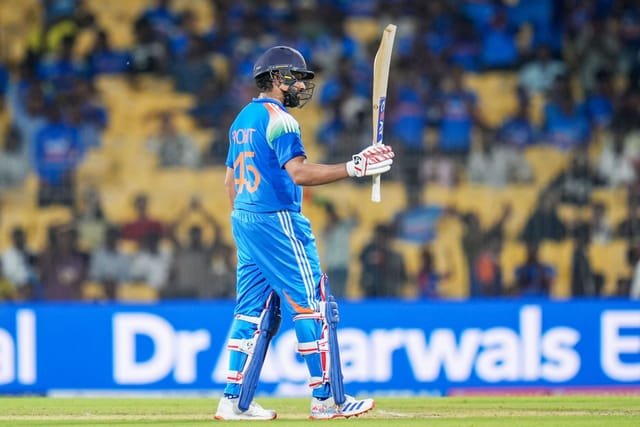
Rohit Sharma may have fallen 21 runs short of a century, but his performance in India’s commanding victory over Afghanistan was a reminder of why he remains one of the most influential batters in world cricket. The Indian captain scored a fluent 79 off 69 deliveries in the third ODI, laying the foundation for a comfortable nine-wicket win and helping India seal the series in emphatic fashion.
While much of the post-match discussion focused on Yashasvi Jaiswal’s unbeaten century, Rohit’s innings carried significant importance of its own. Former India opener Aakash Chopra highlighted how the knock reflected a batter determined to make a statement after narrowly missing out on a big score in the previous game.
The innings also arrived at a crucial time, with discussions continuing around India’s long-term ODI plans and preparations for future ICC tournaments. Rohit’s response was simple: let the bat do the talking.
India vs Afghanistan 3rd ODI: Match Overview
| Match Details | Result |
|---|---|
| Afghanistan Total | 218 All Out |
| India Total | 224/1 |
| Result | India Won by 9 Wickets |
| Overs Remaining | 21.2 Overs |
| Venue | Chennai |
India’s chase was virtually flawless, with Rohit Sharma and Yashasvi Jaiswal dominating Afghanistan’s bowling attack from the outset and removing any possibility of a competitive finish.
Why Rohit Sharma’s Knock Was More Important Than the Score Suggests
Statistics alone rarely tell the complete story of a batting performance.
Rohit’s 79 was not merely another half-century. It was an innings that showcased adaptability, game awareness, and a willingness to build an innings according to the match situation.
Unlike some of his explosive starts in recent years, Rohit began cautiously, allowing himself time to assess conditions before accelerating. Once settled, he shifted gears effortlessly and began finding boundaries with the confidence that has defined his career.
This measured approach impressed Aakash Chopra, who noted that Rohit appeared particularly focused from the beginning of the innings.
Aakash Chopra’s Assessment of Rohit’s Innings
According to Chopra, Rohit’s approach suggested he was fully aware of the importance of spending time at the crease.
With India playing relatively few ODI matches before their next assignment, opportunities to build rhythm and confidence become increasingly valuable.
Rohit’s innings reflected that understanding. Rather than chasing quick runs from the start, he allowed the innings to develop naturally before launching his attack.
The strategy nearly resulted in a century and highlighted the maturity that comes with years of international experience.
Rohit Sharma’s Performance by the Numbers
| Statistic | Performance |
|---|---|
| Runs | 79 |
| Balls Faced | 69 |
| Fours | 9 |
| Sixes | 3 |
| Strike Rate | 114.49 |
| Result | India Won by 9 Wickets |
The figures underline how effectively Rohit balanced aggression and control throughout the chase.
The Century That Got Away
One of the biggest talking points from the innings was the manner of Rohit’s dismissal.
After positioning himself for a possible hundred, the opener fell while attempting an attacking shot against Mohammad Nabi. It was not a delivery that demanded risk, making the dismissal particularly frustrating for the veteran batter.
Observers immediately noticed Rohit’s disappointment as he walked back to the pavilion.
Given the way he was batting, a century appeared inevitable. However, cricket often reminds players that concentration cannot lapse even when milestones seem within reach.
Despite missing out on three figures, the innings had already served its purpose.
Rohit Sharma vs Rashid Khan: The Defining Battle
Every major ODI contest contains individual battles that shape the outcome, and one of the most anticipated matchups was Rohit Sharma against Rashid Khan.
Rashid remains Afghanistan’s most dangerous bowler and has troubled some of the world’s best batters throughout his career.
This time, however, Rohit dominated the contest.
After being dismissed by Rashid in the previous match, the Indian captain responded with authority, attacking the leg-spinner and preventing him from settling into a rhythm.
| Rohit vs Rashid Khan | Performance |
|---|---|
| Runs Scored Against Rashid | 42 |
| Rashid Khan’s Figures | 51 Runs Conceded in 6 Overs |
| Outcome | Advantage Rohit Sharma |
The aggressive approach disrupted Afghanistan’s bowling plans and ensured India’s chase remained comfortably under control.
The Opening Partnership That Ended the Contest
One of the strongest indicators of India’s dominance was the opening stand between Rohit Sharma and Yashasvi Jaiswal.
The pair combined for a massive 170-run partnership that effectively removed Afghanistan from the contest.
The partnership worked because both players complemented each other perfectly.
- Rohit provided experience and composure.
- Jaiswal supplied youthful energy and aggression.
- Both rotated strike efficiently.
- Neither allowed pressure to build.
- The left-right combination disrupted bowling plans.
Such partnerships are often the foundation of successful ODI teams.
More Than Just Runs: Rohit’s Contribution in the Field
Rohit’s impact was not limited to batting.
Fielding remains an underrated aspect of leadership, and the Indian captain contributed significantly by taking three catches in the slip cordon.
Slip catching demands concentration, anticipation, and sharp reflexes. Rohit’s ability to maintain those standards while also leading the side reflects the professionalism that has defined his career.
In modern cricket, elite players are expected to influence games in multiple ways, and Rohit did exactly that.
Has Rohit Sharma Answered Questions About His ODI Future?
Before the series, conversations emerged regarding Rohit’s long-term role in India’s ODI setup and his potential involvement in future ICC events.
Those discussions were driven less by form and more by age and long-term planning.
However, performances like this highlight why writing off experienced players can be risky.
Rohit’s recent performances in both franchise cricket and international matches suggest he remains capable of producing match-winning contributions at the highest level.
His understanding of pressure situations and ability to perform in major tournaments remain valuable assets for India.
What Makes Rohit Different from Other Modern Openers?
Modern ODI cricket increasingly rewards aggressive batting, but Rohit’s success has always been built on a unique balance.
Unlike many attacking openers who rely solely on power, Rohit combines timing, placement, and game awareness with explosive strokeplay.
His ability to accelerate without appearing rushed remains one of his greatest strengths.
Against Afghanistan, that quality was visible throughout the innings as he shifted seamlessly between caution and aggression depending on the situation.
Why This Knock Matters for India’s World Cup Preparation
Major tournaments are often won by teams whose senior players enter the competition in form.
India’s management will be encouraged by Rohit’s rhythm, confidence, and decision-making during this innings.
Even more importantly, the partnership with Jaiswal demonstrated that India possess multiple top-order combinations capable of succeeding against international opposition.
The stronger India’s batting options become, the more flexibility selectors will have when planning for future ICC events.
Leadership Through Performance
Captains are often judged not only by tactical decisions but also by their ability to lead from the front.
Rohit’s innings served as an example of that leadership.
By taking responsibility during the chase, attacking Afghanistan’s strongest bowler, and setting the tone for the batting unit, he ensured the team never lost control of the match.
Such performances create confidence throughout the dressing room and reinforce the standards expected within successful teams.
Conclusion
Although Rohit Sharma narrowly missed a century against Afghanistan, his 79-run innings was a masterclass in controlled ODI batting. The knock combined patience, aggression, experience, and tactical awareness, helping India secure a dominant victory while strengthening his own position within the team.
Aakash Chopra’s assessment accurately captured the mood surrounding the innings: Rohit knew a century was within reach and was understandably disappointed to miss out. Yet the larger takeaway remains overwhelmingly positive.
As India continue preparing for future international challenges, performances like this prove that Rohit Sharma remains one of the most dependable and influential players in ODI cricket. The hundred may have escaped him, but the statement certainly did not.
For breaking news and live news updates, like us on Facebook or follow us on Twitter and Instagram. Read more on Latest Sports on thefoxdaily.com.






COMMENTS 0