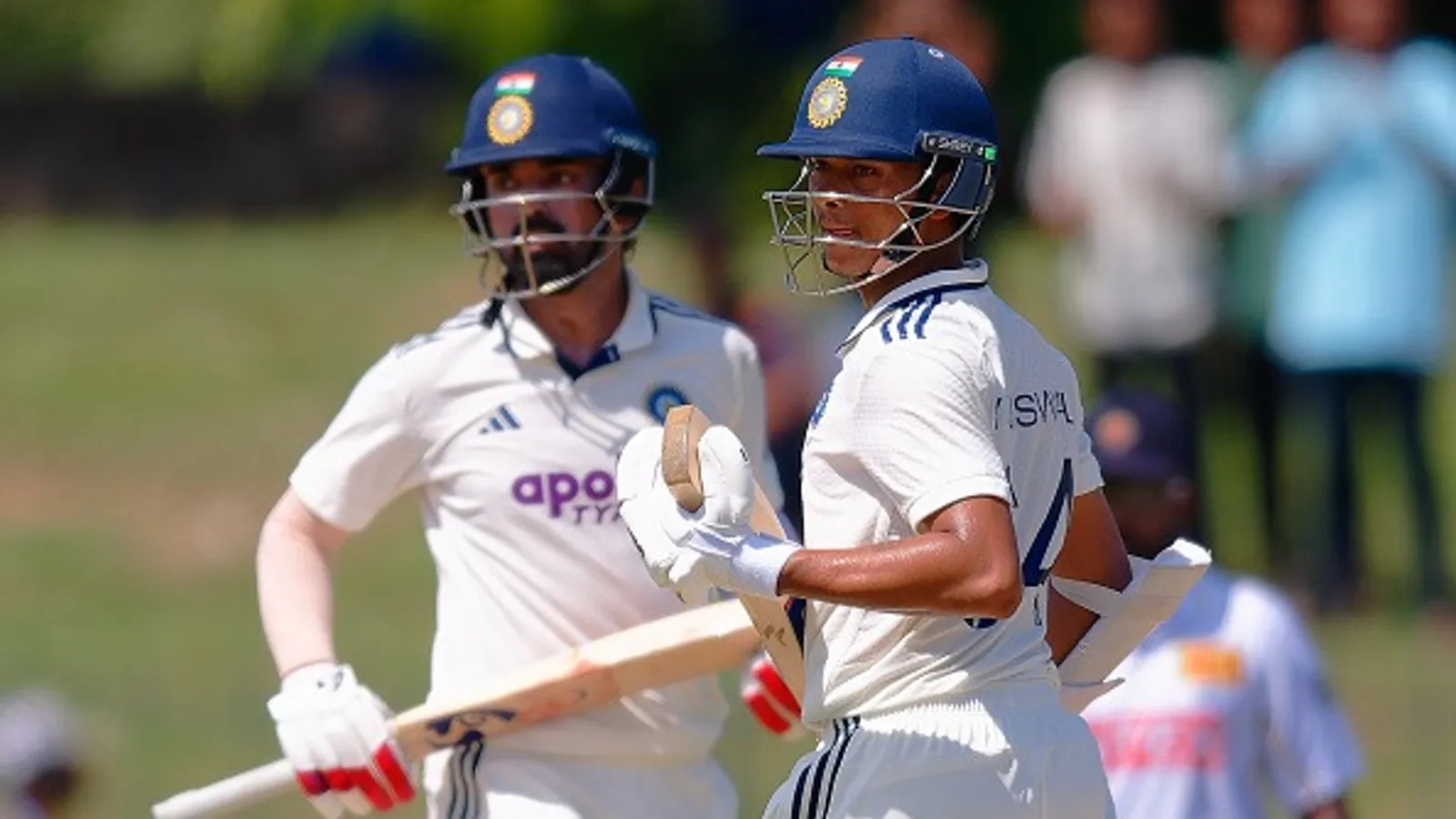
India produced a strong batting response against New Zealand on Day 2 of the first Test at the Basin Reserve in Wellington, reaching 159/1 at stumps after the hosts posted 368 in their first innings. Half-centuries from Yashasvi Jaiswal and KL Rahul helped the visitors recover from New Zealand’s challenging total and finish the day in a promising position.
Jaiswal played an aggressive innings of 85 off 89 deliveries, while Rahul remained unbeaten on 52 from 116 balls. The opening pair added 130 runs, putting India firmly in control of the final session before Matt Henry dismissed Jaiswal. Devdutt Padikkal joined Rahul at the crease and finished the day unbeaten on 16.
India ended Day 2 trailing by 209 runs, with nine wickets remaining. After New Zealand’s middle-order recovery had threatened to put the hosts in a commanding position, the Indian openers ensured that the visitors remained firmly in contention.
Henry Nicholls and Glenn Phillips Power New Zealand to 368
New Zealand resumed Day 2 at 243/5, with Henry Nicholls unbeaten on 113 and Glenn Phillips on 94. The pair had already rescued their team from a difficult position of 70/5 on the opening day and were determined to extend their partnership to build a substantial first-innings total.
Conditions in Wellington were clearer in the morning, while the pitch had become considerably flatter. India’s fast bowlers initially found it difficult to generate the same movement that had troubled New Zealand’s top order on Day 1.
Phillips quickly reached his century, registering his second Test hundred and completing a remarkable international achievement. He became the first batter to score centuries against India across Test, ODI and T20I cricket within a single calendar year.
His partnership with Nicholls continued to frustrate India’s bowling attack. The sixth-wicket pair extended their stand to 216 runs, completely changing the direction of New Zealand’s innings after the early collapse.
The partnership took the hosts beyond the 280-run mark and gave them a strong platform to build a competitive total. Both batters showed patience and attacking intent, taking advantage of the improved batting conditions.
Akash Deep Breaks the 216-Run Partnership
Just when New Zealand appeared capable of batting India out of the contest, Akash Deep produced an important breakthrough. The Indian pacer found movement off the surface and managed to breach Phillips’ defence, sending his off-stump flying.
Phillips departed for an impressive 118 from 216 deliveries, including 14 boundaries. His innings was central to New Zealand’s recovery and gave the hosts a strong position after losing five wickets for just 70 runs.
Nathan Smith joined Nicholls at the crease, and the pair guided New Zealand safely to lunch at 317/6. Nicholls remained unbeaten on 146, continuing to anchor the innings as India searched for quick wickets.
Akash Deep’s dismissal of Phillips was particularly important because the partnership had allowed New Zealand to regain control after its early batting collapse. India needed further breakthroughs to prevent the hosts from pushing towards an even bigger total.
Prasidh Krishna and Jasprit Bumrah Strike After Lunch
India began the second session looking to finish off New Zealand’s lower order quickly. Prasidh Krishna delivered an immediate breakthrough, trapping Nathan Smith leg-before-wicket with the first ball of his spell after lunch.
Smith was dismissed for 14, with the decision confirmed through umpire’s call after New Zealand’s review. The wicket reduced the hosts to 318/7 and gave India an opportunity to restrict the final total.
At the other end, Nicholls continued his outstanding innings. He brought up his 150 with a well-timed drive through the covers off Krishna, demonstrating excellent control and patience throughout his stay at the crease.
The 34-year-old left-hander also created a piece of New Zealand Cricket history. His unbeaten 175 surpassed Andrew Jones’ previous record of 170 not out, set in 1990, to become the highest individual Test score by a New Zealand No. 3 batter against India.
Nicholls’ achievement highlighted the importance of his innings in rescuing New Zealand. While Phillips provided attacking support, Nicholls remained at the crease and continued scoring even as wickets fell around him.
India’s Bowlers Restrict New Zealand’s Lower Order
Despite Nicholls’ remarkable resistance, India’s bowlers continued taking wickets at the opposite end. The final four New Zealand wickets added only 25 runs, preventing the hosts from converting their strong middle-order partnership into an even larger total.
Kyle Jamieson scored 11 and struck a couple of clean boundaries before falling to an Akash Deep bouncer. The delivery produced a top edge, with the ball deflecting off the wicketkeeper’s gloves before KL Rahul completed the catch at second slip.
Matt Henry managed just one run before Jasprit Bumrah produced a trademark delivery that pinned him in front and crashed into middle stump. The dismissal gave Bumrah his fourth wicket of the innings and completed an impressive return to Test Cricket.
Bumrah had been absent from Test cricket for a year before returning to the format. His figures of 4/92 underlined his importance to India’s bowling attack, particularly during the final stages of New Zealand’s innings.
Jacob Duffy helped Nicholls add another 20 valuable runs for the final wicket. However, debutant Anshul Kamboj eventually ended the innings, dismissing the last batter as New Zealand were bowled out for 368 in 121 overs.
Nicholls remained unbeaten on 175, having played a magnificent innings that combined patience, concentration and effective stroke-making. His effort ensured New Zealand recovered from a difficult start to post a competitive total.
India Survive Early Pressure Before Tea
India had a brief opportunity to bat before the tea interval and needed to negotiate six overs without losing a wicket. The opening pair managed to survive the short spell, reaching 16/0 and setting the stage for an important final session.
With New Zealand having scored 368, India needed a strong opening partnership to avoid allowing the hosts to build further pressure. Yashasvi Jaiswal and KL Rahul returned after tea with the responsibility of giving the visitors a solid start.
Yashasvi Jaiswal and KL Rahul Lead India’s Strong Reply
The final session belonged to India’s opening batters, who produced an impressive partnership despite a few early scares. Jaiswal and Rahul combined contrasting approaches to take control of the New Zealand bowling attack.
Rahul focused on playing a disciplined and measured innings, while Jaiswal looked to score freely through cuts, ramps and powerful straight drives. Their partnership gradually shifted the momentum towards India.
However, Rahul received a major reprieve early in his innings. When he was batting on just five, Matt Henry beat his inside edge and struck him on the pads. Umpire Kumar Dharmasena turned down New Zealand’s leg-before-wicket appeal, and the hosts decided against taking a review.
Replays later showed that the delivery would have gone on to hit the stumps, making the decision not to review a costly one for New Zealand.
Jaiswal also benefited from two opportunities in the field. Henry Nicholls and Glenn Phillips, who had been the standout performers with the bat for New Zealand, were involved in the missed chances that allowed the Indian opener to continue his innings.
After surviving those moments, the Indian pair began scoring with greater confidence. Rahul provided stability at one end, while Jaiswal took advantage of loose deliveries and put pressure on the New Zealand fast bowlers.
India Reach 50 as Openers Attack New Zealand’s Pacers
India’s first 50 runs came up in the 14th over, with the opening pair steadily building their partnership. The scoring rate increased considerably after tea as Jaiswal and Rahul began finding boundaries against Matt Henry, Kyle Jamieson, Jacob Duffy and Nathan Smith.
During one particularly productive hour, the pair added 81 runs and struck 20 boundaries. Their aggressive approach forced New Zealand’s bowlers to search for different lines and lengths, but the hosts struggled to maintain consistent discipline.
Jaiswal was particularly impressive, using his range of attacking shots to disrupt the bowling rhythm. He found boundaries through the off side, played effective ramps and regularly punished deliveries that offered width.
Rahul, meanwhile, continued to provide a dependable presence at the other end. His ability to rotate the strike and remain patient allowed Jaiswal to play more freely without exposing India to unnecessary risks.
The opening partnership eventually reached 130 runs, becoming the second-highest opening stand by an Indian pair in Test cricket on New Zealand soil.
Jaiswal Completes a Brilliant Half-Century
Jaiswal brought up his half-century from just 66 deliveries, reaching the milestone with a straight drive down the ground off Jacob Duffy. The shot reflected the confidence he had built throughout the innings and his ability to dominate the bowling attack.
The young left-hander continued to attack after reaching fifty, refusing to allow New Zealand to regain control. His aggressive stroke play complemented Rahul’s more cautious approach and helped India maintain a strong scoring rate.
His innings was especially important because New Zealand had finished its first innings with 368 runs. India needed to make significant progress towards that total, and Jaiswal’s attacking approach helped the visitors reduce the deficit quickly.
However, New Zealand eventually found the breakthrough in the 28th over. Matt Henry induced an edge from Jaiswal, and wicketkeeper Tom Blundell completed the catch behind the stumps.
Jaiswal walked back after scoring 85 from only 89 deliveries, falling 15 runs short of a century. His innings included 16 boundaries and came at an impressive strike rate of 95.51.
Although he missed out on three figures, his contribution gave India the strong opening platform they needed. The 130-run stand also put considerable pressure on New Zealand after the hosts had spent much of the morning and afternoon trying to build their own advantage.
KL Rahul Completes a Gritty Fifty as Padikkal Remains Unbeaten
Following Jaiswal’s dismissal, Devdutt Padikkal joined Rahul at No. 3. The left-handed batter looked comfortable from the beginning, finding boundaries and showing confidence against the New Zealand bowling attack.
Padikkal remained unbeaten on 16 from 35 deliveries at the close of play, giving India another reliable batting option alongside Rahul.
At the other end, Rahul continued his composed innings and reached his half-century from 99 balls. His knock was built around patience, careful shot selection and the ability to survive difficult periods.
Rahul finished the day unbeaten on 52 from 116 deliveries. His innings provided the stability India required after Jaiswal’s departure and ensured that New Zealand could not create another breakthrough before stumps.
The combination of Rahul’s experience and Padikkal’s positive start gave India a solid finish to the second day. With nine wickets still available, the visitors remained well placed to challenge New Zealand’s first-innings advantage.
IND vs NZ: What to Expect on Day 3?
New Zealand’s total of 368 initially appeared formidable, particularly after the hosts recovered from 70/5 through the outstanding 216-run partnership between Nicholls and Phillips. However, India’s response has changed the momentum of the contest.
The visitors ended Day 2 at 159/1, scoring at approximately 4.08 runs per over and reducing the deficit to 209. Their disciplined opening partnership has given the middle order an excellent platform to build on during the next day’s play.
The Basin Reserve pitch has offered relatively true bounce and favourable batting conditions as the match has progressed. India will look to take advantage of those conditions by batting for an extended period and reducing the remaining deficit.
Rahul’s unbeaten half-century will be important as India attempt to build a substantial first-innings total. Padikkal will also be looking to convert his promising start into a bigger contribution, while the remaining Indian batters will have the opportunity to put pressure on New Zealand’s bowling attack.
For New Zealand, the priority will be to take early wickets and prevent India from building a significant lead. Henry and the other fast bowlers will need to find a way to break Rahul’s resistance and put pressure on the incoming batters.
After two contrasting days of cricket, the first Test remains finely balanced. New Zealand’s middle-order recovery gave the hosts a competitive total, but Jaiswal and Rahul’s impressive opening partnership ensured India finished Day 2 in a strong position. The visitors will now aim to erase the 209-run deficit and establish a substantial first-innings lead on Day 3.
For breaking news and live news updates, like us on Facebook or follow us on Twitter and Instagram. Read more on Latest Cricket on thefoxdaily.com.






COMMENTS 0