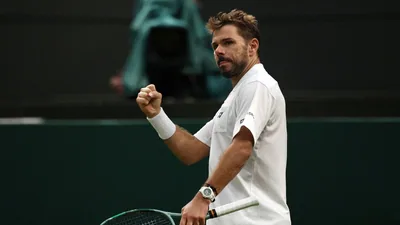
Some Tennis careers are remembered through trophies. Others become unforgettable because of the moments they create.
Stan Wawrinka’s relationship with Wimbledon belongs firmly in the second category.
Unlike players whose games seemed naturally built for grass, Wawrinka spent nearly two decades challenging a surface that never fully rewarded his strengths. Yet that struggle became part of his identity—and ultimately part of what made his Wimbledon story memorable.
As the Swiss veteran stepped onto the grass courts for the final time in 2026, the tournament became the closing chapter of one of modern tennis’s most admired careers.
His farewell match delivered everything people had come to associate with him: intensity, drama, resistance, and refusal to surrender.
Although Wimbledon never became his kingdom, Wawrinka ensured it would remember his name.
Why Wimbledon Was Always Stan Wawrinka’s Toughest Challenge
Every great player has a surface that amplifies strengths and another that exposes limitations.
For Wawrinka, grass courts represented both challenge and opportunity.
His game relied heavily on:
- Powerful baseline exchanges
- Heavy topspin
- One-handed backhand acceleration
- Extended rally construction
- Physical endurance
Grass historically rewards different traits:
- Lower ball bounce
- Fast points
- Efficient serving
- Net transitions
- Shorter rallies
That contrast made Wimbledon an unusual stage for Wawrinka.
Yet instead of avoiding the challenge, he returned year after year and gradually turned resistance into identity.
The Numbers Behind Stan Wawrinka’s Wimbledon Career
| Category | Career Record |
|---|---|
| Wimbledon Appearances | 19 |
| Total Match Record | 23–19 |
| Best Result | Quarter-final |
| Final Wimbledon Season | 2026 |
| Playing Style | Aggressive Baseline |
Those numbers tell only part of the story.
Wawrinka’s true legacy was built in long evenings, difficult rallies, and matches that stretched both body and emotion.
2005: The Beginning of a 19-Year Journey
At just twenty years old, Wawrinka entered Wimbledon’s main draw for the first time.
His opening-round victory offered a glimpse of the qualities that would define his career—patience, resilience, and competitive toughness.
Although his run ended early, the tournament introduced fans to a player who would continue returning despite difficult results.
That persistence became one of his strongest trademarks.
2009: The Match That Introduced Wimbledon to Wawrinka’s Fighting Spirit
One of his earliest memorable Wimbledon moments arrived in a dramatic third-round battle that tested endurance and focus.
Playing in fading conditions, Wawrinka refused to disappear quietly.
The match became symbolic of something bigger than victory.
It showed British audiences a player willing to stay uncomfortable longer than his opponents.
His reputation as a fan favourite started to grow.
The Centre Court Battle That Proved He Belonged
Wawrinka’s clashes on major stages repeatedly demonstrated that grass could not erase his competitive edge.
One particularly memorable Centre Court marathon became part of Wimbledon folklore.
Long rallies, physical exchanges, and emotional momentum swings created a match remembered less for the final result and more for its intensity.
Wawrinka repeatedly showed a trait that separated him from many players:
He made opponents earn every point until the final ball.
2014 and 2015: The Years Wimbledon Nearly Became His Tournament
The middle phase of Wawrinka’s career produced his strongest Wimbledon performances.
Quarter-final appearances proved that his game could evolve and succeed even on challenging conditions.
Those seasons represented a breakthrough.
His movement improved.
His serving became more efficient.
His confidence grew.
For a moment, Wimbledon stopped feeling impossible.
The Swiss Comparison Nobody Could Escape
Every Wimbledon conversation involving Wawrinka eventually returned to another Swiss legend.
But comparing careers sometimes hides what made each unique.
| Stan Wawrinka | Classic Wimbledon Style |
|---|---|
| Power baseline game | Fast transition game |
| Heavy topspin | Low-risk efficiency |
| Long exchanges | Short point creation |
| Emotional intensity | Controlled rhythm |
| Physical battles | Grass adaptability |
Wawrinka succeeded differently.
His victories felt earned through struggle rather than effortless control.
The Final Wimbledon Match: Four Hours That Captured an Entire Career
Wawrinka’s final Wimbledon appearance reflected his career perfectly.
Nothing came easy.
Nothing ended quickly.
Every set demanded another response.
The opening-round marathon stretched beyond four hours and pushed both players into repeated tiebreak battles.
Even in farewell, Wawrinka refused a simple exit.
His final performance reminded fans of what made him beloved:
- Competitive courage
- Refusal to quit
- Physical endurance
- Shot-making under pressure
- Emotional authenticity
The standing ovation at the end felt less like applause for one match and more like appreciation for nineteen appearances built on persistence.
Why Stan Wawrinka’s Wimbledon Story Matters Beyond Results
Sports often celebrate winners.
But careers like Wawrinka’s remind audiences that greatness can also come from consistency, adaptation, and refusal to disappear when conditions are unfavourable.
He never dominated Wimbledon.
He never became synonymous with grass.
Yet he created something equally valuable:
A career that audiences respected because every appearance felt honest.
The Legacy of “Stan the Man”
When fans remember Stan Wawrinka, they will remember more than statistics.
They will remember explosive backhands, impossible recoveries, emotional celebrations, and battles that lasted longer than expected.
His Wimbledon record may never sit among the tournament’s most decorated names.
But his journey will remain one of its most human.
He arrived as an outsider to the surface.
He left as one of its most respected fighters.
Conclusion
Stan Wawrinka’s final Wimbledon appearance closed a remarkable nineteen-year relationship with one of tennis’s most demanding stages.
His story was never about effortless victories or perfect compatibility.
It was about persistence, adaptation, and competing with conviction regardless of circumstances.
In the end, Wimbledon may not have been his easiest tournament—but it became one of his most meaningful stages.
And perhaps that makes the farewell even more memorable.
For breaking news and live news updates, like us on Facebook or follow us on Twitter and Instagram. Read more on Latest Sports on thefoxdaily.com.






COMMENTS 0