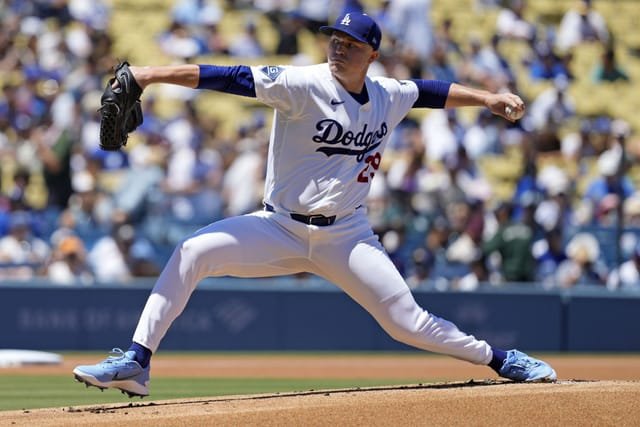
Tarik Skubal contract talks are becoming an increasingly important storyline as the Los Angeles Dodgers prepare for the final stretch of the 2026 MLB season and the possibility of another difficult collective bargaining period approaches. Reports indicate that Skubal would prefer to have his long-term future settled before the current collective bargaining agreement expires on December 1, a development that has triggered sharp reactions from fans online.
The 29-year-old left-hander is playing the final season of his current team control after joining the Dodgers from the Detroit Tigers at the August trade deadline. His 2026 salary was established at $32 million after a high-profile arbitration process, putting him among the highest-paid players for a single arbitration season.
At first glance, wanting a contract before a potential lockout may look like a straightforward financial decision. However, the situation is more complicated. Skubal is approaching free agency at an age when elite starting pitchers can command enormous commitments, while the expiration of the current labor agreement introduces uncertainty for both players and clubs. The real question is not simply whether Skubal wants to get paid. It is whether both sides believe locking in a deal before the labor uncertainty is worth sacrificing the flexibility that comes with waiting.
Why Tarik Skubal’s Contract Situation Matters Now
Skubal’s situation is unusual because several major forces are colliding at the same time: his impending free agency, his recent move to Los Angeles, the Dodgers’ championship ambitions and the approaching expiration of the current collective bargaining agreement.
For a player, free agency normally provides maximum leverage. Multiple teams can compete for his services, potentially pushing the value and length of a contract higher. A pre-free-agency extension can remove some of that uncertainty but replaces it with guaranteed financial security.
That distinction is particularly important for a starting pitcher. Pitchers carry an obvious physical risk because their value depends heavily on maintaining velocity, command, durability and workload. A long-term agreement can protect a player from a sudden decline or injury, while a club accepting that risk receives certainty over an important rotation piece.
Skubal therefore has two competing paths. He can enter free agency and allow the market to determine his value, or he can negotiate an agreement before the labor environment becomes less predictable.
What Skubal’s $32 Million 2026 Salary Tells Us
Skubal’s one-year, $32 million salary for 2026 is an important piece of the larger contract discussion because it demonstrates the value already attached to his services.
The figure came after arbitration, meaning the pitcher entered the season with considerable earning power before reaching unrestricted free agency. His next contract would operate under a very different market mechanism because interested clubs could compete directly for his services.
That does not automatically mean his next deal must be dramatically larger in every respect. Contract length, guarantees, incentives, options and the player’s age all influence how teams value a pitcher.
The more important point is that Skubal is not entering the market as an unknown starter hoping to establish himself. He has already built a reputation as a frontline pitcher, which gives him considerable negotiating leverage.
Why Fans Are Calling the Reported Strategy “Greedy”
The online reaction illustrates a familiar disconnect between sports economics and fan perception.
Some fans interpreted the reported desire to complete a contract before a possible lockout as another example of a highly paid athlete trying to maximize his earnings. Others questioned why a player earning $32 million for one season would need to prioritize another enormous contract so quickly.
But that interpretation overlooks the basic economics of professional baseball.
A player’s career can change dramatically because of one injury or one difficult season. Unlike ordinary employment, a starting pitcher’s earning window is heavily concentrated into a relatively short period. The difference between signing a guaranteed contract and entering an uncertain offseason can be worth far more than the difference between two headline salary numbers.
There is also an important distinction between wanting a contract and demanding one. Reports about a player’s preference do not mean negotiations have reached an advanced stage, nor do they guarantee that the Dodgers or another team will agree to his preferred terms.
Potential MLB Lockout Adds a Different Layer of Risk
The expiration of the collective bargaining agreement creates uncertainty because baseball’s labor system depends on negotiations between MLB and the MLB Players Association.
A lockout can affect offseason activity, transactions and negotiations, depending on the circumstances and rules governing the dispute. That uncertainty is particularly relevant for a free agent whose value depends on multiple clubs being able to compete for his services.
From Skubal’s perspective, completing a deal before that uncertainty arrives could provide guaranteed security. From a team’s perspective, however, committing significant money before the next labor agreement is finalized could carry its own risks.
This explains why the fan criticism that teams would be “stupid” to sign him before a new CBA is agreed upon is not necessarily a universal baseball conclusion. Clubs and players may calculate the risks differently.
The Dodgers Have a Major Decision to Make
The Dodgers are in a particularly interesting position because they acquired Skubal with championship expectations already attached to the season.
The organization does not have to decide solely whether Skubal is a good pitcher. It has to determine whether he fits its long-term roster construction.
That distinction matters.
A team can believe a pitcher is worth a major contract while still deciding that the timing, length or financial structure is unsuitable. The Dodgers must balance a potential Skubal extension against their existing commitments and future roster needs.
There is also a competitive argument for acting early. If the Dodgers believe Skubal is a foundational part of their rotation, keeping him away from the open market could eliminate the possibility of a bidding war involving other contenders.
Skubal’s Dodgers Performance Adds Another Variable
The timing of the contract conversation is particularly interesting because Skubal’s transition to Los Angeles has not yet completely replicated the dominance he showed with Detroit.
That does not erase his previous track record, but it gives the Dodgers another piece of information before committing to a long-term agreement.
Every start between now and the end of the season can therefore carry additional significance. The Dodgers will be evaluating more than strikeouts and earned runs. They will also be looking at how Skubal handles pressure, workload, opposing lineups and the expectations attached to pitching for a championship contender.
The pitcher himself has already demonstrated that he expects more from his performances.
Following the Dodgers’ 6-2 loss to the Milwaukee Brewers, Skubal expressed frustration with his pitch count after five innings. He ultimately returned for the sixth and finished with a career-high 109 pitches, allowing two runs, one earned, on seven hits while recording seven strikeouts and two walks.
His comments afterward emphasized efficiency and pitching deeper into games. That mindset is relevant to his contract value because durability and workload are especially important when evaluating an elite starting pitcher for a long-term commitment.
Why the Brewers Loss Does Not Define His Contract Value
It would be easy for fans to connect Skubal’s difficult outing with the contract discussion, but that would be an overly simplistic way to evaluate a player.
One game should not determine the value of a pitcher with an established body of work.
The more meaningful question is whether Skubal can consistently perform at the level expected of a frontline starter. Teams considering a major long-term contract will examine a much broader sample than one loss.
That is particularly important for the Dodgers because their immediate objective is winning another championship. Manager Dave Roberts’ postgame frustration, including his comment that the performance was not representative of the team’s “pedigree,” highlights the organization’s expectations.
For Skubal, the remaining regular-season schedule is therefore about more than statistics. It is also an opportunity to demonstrate that his previous success translates into the highest-pressure environment in baseball.
Pre-Lockout Deal vs. Free Agency: The Real Choice
| Option | Potential Advantage | Potential Risk |
|---|---|---|
| Sign before the CBA expires | Immediate financial security and protection from future uncertainty | Could leave potential free-agent bidding leverage unused |
| Enter free agency | Multiple teams could compete for his services | Labor uncertainty or market changes could complicate negotiations |
| Short-term deal | Allows Skubal to return to the market sooner | Provides less long-term financial security |
| Long-term deal | Maximum guaranteed security and stability | Creates long-term commitment for both player and team |
The table shows why there is no obvious winner in the timing debate. Skubal has to balance certainty against upside, while the Dodgers have to balance competitive value against financial flexibility.
The Biggest Factor Could Be the Next CBA
The most overlooked element in this entire discussion is that Skubal’s contract is being evaluated against a changing economic environment.
Collective bargaining agreements determine important parts of baseball’s financial framework. Any changes negotiated between MLB and the players’ union could influence how clubs approach payroll and how players evaluate future contracts.
That creates an unusual incentive for both sides.
Skubal may prefer certainty before the rules potentially change. The Dodgers may prefer to understand those rules before making a major commitment.
Neither position is irrational.
In fact, the tension between those two approaches could determine whether a deal happens before December 1 or whether Skubal reaches the open market.
Scott Boras Factor Could Also Matter
Fan reactions have also focused on Skubal’s representation, with some suggesting that agent Scott Boras would naturally push for the best possible financial outcome.
That expectation is not surprising. An agent representing an elite free agent has an obvious responsibility to maximize the player’s contractual position.
However, maximizing value does not always mean waiting for the highest possible offer.
Sometimes the smartest strategy is to secure a massive guaranteed contract before circumstances outside the player’s control become unpredictable. A labor dispute, injury or unexpected market contraction can change negotiations quickly.
That makes the reported desire for a pre-lockout agreement more understandable, even if fans remain skeptical.
What Happens If the Dodgers Do Not Sign Skubal?
If the Dodgers decide against extending Skubal, the pitcher could enter free agency with significant leverage.
His previous performance with Detroit, his age and his status as an established starting pitcher would make him an attractive target for clubs searching for frontline rotation help.
The Dodgers would then have to compete with other teams if they wanted to bring him back.
That scenario could ultimately produce a higher price than an extension negotiated before free agency. On the other hand, the Dodgers would have more information about the labor environment and potentially more clarity regarding their own roster and payroll plans.
In other words, waiting could either save the organization from an overly aggressive commitment or force it into an expensive bidding competition.
What Skubal’s Situation Could Mean for Other Free Agents
The Skubal situation may also become an early indicator for other major free agents approaching the 2026-27 offseason.
If an elite player successfully secures a major contract before the CBA deadline, other stars could view that as evidence that early negotiations provide valuable protection.
Conversely, if teams avoid significant commitments until the labor situation becomes clearer, the market could slow down considerably.
That makes Skubal’s situation worth watching even for fans who do not support the Dodgers or have no particular interest in his eventual destination.
His contract could become part of a much larger offseason trend involving player security, team spending and the future economic structure of MLB.
Prediction: Expect the Contract Debate to Intensify After the Season
The most logical outcome is that Skubal’s market value will become clearer once the regular season and postseason are complete.
If he delivers dominant performances for the Dodgers during their championship push, his leverage could increase significantly. If his transition to Los Angeles remains inconsistent, teams may become more cautious about committing to a massive long-term deal.
The Dodgers also have a difficult calculation to make. Signing him early could eliminate competition and provide rotation stability. Waiting could provide more information but expose the organization to a broader market.
That is why the coming months could be more important than the current social-media debate.
Tarik Skubal Contract Outlook: What Fans Should Watch
- Skubal’s performance with the Dodgers: His final stretch of the season will influence how teams view his immediate value.
- Durability and workload: Clubs will closely evaluate his ability to consistently handle a starter’s workload.
- Dodgers’ postseason results: A strong playoff run could strengthen the argument for keeping him as a key part of the rotation.
- Free-agent competition: The number of teams looking for frontline pitching could dramatically affect his market.
- CBA negotiations: The direction of MLB’s labor talks could become one of the biggest factors in the timing of any contract.
Conclusion: Greed or Smart Risk Management?
The criticism aimed at Tarik Skubal after reports of his preference for a pre-lockout contract reflects the emotional side of professional sports. Fans naturally see enormous salaries differently from players whose careers can change overnight.
But labeling the reported strategy as simple greed misses the economic reality of MLB free agency.
Skubal is approaching unrestricted free agency after earning $32 million in 2026 and establishing himself as one of baseball’s most highly valued starting pitchers. The approaching expiration of the collective bargaining agreement adds another layer of uncertainty to a decision that would already be complicated.
For Skubal, an early agreement could guarantee security before the baseball economy potentially changes. For the Dodgers, signing him early could secure an elite rotation piece while avoiding a bidding war. But waiting could also provide valuable information and greater clarity about the next labor agreement.
The most important takeaway is that neither side has to be viewed as irrational. This is a negotiation involving enormous financial stakes, career risk and an uncertain labor environment.
Whether Skubal ultimately stays in Los Angeles, tests free agency or signs a deal before the CBA expires, his contract situation could become one of the defining stories of the 2026-27 MLB offseason.
For breaking news and live news updates, like us on Facebook or follow us on Twitter and Instagram. Read more on Latest MLB on thefoxdaily.com.






COMMENTS 0