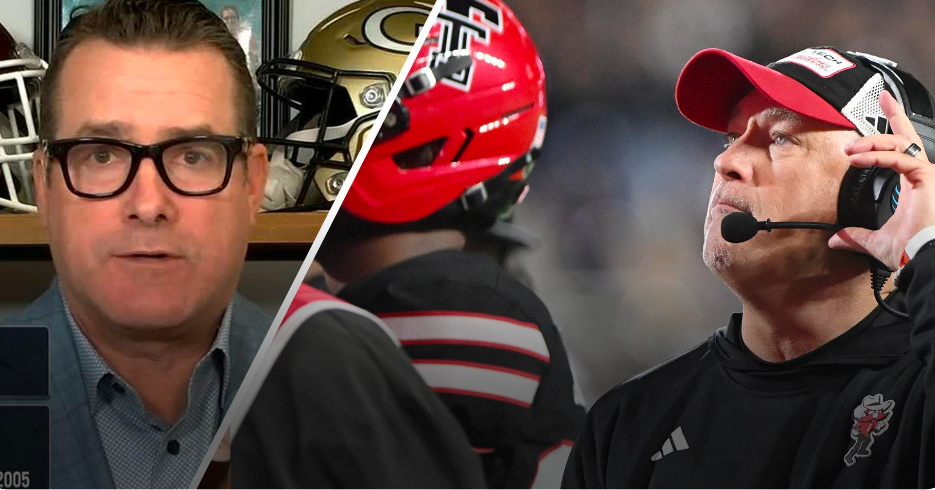
For generations, Texas Tech University has lived with the feeling that it was treated as an outsider in its own state. While the University of Texas and Texas A&M benefited from the wealth generated by West Texas oil, the Red Raiders watched from the sidelines, fighting for recognition, resources and a place among the state’s most powerful football programs.
Now, with billionaire oil executive Cody Campbell helping transform Texas Tech through major investments, aggressive recruiting and a high-profile approach to college athletics, the university is pushing back against the established order. The old resentment has become part of a new identity: Texas Tech is no longer content with being overlooked. It wants to compete with the biggest programs in College Football, even if that means becoming a target.
The story behind the oldest grudge in football stretches far beyond the playing field. It involves oil wealth, political battles, conference realignment, decades of sporting frustration and a West Texas community determined to prove that it belongs.
The Oil Discovery That Created a Lasting Divide
The roots of Texas Tech’s long-standing frustration can be traced to one of the most significant oil discoveries in American history. On May 28, 1923, after 646 days of drilling in difficult conditions, the Santa Rita No. 1 well struck oil in West Texas.
The discovery revealed the enormous commercial potential of the Permian Basin and helped transform the region into one of the country’s most important oil-producing areas. The oil wealth also created lasting financial benefits for two major Texas universities: the University of Texas and Texas A&M.
The Permanent University Fund, established using public land resources, became a major source of financial support for those institutions. Texas A&M eventually secured a one-third share after years of disputes with UT. Texas Tech, however, received nothing from the fund.
The university had been chartered only months before the Santa Rita discovery. Its supporters believed that West Texas deserved a fair share of the resources generated by the region, particularly because Texas Tech represented a large and growing part of the state.
Instead, the discovery created a financial divide that would shape the university’s relationship with its wealthier rivals for generations.
Preston Smith’s Fight for Texas Tech
One of the earliest political figures to challenge the arrangement was Preston Smith, a West Texas resident who later became governor of Texas. After arriving in Lubbock in 1930 with just $50 in savings, Smith built a successful business career and entered politics.
He was elected to the Texas House of Representatives in 1944 and quickly became an advocate for Texas Tech. Smith argued that the university deserved access to the wealth generated by the Permanent University Fund and proposed a constitutional amendment that would distribute the money more broadly among the state’s universities.
His proposal faced strong resistance. Supporters of the University of Texas argued that reducing its share would damage its ambitions to become one of America’s leading universities. Smith rejected that argument, believing that UT was simply unwilling to accept the competition Texas Tech represented.
In 1947, he said: “They don’t like the competition Tech is giving them. And they’re determined to do something about it if they can.”
Smith eventually became lieutenant governor and the first West Texan elected governor, but his campaign to change the fund’s distribution did not succeed. A later constitutional amendment to include Texas Tech also failed in 1974.
For Red Raiders supporters, the repeated defeats reinforced the belief that the state’s established institutions had more influence and political support than their university.
Why West Texas Became Part of the Texas Tech Identity
Texas Tech’s location in Lubbock has always played an important role in its culture. The city sits in an enormous and relatively isolated region, surrounded by long stretches of open land, agricultural communities and oil-producing areas.
Travel to major Texas cities can require several hours on the road. The weather can be unforgiving, with dust storms, strong winds, extreme summer heat and sudden winter cold fronts shaping everyday life.
For many students and alumni, that isolation is not simply a disadvantage. It is part of what makes Texas Tech different. Supporters often describe the university as a place where people build their own opportunities rather than waiting for outside recognition.
The region’s cultural identity is closely connected to the university. Music, ranching, agriculture, oil exploration and college football all contribute to the character of West Texas. Many students arrive in Lubbock from smaller communities where Texas Tech is the central institution around which local pride is built.
That connection has helped create a particularly strong sense of loyalty among Red Raiders supporters. When outsiders criticize Lubbock or question the university’s standing, fans often see those comments as another reason to stand together.
Texas Tech’s Long Struggle for Recognition
Texas Tech began playing football in 1925, but it spent decades competing outside the most influential conferences. Its supporters wanted opportunities to face major programs, but the university’s location and perceived academic standing made acceptance difficult.
The Red Raiders eventually gained entry into the Southwest Conference in 1956 after years of campaigning. The breakthrough was celebrated across Lubbock, with supporters viewing it as a major victory for the university and the wider West Texas region.
However, joining a major conference did not immediately turn Texas Tech into a national football power. The program struggled to maintain consistent success and finished in the Associated Press Top 25 only twice over the next three decades.
The arrival of coach Spike Dykes in 1984 helped change the program’s direction. Dykes built competitive teams, developed a reputation for getting the most out of his players and delivered important victories against rivals, including Texas.
Another major turning point came in 2000, when Mike Leach arrived in Lubbock and introduced his Air Raid offensive system. His unconventional coaching style and entertaining public personality gave Texas Tech a national identity.
Leach led the Red Raiders to bowl games in each of his 10 seasons. His teams regularly challenged stronger programs, and the 2008 victory over No. 1 Texas became one of the defining moments in school history.
In that game, Michael Crabtree caught a dramatic touchdown pass with one second remaining to give Texas Tech a 39-33 victory. For a fan base that had spent decades fighting for recognition, the result represented much more than a football win.
Cody Campbell Emerges as Texas Tech’s Financial Powerhouse
The modern transformation of Texas Tech football is closely connected to Cody Campbell, an oil and gas entrepreneur, former Red Raiders offensive lineman and influential university supporter.
Campbell grew up in the Texas Panhandle and played for Texas Tech under Mike Leach from 2000 to 2004. After graduating, he entered the mineral rights business with longtime friend John Sellers. Their early deals helped establish the foundation of Double Eagle Energy Holdings, which eventually became a major player in the oil and gas industry.
Unlike traditional boosters who often prefer to operate privately, Campbell has embraced a public role. He speaks openly about the financial realities of modern college football, uses social media to challenge critics and has become one of the most recognizable figures associated with Texas Tech.
He also helped establish the Matador Club, the university’s name, image and likeness collective, which grew to more than 3,500 members. The collective helped Texas Tech compete for players in an increasingly expensive recruiting environment.
Campbell’s approach reflects a broader change in college athletics. With NIL opportunities and the transfer portal reshaping roster construction, wealthy supporters can have a direct influence on a program’s ability to attract talent.
For Campbell, accepting those new realities was essential. He described Texas Tech’s approach by saying: “We were the first ones to actually come to the realization that this is just our reality. We’re going to be living in and playing by these rules — or no rules — as the case actually was.”
He believes that Texas Tech can no longer afford to wait for traditional power brokers to create opportunities for the university.
The Transfer Portal Changes the Red Raiders’ Future
Texas Tech’s financial commitment began producing visible results in recruiting. Before the 2025 season, the Red Raiders assembled one of the country’s most aggressive transfer portal classes, bringing in 26 transfers in a group ranked second by ESPN.
The program’s growing resources allowed it to compete for players who previously might have chosen established national powers. The university also benefited from the recruiting work of head coach Joey McGuire, whose energetic approach helped turn financial opportunities into player commitments.
Texas Tech enjoyed a breakthrough season, finishing the regular season 12-1, winning its first outright conference championship since 1955 and reaching the College Football Playoff. The program also produced a record nine NFL draft selections, matching the number it had managed across the previous five seasons combined.
The playoff campaign ended with a 23-0 defeat to Oregon in the Orange Bowl quarterfinal. Even so, the appearance gave the university a new level of national visibility and showed supporters what the program could achieve with greater resources.
Texas Tech’s success also raised expectations. A fan base that had spent years celebrating occasional upsets was suddenly discussing conference championships, playoff appearances and the possibility of competing for a national title.
The Brendan Sorsby Controversy Tests the Program
Texas Tech’s aggressive approach faced a major challenge when quarterback Brendan Sorsby became ineligible following an NCAA investigation involving more than 9,000 alleged impermissible wagers. The reported betting activity included more than 40 wagers involving Indiana football during his time at the school in 2022.
Campbell and McGuire publicly supported Sorsby as he entered treatment for gambling addiction and challenged the NCAA’s eligibility decision. A temporary injunction granted by retired Fort Worth judge Ken Curry on June 8 allowed Sorsby to remain eligible to play for Texas Tech while the dispute continued.
The ruling triggered criticism from several figures across college football. Big 12 commissioner Brett Yormark warned that the decision could have broader consequences for college athletics, while athletic directors and other commentators questioned the precedent it might create.
Campbell responded publicly, particularly after Georgia athletic director Josh Brooks reportedly advised his program not to schedule Texas Tech. Campbell used social media to challenge the criticism, further increasing attention around the university.
The situation escalated when the Big 12 filed a federal lawsuit, prompting Texas Tech to step back from its effort to rely on the temporary ruling.
For critics, the episode reinforced the perception that Texas Tech was willing to push boundaries in pursuit of success. Campbell, however, viewed the backlash as another example of the resistance the university faces when it tries to compete with more established programs.
“You corner somebody and they’re going to fight back,” Campbell said. “Especially if they’re a West Texan.”
The Texas Rivalry and a History of Public Feuds
The rivalry between Texas Tech and the University of Texas is built on more than football results. It reflects a broader struggle over financial resources, political influence, conference membership and the status of West Texas within the state.
One of the most memorable modern moments came in 2022, when Texas Tech defeated the Longhorns in Lubbock. For fans such as Lugene Pickering, who had spent decades waiting for victories over Texas, the result carried deep emotional significance.
Texas later moved to the SEC, and the teams’ final scheduled meeting came in 2023 in Austin, where the Longhorns won 57-7. With no games between the programs currently scheduled moving forward, the rivalry has become more symbolic than a regular fixture on the football calendar.
That has not stopped Texas Tech supporters from displaying their feelings. Merchandise featuring slogans such as “Beat Texas” and “Horns Down” remains visible around campus and local stores.
The tension has also played out through public comments from the two programs’ leaders. When Texas coach Steve Sarkisian questioned the strength of Texas Tech’s schedule, Campbell responded by challenging the Longhorns to arrange a game against the Red Raiders.
His response included a pointed reference to Texas’ mascot, Bevo, and a warning that the Longhorns should have been prepared for the reaction they would receive after criticizing West Texas.
Campbell’s confrontational style is not universally popular, but it has become part of the public identity of a program that wants to be taken seriously.
Texas A&M and the Permanent University Fund Dispute
Although Texas receives much of the attention in the modern rivalry, Texas A&M also occupies an important place in Texas Tech’s history of resentment.
The Aggies successfully secured a share of the Permanent University Fund after years of disputes with UT. Texas Tech, despite its location in the oil-rich western part of the state, never received a comparable allocation.
That difference remains a powerful symbol for Red Raiders supporters. They argue that their university had to build its football program and facilities without the same historical financial advantages enjoyed by its larger rivals.
Texas Tech has increasingly tried to close that gap through private donations, NIL resources and major investments in athletic infrastructure.
Its supporters do not necessarily expect the historical differences to disappear. Instead, they want the university to compete on a level where those differences no longer determine its future.
Big Spending and the Future of College Football
Texas Tech’s rise is taking place during a period of major financial change across college sports. NIL payments, revenue sharing and transfer portal competition have made roster spending a central part of building successful football programs.
Industry estimates cited in the supplied report suggest that around 30 football teams have player payrolls of at least $30 million, with roughly half exceeding $40 million. Texas Tech is among the programs operating near the top of that spending range within the Big 12.
Campbell has also become involved in the political debate over how college athletics should be governed. He has supported the Protect College Sports Act, which seeks to establish clearer rules around payments to athletes and the structure of college sports.
The proposed legislation would establish a framework for player compensation, including a reported salary cap of $49 million. It would also place limits on the size of Power Four conference membership.
Campbell argues that college football’s current financial direction could create serious problems for smaller programs and non-revenue sports. He has warned that universities may eventually struggle to maintain funding for women’s sports and Olympic programs as football spending increases.
“I love my school, but I love the whole ecosystem. It doesn’t just need to be a few schools that have it all, and that’s what we’re headed toward,” he said.
His position presents an unusual contrast: Texas Tech is spending aggressively to compete in the current system while Campbell is also advocating rules that could restrict the financial arms race.
Sports law expert Gabe Feldman has acknowledged the importance of accepting restrictions, saying: “I think everybody wants strict rules until they’re going to be the victim of them.”
New Facilities Reflect Texas Tech’s Ambitions
Texas Tech’s investment in football is not limited to player recruitment. The university has also expanded its facilities, giving athletes access to infrastructure designed to compete with the country’s leading programs.
The Womble Football Center is a major part of that transformation. The four-story facility covers approximately 340,000 square feet and includes a large weight room, indoor training space, medical facilities and recovery areas.
Players have access to hydrotherapy pools, cryotherapy and hyperbaric chambers, red-light therapy beds and other recovery resources. The building also includes a gaming lounge, barbershop, podcast studios and an auditorium.
The Patrick Mahomes walk-through room features an indoor field and a large LED screen with virtual-reality capabilities, providing another tool for preparation and tactical work.
For Texas Tech players, the new facilities represent a significant change from the resources available to earlier generations. Linebacker John Curry described the environment as a resort for football, reflecting the scale of the university’s investment.
The facilities also help communicate a message to recruits: Texas Tech is prepared to provide the resources needed to compete at the highest level.
From Underdogs to the Bad Guys
Texas Tech’s changing position in college football has also affected how the program presents itself. For decades, the Red Raiders were comfortable being underdogs, taking pride in their outsider status and using criticism as motivation.
Now, the university is increasingly embracing a more confrontational identity. A pregame video introduced during the 2026 season declared: “IT’S US VS. EVERYBODY.” Head coach Joey McGuire followed with the message: “So we’re the bad guys now. GOOD.”
The slogan reflects a program that no longer wants sympathy for its difficult history. Instead, Texas Tech wants opponents to recognize it as a serious competitor.
The shift has not been without criticism. Some supporters prefer the university’s traditional underdog image, while others believe that being disliked is an acceptable consequence of finally having the resources to compete.
For fans who remember years of struggling for conference recognition, the new attention is a welcome change. The challenge is making sure that the program’s ambitions are supported by consistent performances on the field.
Joey McGuire’s Team Faces New Expectations
Head coach Joey McGuire has been central to Texas Tech’s transition. His ability to connect with players, energize the fan base and support the university’s aggressive recruiting strategy has helped build momentum around the program.
However, the expectations surrounding the team have changed. A defeat that might once have been accepted as part of a difficult season now attracts significant criticism.
After a loss to Cincinnati, Campbell publicly expressed disappointment, while McGuire acknowledged the responsibility that comes with coaching a heavily invested program.
Texas Tech responded with an important victory over Arizona. Quarterback Thomas Castellanos helped spark the offense, throwing for 144 yards and two touchdowns while adding 117 rushing yards and another score. The Red Raiders also produced 328 rushing yards in the game.
Castellanos later delivered another major performance against West Virginia, passing for 362 yards and five touchdowns while adding 102 rushing yards. His performances helped revive the team’s ambitions after the Sorsby situation and the loss to Cincinnati.
Still, the increased investment means that Texas Tech will be judged by a higher standard. The university is no longer simply trying to prove that it can compete. It is expected to win.
Can Texas Tech Become a National Power?
Texas Tech’s transformation has already changed the way the university is viewed nationally. The program has reached the College Football Playoff, attracted highly rated transfers and invested heavily in its facilities and recruiting operation.
The university has also made progress in high school recruiting. Its reported top-10 recruiting class includes five-star defensive lineman Jalen Brewster, one of the highest-rated prospects in the country.
However, financial resources alone cannot guarantee long-term success. Texas Tech must continue developing players, maintaining coaching stability and competing against programs with similarly strong recruiting operations.
There is also the question of college football realignment. The future structure of the sport could create new opportunities for some programs while leaving others outside the most powerful conferences.
Campbell believes Texas Tech must remain prepared for every possibility. He has argued that conference decisions are ultimately driven by financial interests rather than personal relationships.
For the Red Raiders, the objective is to become valuable enough that the sport’s biggest decision-makers cannot overlook them.
The Old Grudge Is Still Alive
The history of Texas Tech is a story of persistence. From the early fight over the Permanent University Fund to the struggle for Southwest Conference membership and the modern battles over NIL and conference realignment, the university has repeatedly found itself fighting for recognition.
Cody Campbell’s financial influence has given the Red Raiders new tools, while Joey McGuire’s leadership has helped turn those resources into a competitive football program. The university now has the facilities, recruiting reach and financial backing to challenge opponents that once seemed out of reach.
But the old resentment has not disappeared. For many supporters, the rivalry with Texas remains unfinished, especially with the teams no longer meeting regularly on the football field.
Lugene Pickering expressed the feeling shared by generations of Red Raiders when she said she wished the teams could play one more time.
“Just one more time,” she said. “It won’t hurt. Too bad.”
That longing captures the heart of the oldest grudge in football. Texas Tech has spent a century trying to prove that it belongs among the state’s most powerful institutions. Now that it has the resources to compete, the next challenge is turning decades of frustration into sustained success on the field.
For breaking news and live news updates, like us on Facebook or follow us on Twitter and Instagram. Read more on Latest Sports on thefoxdaily.com.






COMMENTS 0