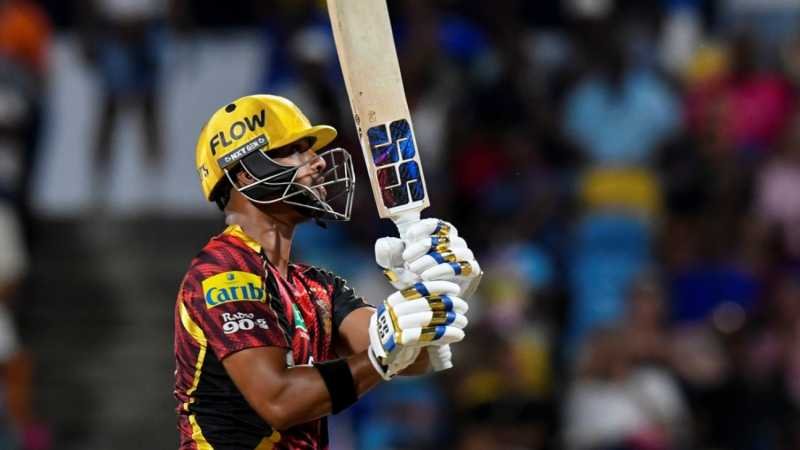
Trinbago Knight Riders produced a superb all-round bowling performance to defeat Barbados Tridents by 35 runs in the 27th match of the Caribbean Premier League 2026 at Bridgetown on September 5.
After posting 147 for 6 from their 20 overs, Trinbago defended the total convincingly as Barbados were dismissed for 112 in 18.3 overs. The victory was built around two contrasting performances: Nicholas Pooran supplied the attacking fireworks with a 37-ball 59, while Sunil Narine led a devastating spin attack that dismantled the Tridents’ top order.
The match was a reminder that T20 cricket is not always about enormous totals. On a challenging batting surface, one substantial innings can make the difference, particularly when it is followed by disciplined bowling.
Trinbago Knight Riders Win a Low-Scoring CPL Battle
The final margin of 35 runs tells only part of the story. Barbados were chasing 148, a target that initially appeared achievable in a T20 match, but their innings quickly moved away from them during the powerplay.
Narine struck repeatedly during the opening phase, and Akeal Hosein added another wicket in the sixth over. By the end of the powerplay, Barbados had reached only 35 for 4.
From that point, the required rate became increasingly difficult to manage. The Tridents never produced the sustained partnership needed to challenge the target.
Instead, Trinbago’s bowlers continued to attack the stumps, restrict scoring options and create pressure from both ends. The result was a controlled defence in which Barbados were eventually bowled out with nine deliveries still remaining.
Nicholas Pooran Produces the Match-Winning Innings
The foundation of Trinbago’s total was built by Nicholas Pooran, who produced the only sustained innings of real dominance during the match.
Interestingly, Pooran did not begin his innings at full speed. It took him 10 balls to score his first run as he assessed the conditions and worked out which areas of the ground could be attacked safely.
Once he settled, however, the left-hander changed the complexion of the innings.
His 59 came from just 37 balls and included seven sixes. The acceleration was particularly important because Trinbago had struggled to score consistently around him.
Pooran’s innings showed why experienced T20 batters often need to balance patience with aggression. Rather than forcing big shots immediately, he waited until he had adjusted to the surface before unleashing his power.
Pooran Turns the Momentum With Six-Hitting
Once Pooran found his rhythm, the boundary count began to rise rapidly.
A whip through the leg side off debutant Jakeem Pollard provided an early indication that he had found his range. The real acceleration came during the ninth over, when Pooran hit three consecutive sixes against Mujeeb Ur Rahman.
He repeated the feat in the 14th over, this time taking three sixes in succession off Gudakesh Motie.
Those bursts were crucial because they allowed Trinbago to recover from periods when the scoring rate had slowed considerably.
Pooran eventually finished with 59 from 37 balls, and his influence on the overall innings was striking. Trinbago scored 96 runs from 63 deliveries while Pooran was at the crease, compared with only 51 runs from the remaining 57 balls.
That split demonstrates how dramatically one batter can alter a T20 innings.
A Dropped Catch Gives Pooran a Second Chance
Pooran’s innings also contained a major moment of fortune.
He was dropped by Rivaldo Clarke at deep third while batting on 35 from 26 balls. The opportunity came off Jakeem Pollard, but Barbados could not complete the catch.
At that stage, Pooran was already well placed to influence the final total. His survival proved costly because he continued attacking and added another 24 runs after the dropped chance.
In a match decided by 35 runs, moments such as these can become extremely important. A successful catch could have forced Trinbago into another period of rebuilding, whereas Pooran’s continued presence allowed them to finish with a competitive total.
Colin Munro Provides Valuable Support
Although Pooran was the standout batter, Colin Munro also played an important supporting role.
Munro scored 38, helping Trinbago build a platform before Pooran’s late acceleration took over.
His contribution was especially valuable because the pitch did not appear to be an easy batting surface. Pooran needed time to adjust, and Munro’s innings helped ensure that Trinbago remained in position to post a defendable score.
The combination of Munro’s 38 and Pooran’s 59 gave Trinbago the stability and late acceleration required to reach 147 for 6.
Why 147 Became a Competitive Total
On paper, 147 may not look intimidating in a T20 match. But totals have to be judged in context.
The conditions made stroke-making difficult for much of the contest, and Barbados’ innings quickly confirmed that the pitch was not offering easy runs.
Trinbago’s bowlers also used the conditions intelligently. By taking early wickets, they ensured that Barbados could not simply settle into a controlled chase.
The target effectively became much larger once the Tridents lost four wickets inside the powerplay.
This is an important feature of T20 cricket: a target’s difficulty can change dramatically depending on wickets in hand. A team chasing 148 with eight or nine wickets available has a very different task from a team chasing the same score after losing four early wickets.
Sunil Narine Destroys Barbados in the Powerplay
Sunil Narine was the central figure in Trinbago’s defence.
The veteran spinner claimed three wickets during the powerplay, immediately disrupting the Tridents’ chase.
His bowling was especially effective because Barbados could not afford to spend too many deliveries simply defending. The required target demanded a reasonable scoring rate, but attacking against Narine created opportunities for wickets.
By the end of the powerplay, Barbados were 35 for 4, and the match had swung heavily in Trinbago’s favour.
Narine later returned to complete the final wicket, finishing with four wickets for just 12 runs.
Akeal Hosein Adds More Spin Pressure
Narine was not operating alone.
Akeal Hosein also struck during the powerplay, adding another important blow to an already struggling batting lineup.
The left-arm spinner’s contribution meant Barbados faced pressure from multiple angles rather than being able to focus solely on Narine.
That was one of Trinbago’s major tactical advantages. Instead of depending on one bowler to control the innings, they created a collective spin challenge that made it difficult for the Tridents to establish momentum.
Jyd Goolie Completes the Spin Strangle
Jyd Goolie added another three wickets with his offspin, ensuring that Barbados never recovered from the early collapse.
The combined figures of Trinbago’s spin quartet were impressive. Narine, Hosein, Usman Tariq and Goolie took eight wickets for 82 runs in 14.3 overs.
Usman Tariq was particularly economical, conceding only 25 runs from his four overs. In a low-scoring match, that kind of control can be just as valuable as taking wickets.
The spin attack therefore combined two essential T20 qualities: wicket-taking ability and run prevention.
Lahiru Kumara Provides Pace Support
While spin dominated the contest, Lahiru Kumara also played an important role with the ball.
The fast bowler took two wickets, including the dismissal of Sherfane Rutherford, who had been one of Barbados’ joint top scorers.
Kumara’s contribution prevented the Tridents from relying entirely on their lower order after the spin bowlers had broken the top and middle order.
The overall bowling performance showed the value of variety. Trinbago used spin to exploit the conditions while pace provided another method of attacking the batting lineup.
Barbados Tridents Never Find a Match-Defining Partnership
The biggest problem for Barbados was the absence of a substantial partnership.
Zachary Carter and Sherfane Rutherford both scored 21, making them the joint top scorers, but neither could convert their start into a significant innings.
In a chase of 148, Barbados needed at least one batter to stay at the crease for a prolonged period and combine with a partner.
Instead, wickets continued to fall at regular intervals.
That prevented the Tridents from building momentum and forced successive batters to start under increasing pressure.
By the time Narine returned to claim the final wicket, the innings had reached only 112 in 18.3 overs.
Match Turning Points
| Moment | Impact on the Match |
|---|---|
| Pooran takes time to settle | Allowed him to understand difficult batting conditions before attacking. |
| Pooran hits three sixes off Mujeeb | Rapidly changed Trinbago’s scoring momentum. |
| Pooran hits three more sixes off Motie | Helped push Trinbago toward a defendable total. |
| Pooran dropped on 35 | Gave Trinbago’s key batter another opportunity to accelerate. |
| Narine’s powerplay spell | Reduced Barbados to 35 for 4 and effectively controlled the chase. |
| Spin quartet maintains pressure | Prevented Barbados from building a substantial partnership. |
| Barbados bowled out for 112 | Confirmed a 35-run victory for Trinbago. |
The Importance of Bowling First-Class Discipline in T20 Cricket
Trinbago’s performance demonstrated that successful T20 bowling is not always about constant variations or attempting spectacular deliveries.
Their bowlers consistently attacked the weaknesses created by the match situation. Once Barbados lost early wickets, the pressure increased naturally because every additional wicket made the target more difficult to chase.
Narine’s ability to take wickets while maintaining control was particularly important. His four-wicket haul for 12 runs meant Barbados never had a realistic period of sustained acceleration.
That is the essence of a spin strangle: reduce scoring options, force batters into difficult decisions and allow pressure to produce wickets.
Pooran and Narine Offer the Perfect Contrast
The victory was shaped by two very different forms of T20 excellence.
Pooran provided explosive batting power. Narine delivered control and wicket-taking with the ball.
| Player | Performance | Match Impact |
|---|---|---|
| Nicholas Pooran | 59 off 37 balls, seven sixes | Provided the decisive acceleration for Trinbago. |
| Colin Munro | 38 runs | Helped establish the batting platform. |
| Sunil Narine | 4 wickets for 12 runs | Destroyed the chase and controlled the innings. |
| Jyd Goolie | 3 wickets for 20 runs | Maintained pressure through the middle overs. |
| Lahiru Kumara | 2 wickets for 30 runs | Added important pace-bowling breakthroughs. |
That balance is often what separates winning T20 sides from teams that rely too heavily on one department.
What Barbados Tridents Can Learn From the Defeat
For Barbados, the biggest concern is the batting collapse rather than the final margin alone.
Chasing 148 did not require an extraordinary batting performance. It required one or two meaningful partnerships and sensible risk management.
Instead, four wickets fell during the powerplay, leaving the middle order with too much work to do.
The Tridents will need to find ways to protect their top order from early collapses while also identifying batters capable of controlling an innings when conditions are difficult.
Against a bowling attack featuring Narine and several other effective spinners, shot selection and strike rotation become particularly important.
What the Victory Means for Trinbago Knight Riders
For Trinbago, this was more than simply another win in the CPL 2026 campaign.
The performance showed that the team can adapt to conditions rather than relying exclusively on high-scoring matches.
When the surface makes batting difficult, the ability to produce a competitive total and defend it through disciplined bowling becomes a major advantage.
Pooran’s innings provided the necessary batting difference, while Narine and the spin unit ensured that the opposition never got close to the target.
That combination could prove valuable as the tournament progresses and matches become increasingly important.
Conclusion: Pooran and Narine Deliver a Complete T20 Performance
Trinbago Knight Riders defeated Barbados Tridents by 35 runs after producing an impressive performance in a low-scoring CPL 2026 contest in Bridgetown.
Nicholas Pooran was the batting hero, scoring 59 from 37 balls with seven sixes after initially taking time to understand the conditions. His innings accounted for much of Trinbago’s scoring momentum and helped the team reach 147 for 6.
The bowlers then completed the job. Sunil Narine took four wickets for only 12 runs, including three during the powerplay, while Jyd Goolie claimed three wickets and the wider spin unit maintained relentless pressure.
Barbados could manage only 112 in 18.3 overs, with Zachary Carter and Sherfane Rutherford scoring 21 each but failing to produce the major partnership their chase required.
The result ultimately belonged to Trinbago’s balance. Pooran supplied the power, Narine supplied the control, and together they turned a modest total into a comfortable 35-run victory.
For breaking news and live news updates, like us on Facebook or follow us on Twitter and Instagram. Read more on Latest Cricket on thefoxdaily.com.






COMMENTS 0