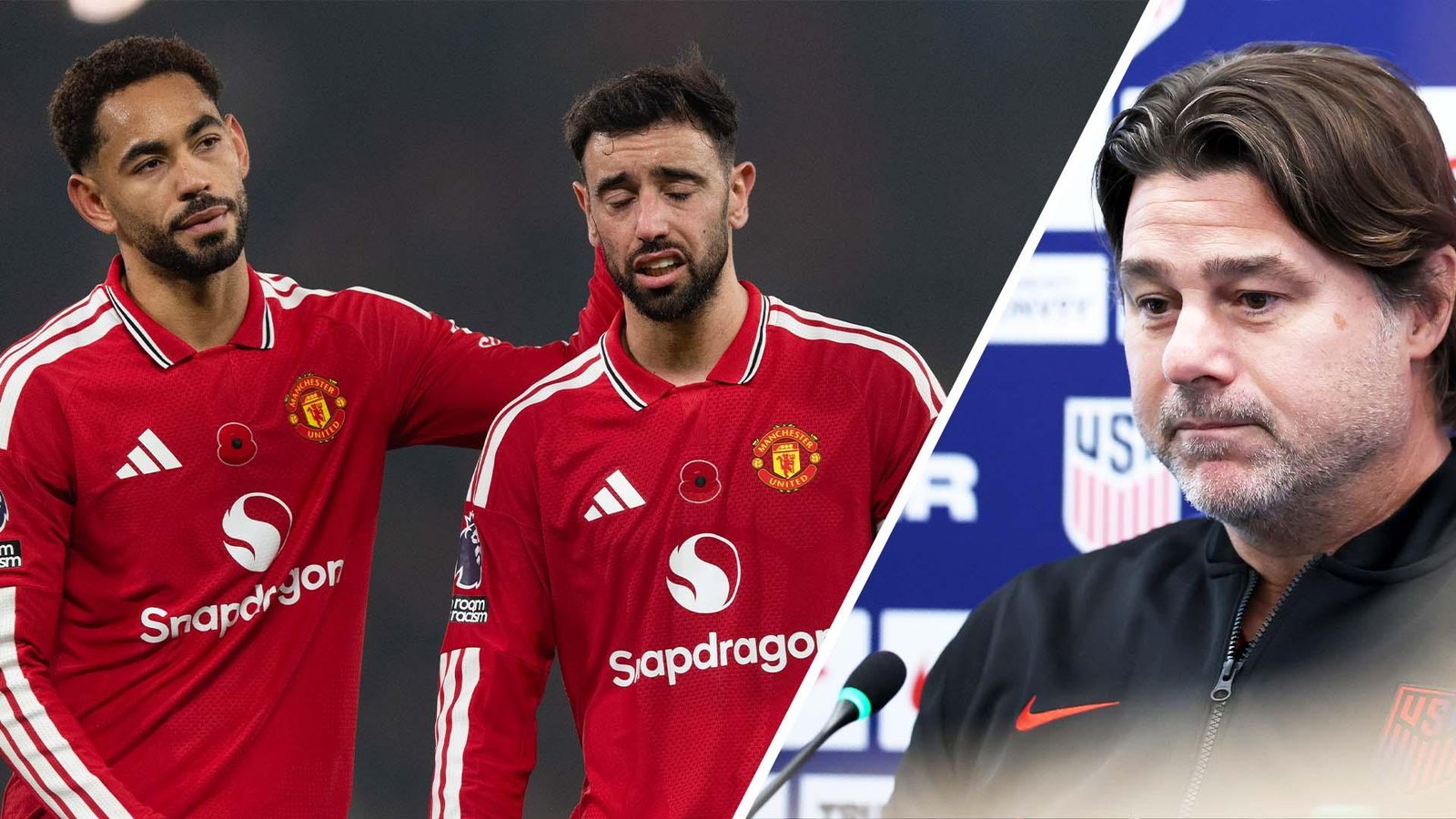
The United States men’s national team (USMNT) may not need another high-profile managerial appointment to continue its progress. After decades of searching for a revolutionary figure who could transform American Soccer, the national team has already established a tactical identity and developed a stronger pool of players. Its next manager may simply need to preserve that progress rather than attempt to rebuild the program from scratch.
The debate over the USMNT’s next head coach comes after Mauricio Pochettino‘s reported move to Manchester United. His appointment represented the kind of ambitious decision that American soccer supporters had demanded for years. However, the team’s recent tactical development and improvements in player quality suggest that the next step does not necessarily require another superstar manager.
USMNT’s Long Search for a Transformational Manager
American soccer has spent decades looking for someone capable of taking the men’s national team to the highest level. Before the 1998 World Cup, the U.S. Soccer Federation (USSF) commissioned Project 2010, a report of more than 100 pages that outlined a plan for the USMNT to win the 2010 World Cup.
The report’s cover featured an astronaut standing on the moon, holding an American flag in one hand and a photoshopped World Cup trophy in the other, with a soccer ball at his feet. Above the image were the words: “WE CAN FLY.”
One of the report’s coauthors was Carlos Queiroz, who would later manage Real Madrid and Portugal. Its introduction highlighted America’s ambition and ability to achieve major goals:
“Throughout history, Americans have many times demonstrated a remarkable ability to accomplish extraordinary goals. While Americans do not own a monopoly on inventiveness or problem solving, one fact sets them apart from the rest of the world. America’s collective resources and creativity are the greatest on earth.”
Despite those ambitions, the USMNT finished last at the 1998 World Cup. The federation also never hired Queiroz to implement the 113-page plan.
Another attempt to find a transformational manager came several years later. The USSF initially approached Jurgen Klinsmann, who rejected the opportunity before eventually accepting the job after years of discussions. Expectations were substantial, with media coverage presenting his appointment as an opportunity to transform American soccer.
The Associated Press described his responsibility clearly: “Klinsmann’s job is to transform U.S. football.” Reuters also highlighted the ambitions surrounding his arrival, writing: “As a former World Cup winner, Jurgen Klinsmann knows what it takes to rule the world. The United States has similar ambitions but have not come close to reaching their goals, so they have hired Klinsmann to teach them how.”
Klinsmann was eventually dismissed five years after his appointment. The situation became even more difficult in 2017 when the USMNT failed to qualify for its first World Cup since 1986.
Donna Shalala, then a USSF board member, called for change in a tweet: “Time for a revolution.” Taylor Twellman’s reaction on ESPN also became memorable: “What are we doing? What are we doing?”
The subsequent appointment of former USMNT player and MLS manager Gregg Berhalter did not end the debate over the team’s direction. After the Americans struggled at the 2024 Copa America, calls for another major managerial appointment returned.
Former USMNT player Alexi Lalas outlined the expectations for the next coach, saying: “We want big, we want bold, and dare I say we want arrogant.”
The federation eventually appointed Pochettino, an experienced manager with a strong reputation in European football. His arrival appeared to satisfy the long-standing demand for an elite coach. However, with his reported move to Manchester United, the USMNT faces another managerial decision.
This time, though, the national team may not need a complete revolution. Its tactical identity and player development have already moved forward, giving the next manager a foundation to build upon.
How the USMNT’s Tactics Have Transformed
There are two major areas that can influence the USMNT’s performance at the World Cup: its tactical approach and the quality of its available players. Both have improved, suggesting that the team is already moving toward the style of football it has wanted to play for years.
At a broad level, leading international teams tend to combine high pressing, the ability to maintain possession under pressure and effective control of territory. These qualities help teams win the ball higher up the pitch, build attacks and keep opponents away from their own goal.
The USMNT has increasingly demonstrated those characteristics.
Improved Pressing and Defensive Activity
One important measure of the team’s tactical development is its high defensive actions. Using statistics from the Futi app, this metric includes tackles, interceptions, fouls and clearances made in the attacking half.
Looking at 2010 as the beginning of the modern tactical era provides a useful comparison because football tactics were generally less organised in earlier periods. Even with that distinction, the USMNT recorded more high defensive actions in 2026 than in any other tournament on record.
High pressing is no longer limited to teams that dominate possession. Modern football has developed different ways of applying an aggressive and physical press, allowing underdogs to disrupt opponents and create opportunities without controlling the ball for long periods.
The Americans have also improved their ability to deal with opposition pressure. Before the 2022 World Cup, the team had completed 80% of its passes outside the attacking third only once. In each of the two tournaments since then, the USMNT has surpassed 85% in that category.
This improvement is particularly significant because it shows that the team can retain possession and move the ball even when opponents attempt to press aggressively.
Better Possession and Control of Territory
Keeping possession is only useful when a team can move the ball into dangerous areas. Passing accurately around the defensive line does not automatically create scoring opportunities, which is why the USMNT’s ability to advance into the opposition’s half is another important part of its development.
One way to measure territorial control is field tilt, which compares a team’s possession in the final third with its opponent’s possession in that area.
At the 2014 World Cup under Klinsmann, the Americans were capable of keeping the ball during buildup play but struggled to move it into valuable attacking positions. That changed under Berhalter and continued under Pochettino.
Across each of the previous two tournaments, most matches saw the majority of play take place in the opposition’s defensive third. The team’s improved possession ability helped it move the ball into those areas more consistently.
These developments indicate that the USMNT has already undergone a significant tactical transformation. It can press higher up the pitch, play through pressure and spend more time away from its own goal.
Before 2026, these characteristics had not appeared together in the same way. Before 2022, the team had demonstrated relatively few of them consistently. The tactical foundation is now in place, meaning further progress can come as the players improve and become more experienced.
How the USMNT Player Pool Has Improved
The tactical progress has coincided with a stronger pool of American players competing at higher levels. More footballers are gaining experience in major European leagues, while younger American talents are also receiving opportunities in MLS.
More Americans Playing in Europe’s Top Leagues
Across the top leagues in England, Spain, Italy, France and Germany, American players have accumulated nearly 12,000 minutes this season. That figure ranks 20th among all countries and seventh among nations outside Europe.
The comparison with a decade ago highlights the scale of the improvement. Ten seasons earlier, American players ranked 41st in minutes played across those competitions.
The increase is also visible in European club competitions. Before the 2020-21 season, there had been 48 individual American seasons involving appearances in the Champions League or European Cup. The total included three Americans appearing in a match during the 1999-2000 campaign and another three in 2007-08, alongside the other appearances recorded before 2020-21.
In the six-plus seasons since the beginning of the COVID-19 pandemic, that figure has increased to 62.
Growing American Presence in the Championship
The improvement is not limited to the biggest European competitions. American players have also become more prominent in England’s second division, the Championship.
They have already played nearly 6,000 minutes in the league this season, ranking ninth among nationalities represented in the competition. Ten years earlier, American players ranked 17th in Championship minutes.
This growing presence gives American footballers more opportunities to compete in demanding professional environments and develop their game against experienced opposition.
Young American Talent Is Emerging in MLS
MLS is another important part of the development picture. While the broader ambition is for the country’s best players to move to Europe and compete at the highest level, a strong domestic development system also needs to give young players meaningful opportunities.
That is increasingly happening in MLS, even as the overall quality of the league has improved and competition for playing time has become more intense.
Cavan Sullivan is one of the most prominent examples. At 17, he has become one of the league’s five finalists for MVP and is regarded as the best American prospect the country has produced.
However, the progress extends beyond one player. Futi evaluates footballers based on how their on-ball actions affect their team’s chances of scoring and conceding. After applying adjustments, the system gives players a rating on a scale from 1 to 99, with 50 representing the league average.
During the most recent MLS season referenced in the analysis, 14 American players aged 23 or younger received ratings of at least 60. That provides another indication that young domestic players are becoming capable contributors rather than simply receiving opportunities because of their age.
USMNT Has a Young and Valuable Squad
The improvements across club football are also reflected in the national team’s current player pool. The average estimated transfer value of the USMNT squad is the 20th highest among the national teams assembled for the current international break.
Transfer value is not a perfect measurement of ability, but it can provide a broad indication of the talent available to a national team.
The age profile makes the American squad particularly notable. Among the 25 most valuable national teams, the average age is almost exactly 26. That falls within the typical peak-age range for professional footballers, which is generally between 24 and 28.
The USMNT is considerably younger. Its current squad has an average age of just 23.8, making it the youngest among those 25 most valuable national teams.
This combination of growing talent and a young squad gives the next manager an opportunity to work with players who still have significant room to develop. Rather than introducing an entirely new footballing philosophy, the coach can focus on improving the existing system and helping the group reach its potential.
Why the USMNT Does Not Need Another Revolution
The history of American soccer is filled with ambitious plans and calls for a manager capable of changing everything. Project 2010, the Klinsmann appointment and the subsequent demand for a high-profile coach all reflected the belief that the right individual could take the national team to another level.
However, the current situation is different. The USMNT has developed a recognisable tactical approach, improved its ability to maintain possession under pressure and become more effective at controlling territory. At the same time, more Americans are playing in major European competitions, while younger talents are making an impact in MLS.
These trends suggest that the national team does not need someone to arrive and completely redesign its future. Its next manager needs to understand what has already been built and ensure that tactical development and player improvement continue.
That does not mean the USMNT should avoid ambitious appointments. If Pep Guardiola becomes a realistic option, the federation would naturally have a reason to consider him. International football does not operate under the same salary-cap restrictions as many domestic leagues.
However, the possibility of attracting a manager of Guardiola’s stature exists partly because of the progress already made by American soccer. The tactical development of the national team and the growing quality of its player pool have created a stronger foundation than the one previous managers inherited.
The next coach could be a global superstar, an experienced European manager or someone who has built a reputation in MLS. What matters most is that the appointment supports the team’s existing direction instead of disrupting its progress for the sake of another dramatic reset.
For the first time in a long while, the USMNT may not need a saviour. It needs a manager who can recognise the progress already underway, develop the players available and help the national team take its next steps without getting in the way.
For breaking news and live news updates, like us on Facebook or follow us on Twitter and Instagram. Read more on Latest Football on thefoxdaily.com.






COMMENTS 0