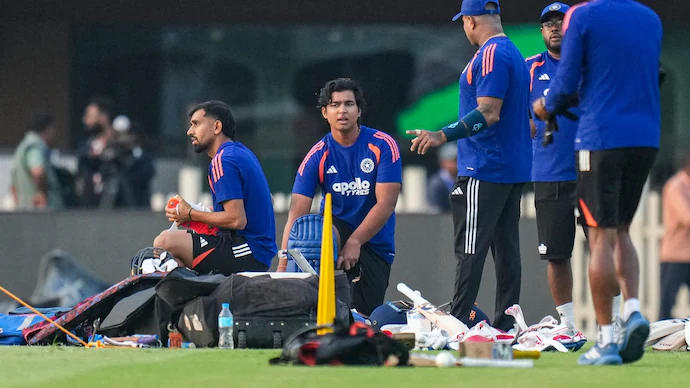
NZ vs IND 2nd T20I: Vaibhav Sooryavanshi Returns to India’s XI in New Batting Role
NZ vs IND 2nd T20I: Vaibhav Sooryavanshi Back in India’s XI, but in New Batting Role
Vaibhav Sooryavanshi returned to India’s playing XI for the second T20I against New Zealand in Christchurch on Saturday, but the teenage batter will have to wait for his opportunity to open the innings. India captain Shreyas Iyer confirmed at the toss that Sooryavanshi would bat at No. 3, with the team retaining its opening combination for the contest.
Sooryavanshi was included in the side in place of the injured Ishan Kishan, giving India another attacking option in the top order. However, rather than immediately promoting the youngster to an opening position, the team management opted to slot him in at No. 3, adding an interesting tactical dimension to the second T20I.
India won the toss and elected to field first, with Iyer citing dew as one of the reasons behind the decision. The captain also indicated that the team had recovered well after the opening game and wanted to maintain its aggressive approach while improving its fielding, particularly during the final over.
Vaibhav Sooryavanshi to Bat at No. 3 Against New Zealand
Sooryavanshi’s return was one of the major talking points ahead of the second T20I, but his batting position added another layer of intrigue to India’s selection. The youngster is known for his aggressive batting approach, making his role in the top order an important aspect of the team’s plans.
Although he has been named in the playing XI, Sooryavanshi will not open the innings in Christchurch. India have retained Sanju Samson and Abhishek Sharma as their opening pair, with the teenager positioned to come in at No. 3.
The role presents a different challenge from opening the batting. A No. 3 batter may have to walk in during the opening overs if an opener is dismissed early, or enter after a strong start and look to build on the momentum. In either situation, the batter must quickly assess the conditions, the state of the innings and the opposition’s bowling plans.
For Sooryavanshi, the opportunity provides a chance to demonstrate that he can adapt his attacking style to different match situations. If India lose an early wicket, he may have to balance the need to rebuild with the importance of maintaining the scoring rate. If the openers establish a solid platform, he could look to continue the attack and put pressure on New Zealand’s bowlers.
The decision also gives India flexibility in the top order without requiring a change to the opening combination. The team management can assess how Sooryavanshi performs in a new position while retaining the existing structure at the start of the innings.
Ishan Kishan’s Injury Creates an Opportunity
Sooryavanshi came into the side after Ishan Kishan was ruled out of the match through injury. Kishan’s absence forced India to make an adjustment to their batting resources, opening the door for the teenage batter to return to the playing XI.
Team combinations in T20 Cricket often depend on a balance between player availability, batting roles and tactical requirements. India have responded to Kishan’s absence by bringing in Sooryavanshi while maintaining their established opening pair.
The decision means the youngster has an opportunity to contribute in an important international contest without being immediately asked to take over an opening role. Batting at No. 3 could also help the team understand how effectively he adapts to situations in which the innings may already be underway when he arrives at the crease.
For a young batter, experience in different positions can be valuable. Opening requires an immediate response to the new ball and fielding restrictions, while batting at No. 3 can involve a wider range of scenarios. The batter may need to attack from the beginning, consolidate after an early wicket or accelerate after the openers have established a platform.
Sooryavanshi’s performance in Christchurch could therefore offer India useful information about his adaptability. However, his selection at No. 3 should not automatically be interpreted as a permanent change to his batting position. The immediate decision reflects the combination chosen for this match and the circumstances surrounding Kishan’s absence.
India Retain Sanju Samson and Abhishek Sharma as Openers
Despite Sooryavanshi’s inclusion, India have decided to retain Sanju Samson and Abhishek Sharma as their opening pair. The two batters are expected to set the tone at the start of the innings, with their performance likely to influence how the middle order approaches the chase.
A productive opening partnership can provide a team with a strong foundation in T20 cricket. Scoring quickly during the powerplay allows the batters who follow to build on the early momentum, while losing wickets in the first few overs can force the middle order to adjust its approach.
With Samson and Abhishek opening, Sooryavanshi will have to remain prepared for different match situations. An early dismissal could bring him to the crease quickly, leaving him with the responsibility of stabilising the innings while keeping the required scoring rate under control.
Alternatively, if the openers give India a strong start, Sooryavanshi could enter with the opportunity to continue the attacking approach. The flexibility of his role at No. 3 could become important as India look to build a competitive total or chase down New Zealand’s score.
India’s decision to preserve the opening combination also avoids making too many changes to the batting order at once. Instead, the team has made a targeted adjustment to accommodate Sooryavanshi while maintaining continuity at the top.
Shreyas Iyer Explains India’s Decision to Field First
India captain Shreyas Iyer won the toss and chose to field first in Christchurch, with dew cited as one of the key factors behind the decision.
Dew can influence T20 matches by making the ball more difficult for bowlers to grip, potentially affecting their control over line, length and variations. Such conditions can sometimes make batting easier later in the game, which is one reason teams may prefer to chase under lights.
However, choosing to field first also places an immediate responsibility on India’s bowling unit. The bowlers must restrict New Zealand’s scoring opportunities and avoid allowing the hosts to build a substantial total. Effective execution during the powerplay and at the death could prove particularly important.
Iyer also said the team had recovered well after the opening game and wanted to continue playing aggressively. His comments indicated that India were looking to preserve their attacking mindset while addressing areas that required improvement.
Fielding was one of the aspects highlighted by the captain, particularly in the final over. In T20 cricket, the closing stages can have a major influence on the result, as batters look to maximise every delivery and bowlers attempt to prevent boundaries.
Missed opportunities, misfields and unnecessary runs can quickly add to the opposition’s total. India will therefore want a sharper fielding performance alongside disciplined bowling as they attempt to put New Zealand under pressure.
New Zealand Make One Change to Their Playing XI
New Zealand also made a change to their lineup for the second T20I, with Jacob Duffy replacing Adam Milne. Captain Mitchell Santner rotated his seamers with a busy Test schedule coming up.
The adjustment reflects the need to manage bowling workloads across a demanding international calendar. Players may have to move between formats within a relatively short period, making workload management an important consideration for team managements.
Duffy’s inclusion gives New Zealand another option in their pace attack as they prepare to face India’s batting lineup. The hosts will look to make effective use of their bowling resources while attempting to exploit any opportunities created by the conditions.
New Zealand’s lineup features Finn Allen and Tim Seifert at the top of the order, followed by Daryl Mitchell and Glenn Phillips. Bevon Jacobs, Michael Bracewell and Santner provide further batting options, while Nathan Smith, Matt Henry, Duffy and Lockie Ferguson complete the XI.
The combination gives New Zealand a range of batting and bowling resources. Allen and Seifert will be responsible for providing an early platform, while the middle order will look to maintain the scoring rate and build a strong total.
Against India’s bowling attack, New Zealand will need to balance aggression with the importance of preserving wickets. A strong powerplay could provide the middle order with room to attack, while early dismissals would increase the pressure on the remaining batters.
India’s Playing XI for NZ vs IND 2nd T20I
India named the following playing XI for the second T20I against New Zealand in Christchurch:
- Sanju Samson (wicketkeeper)
- Abhishek Sharma
- Vaibhav Sooryavanshi
- Shreyas Iyer (captain)
- Tilak Varma
- Nitish Kumar Reddy
- Naman Dhir
- Axar Patel
- Bhuvneshwar Kumar
- Arshdeep Singh
- Prince Yadav
Sooryavanshi’s inclusion at No. 3 is a notable feature of the selection, while Samson and Abhishek remain the designated opening pair. Iyer will lead the side and occupy a position in the middle order, with Tilak Varma, Nitish Kumar Reddy and Naman Dhir providing further batting options.
Axar Patel adds an all-round option to the lineup, while Bhuvneshwar Kumar, Arshdeep Singh and Prince Yadav form part of the bowling attack. India will need contributions across departments to make the most of their decision to field first.
New Zealand’s Playing XI for NZ vs IND 2nd T20I
New Zealand’s playing XI for the second T20I is as follows:
- Finn Allen
- Tim Seifert (wicketkeeper)
- Daryl Mitchell
- Glenn Phillips
- Bevon Jacobs
- Michael Bracewell
- Mitchell Santner (captain)
- Nathan Smith
- Matt Henry
- Jacob Duffy
- Lockie Ferguson
Duffy replaces Milne in the only change announced by New Zealand. Santner will lead the hosts as they look to put together a strong performance against an Indian side that has opted to bowl first.
New Zealand’s top order will be important in setting the tone, while the middle order will need to capitalise if the opening pair provides a strong start. Their bowlers, meanwhile, will be tasked with restricting India’s aggressive batting lineup when the visitors begin their innings.
What Sooryavanshi’s Return Means for India
Sooryavanshi’s return gives India another attacking option at the top of the order, but the decision to bat him at No. 3 makes his role particularly interesting. Rather than simply replacing an opener, the teenager has been placed in a position that could require him to respond to a variety of match situations.
The move allows India to retain their opening partnership while introducing a young batter who can potentially change the tempo of the innings. It also provides the team management with an opportunity to assess his adaptability without making a more extensive reshuffle.
His contribution will depend on when he comes to the crease and how the innings develops. If he arrives early, he may have to focus on building a partnership before accelerating. If he enters after a strong start, he could be expected to keep the pressure on New Zealand’s bowlers.
India’s immediate priority, however, will be to bowl well and limit New Zealand’s scoring opportunities. The decision to field first means the hosts will have the first chance to establish control, and India’s bowlers will need to deliver a disciplined performance before the batting lineup takes over.
The second T20I therefore offers several talking points, from India’s decision to field because of the expected dew to New Zealand’s change in the pace attack. Yet Sooryavanshi’s return in a new batting role stands out as a key selection decision.
For the teenage batter, the match is an opportunity to show that he can adapt to the demands of international T20 cricket. For India, it is a chance to explore their batting flexibility while maintaining continuity at the top of the order. How effectively the team executes its plans in Christchurch will determine whether those decisions translate into a strong performance.
Tighten the repetitive middle sections Add the missing match update link Restore Prince-for-Mayank context
For breaking news and live news updates, like us on Facebook or follow us on Twitter and Instagram. Read more on Latest Cricket on thefoxdaily.com.






COMMENTS 0