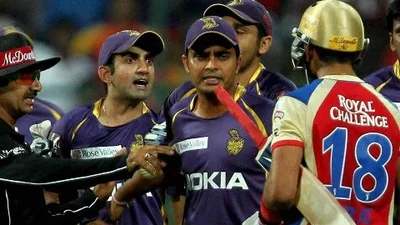
Few rivalries in the Indian Premier League (IPL) have generated as much discussion as the fiery exchanges between Virat Kohli and Gautam Gambhir. More than a decade after their memorable confrontation during IPL 2013, former international umpire Anil Chaudhary has shared his perspective on the incident, explaining that he sensed a clash was inevitable because both players approached the game with extraordinary passion and intensity.
While the incident became one of the most talked-about controversies in IPL history, Chaudhary believes aggression itself is not the problem. Instead, he argues that emotional players add excitement to Cricket, provided they respect the game’s boundaries. His comments offer a fascinating look into how umpires, players, and fans view competitive intensity in modern cricket.
Why the Kohli-Gambhir Rivalry Still Captivates Cricket Fans
Cricket has witnessed countless rivalries over the decades, but only a handful have remained relevant long after the matches ended. The Virat Kohli-Gautam Gambhir rivalry falls into that category because it combined elite competition, strong personalities, and high-pressure IPL contests.
Their competitive relationship was never simply about personal disagreements. Both players built their careers on uncompromising intensity, demanding excellence from themselves and their teammates. That shared competitive mindset often resulted in emotionally charged moments whenever their teams faced each other.
For fans, these moments became symbolic of the IPL’s fiercely competitive environment, where every run, wicket, and decision can influence the outcome of a match.
How the IPL 2013 Incident Unfolded
The confrontation occurred during a league-stage match between Royal Challengers Bengaluru (RCB) and Kolkata Knight Riders (KKR) at Bengaluru’s M. Chinnaswamy Stadium on April 11, 2013.
After Virat Kohli was dismissed during RCB’s run chase, words were exchanged as he walked back toward the pavilion. Instead of continuing directly off the field, Kohli turned back toward Gambhir, leading to a heated verbal exchange before teammates and match officials stepped in to prevent the situation from escalating.
Although no physical altercation occurred, the images quickly became one of the defining moments of the 2013 IPL season and remain among the league’s most memorable confrontations.
| Incident | Details |
|---|---|
| Tournament | Indian Premier League 2013 |
| Teams | Royal Challengers Bengaluru vs Kolkata Knight Riders |
| Venue | M. Chinnaswamy Stadium, Bengaluru |
| Main Figures | Virat Kohli and Gautam Gambhir |
| Outcome | Players and officials intervened before the confrontation escalated |
Anil Chaudhary’s Perspective: Aggression Has a Place in Cricket
Having officiated the match from close quarters, Anil Chaudhary recently reflected on the incident by explaining that he expected some form of confrontation because both players naturally competed with exceptional aggression.
“The flavour of the game won’t be there if you put too many restrictions on the players. But there’s a limit, and it shouldn’t be crossed.”
This observation highlights an important distinction. Cricket authorities encourage passion, competitiveness, and emotional investment, but they also expect players to maintain respect for opponents, officials, and the spirit of the game.
According to Chaudhary, aggressive personalities often produce memorable performances because they channel their emotions into competitive excellence rather than treating matches as routine contests.
Why Virat Kohli’s Aggression Defines His Cricket
Throughout his career, Virat Kohli has built a reputation as one of cricket’s most emotionally expressive competitors. Whether celebrating wickets, motivating teammates, or responding to challenging situations, his body language has become one of his trademarks.
Former teammates and coaches have frequently noted that Kohli’s emotional intensity fuels his concentration rather than distracting him. His celebrations, animated reactions, and visible determination often reflect his commitment to winning rather than personal hostility.
Anil Chaudhary echoed this view by stating that despite Kohli’s aggressive nature, he has never viewed the former India captain as someone who carries personal malice toward opponents.
Competitive Fire vs Crossing the Line
Modern cricket constantly balances two important values: encouraging competitive spirit while protecting sportsmanship.
Elite athletes compete under enormous pressure. High expectations, packed stadiums, millions of viewers, and split-second decisions naturally create emotional moments. However, governing bodies expect those emotions to remain within acceptable boundaries.
- Celebrating success is encouraged.
- Competitive verbal exchanges occur naturally.
- Respect for opponents remains essential.
- Physical confrontations are unacceptable.
- Match officials play a crucial role in maintaining discipline.
The Kohli-Gambhir incident continues to be discussed because it perfectly illustrates how quickly emotions can escalate during elite competition.
The IPL 2023 Chapter Added a New Twist
A decade after their first major confrontation, Kohli and Gambhir again found themselves at the center of headlines during the IPL 2023 season following Royal Challengers Bengaluru’s victory over Lucknow Super Giants.
That incident involved verbal exchanges during and after the match, once again highlighting the competitive nature shared by both Delhi-born cricketers. While disciplinary action followed, the episode also reinforced how intensely both men approach every contest regardless of changing roles.
For many fans, the second confrontation revived memories of the original IPL 2013 clash and demonstrated that competitive rivalries often endure across different phases of a player’s career.
How Their Relationship Has Changed
One of the more interesting developments in recent years has been the apparent improvement in the relationship between Kohli and Gambhir.
Following Gambhir’s appointment as India’s head coach, both have been seen sharing positive interactions while working toward a common objective—helping the Indian cricket team succeed on the international stage.
This evolution reflects an important reality in professional sport. Fierce competitors often move beyond past disagreements when united by larger team goals.
Their ability to work together demonstrates maturity and professionalism, offering an encouraging example for younger cricketers.
Anil Chaudhary’s Long Association with Virat Kohli
One reason Chaudhary’s observations carry weight is his long-standing familiarity with Kohli’s cricketing journey. Having officiated several of his matches from junior cricket onwards, the former umpire has witnessed the batter’s competitive personality develop over many years.
According to Chaudhary, Kohli’s emotional reactions should not be confused with negative intent. Instead, he describes the batting superstar as someone who remains energetic throughout matches and is equally willing to appreciate good officiating.
That balanced perspective provides valuable insight into the difference between visible aggression and genuine hostility.
Why Cricket Needs Emotional Personalities
Every sport benefits from athletes capable of inspiring audiences through passion and commitment. Cricket has historically celebrated players whose competitive instincts elevate major contests.
Emotional competitors often:
- Create unforgettable sporting moments.
- Increase fan engagement.
- Raise competitive standards.
- Motivate teammates during difficult situations.
- Produce memorable rivalries that define eras.
However, sustaining that excitement requires discipline. Aggression becomes an asset only when it remains focused on performance rather than personal conflict.
Lessons Young Cricketers Can Learn
The Kohli-Gambhir episodes offer valuable lessons for aspiring players.
Competitive intensity is essential at the highest level, but emotional control is equally important. Great athletes learn how to convert frustration into better performances instead of allowing emotions to dictate their decisions.
Modern coaching increasingly emphasizes mental conditioning alongside technical development, helping players handle pressure without compromising sportsmanship.
The Bigger Picture: Cricket’s Balance Between Passion and Respect
Every generation of cricket produces players known for their intensity. While playing styles evolve, the balance between aggression and respect remains one of the sport’s defining principles.
Anil Chaudhary’s reflections remind fans that emotionally charged moments are often unavoidable when elite competitors strive relentlessly for victory. What ultimately matters is ensuring those emotions never overshadow the game’s values.
As cricket continues to evolve through franchise leagues and international tournaments, maintaining this balance will remain one of the sport’s greatest challenges.
Conclusion
The Virat Kohli-Gautam Gambhir confrontation from IPL 2013 remains one of the league’s most iconic moments because it captured two fiercely competitive personalities at the height of an intense contest. More than a decade later, Anil Chaudhary’s recollections provide valuable context by emphasizing that aggression itself is not harmful—it is an integral part of elite sport when exercised responsibly.
Today, with Gambhir serving as India’s head coach and Kohli continuing to be one of world cricket’s biggest stars, their professional relationship appears to have evolved significantly. Their journey illustrates that while rivalries create unforgettable memories, mutual respect ultimately defines lasting sporting greatness.
For breaking news and live news updates, like us on Facebook or follow us on Twitter and Instagram. Read more on Latest Sports on thefoxdaily.com.






COMMENTS 0