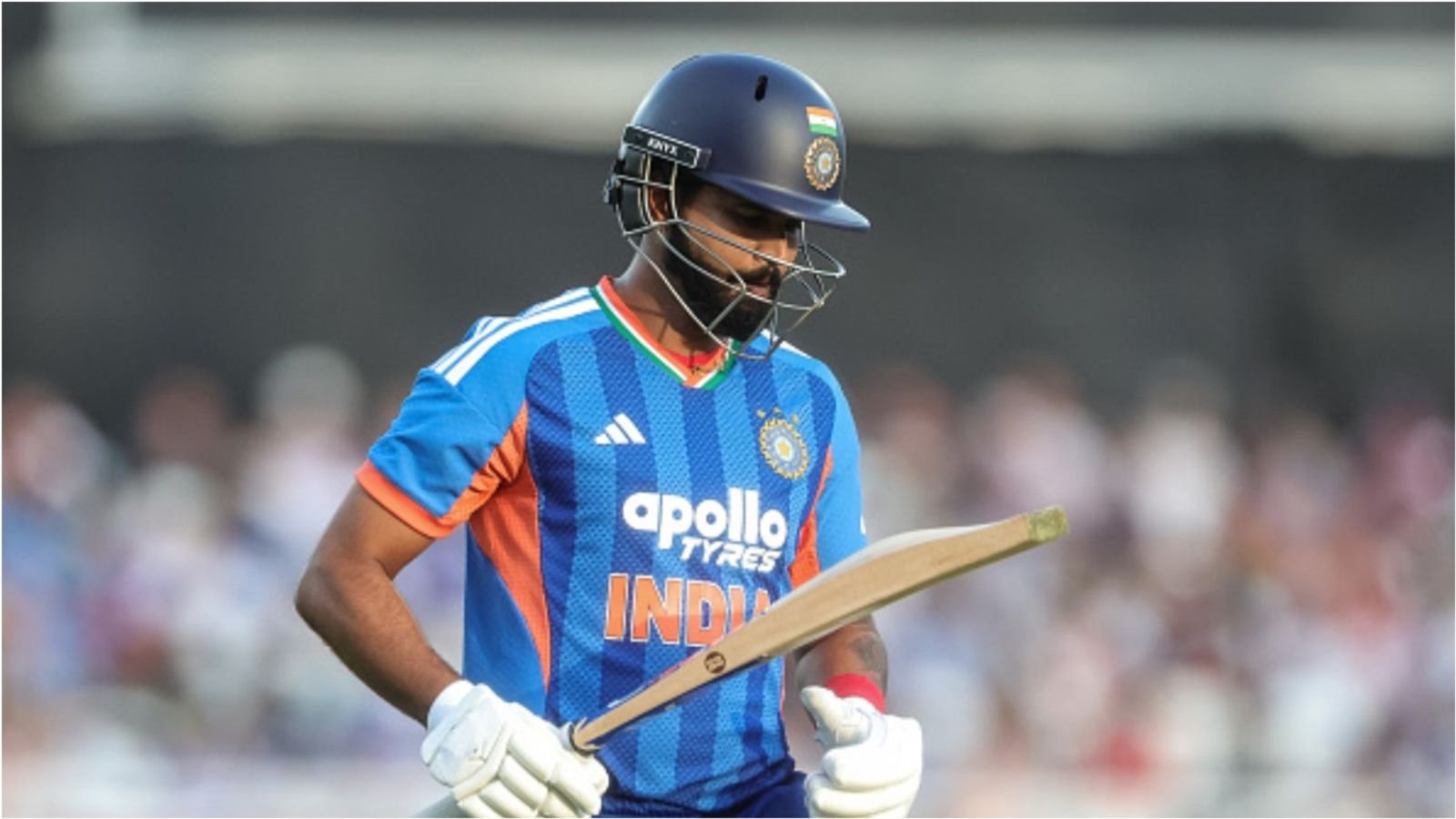
India’s heavy defeat to England in the third T20I has triggered a familiar debate within Indian Cricket: what happens when aggressive batting fails? While England celebrated a dominant 125-run victory at Trent Bridge, India was left searching for answers after one of its most disappointing T20 performances in recent memory.
The spotlight quickly shifted toward India head coach Gautam Gambhir, whose post-match assessment appeared to identify a deeper issue than simply poor shot selection. His remarks about the lack of middle-order players capable of stabilizing an innings have generated significant discussion because they indirectly point toward one of the most important figures in the current setup—captain Shreyas Iyer.
Although Gambhir did not mention any player by name, his comments have intensified scrutiny around Iyer’s performances since taking over the leadership role. With India trailing in the series and consistency becoming a growing concern, the coming matches could prove crucial not only for the team’s fortunes but also for perceptions surrounding its new captain.
India’s Defeat Was About More Than Just One Bad Day
Cricket matches are often decided by a few key moments, but India’s defeat against England reflected broader structural issues rather than isolated mistakes.
The batting collapse exposed a recurring weakness that has occasionally troubled India even during successful periods: an inability to shift gears when aggressive plans begin to fail.
Modern T20 cricket rewards fearless intent. Teams around the world increasingly prioritize explosive starts, boundary-hitting, and maintaining high scoring rates throughout an innings. However, the best teams also understand when to adapt.
Against England, India’s top order attempted to impose itself aggressively but lost wickets at crucial stages. Once that happened, there was little resistance from the middle order.
Instead of rebuilding the innings, India continued losing wickets, resulting in a collapse that effectively ended the contest.
What Gautam Gambhir’s Comments Really Mean
Gautam Gambhir’s analysis after the match offered insight into what the coaching staff may be expecting from the middle order.
His key message was clear: aggressive cricket remains India’s preferred approach, but experienced batters must be capable of adjusting according to match situations.
That distinction is important.
Gambhir was not criticizing attacking cricket itself. Instead, he highlighted the need for balance.
Successful T20 teams generally rely on two complementary approaches:
- Explosive batters who maximize scoring opportunities.
- Stabilizing batters who rebuild after early setbacks.
When both functions exist within the same batting lineup, teams can recover from difficult situations. When they do not, collapses become more likely.
The coach’s reference to players batting at No. 4 and No. 5 positions naturally drew attention because those roles are traditionally responsible for managing transitions during an innings.
Why Shreyas Iyer Is Under the Spotlight
As India’s captain and a middle-order batter, Shreyas Iyer inevitably finds himself at the center of this discussion.
Leadership in cricket often magnifies scrutiny. Every tactical decision, every innings, and every result becomes linked to the captain’s performance.
While Iyer remains one of India’s most talented white-ball players, his recent numbers have not fully reflected his capabilities.
Across his opening matches as captain, he has produced only one half-century and has struggled to convert starts into match-defining contributions.
That would not normally trigger alarm bells. However, when a team suffers a significant defeat and the coach publicly discusses middle-order shortcomings, attention naturally shifts toward the player occupying one of those key positions.
The Captaincy Challenge: Batting and Leadership Simultaneously
One factor often overlooked in discussions about form is the additional responsibility that comes with captaincy.
Leading India is among the most demanding jobs in world sport. Captains must manage tactics, player morale, media obligations, and match strategy while maintaining their own performance standards.
Some players thrive immediately after receiving leadership responsibilities. Others require time to adapt.
Historically, Indian cricket has witnessed both scenarios.
Several successful captains experienced temporary dips in batting form after assuming leadership before eventually finding balance between individual performance and team management.
For Iyer, the challenge is not simply scoring runs but doing so while guiding a team through a transitional phase.
India’s Search for the Ideal Middle Order
Perhaps the most significant issue raised by the England series is the ongoing search for a reliable middle-order combination.
Modern T20 cricket demands versatility from players batting between positions four and six.
These batters must:
- Accelerate immediately when required.
- Rebuild after early wickets.
- Handle spin effectively.
- Finish innings strongly.
- Adapt to different match situations.
Finding players capable of fulfilling all these responsibilities consistently is extremely difficult.
India has experimented with several combinations in recent years, but the search for a long-term solution continues.
Comparing India’s Current Setup With Their World Cup Formula
One of the most interesting elements of Gambhir’s comments was his reference to India’s previous World Cup success.
That team possessed a clear batting structure.
While the top order attacked aggressively, the middle order provided stability and ensured the innings remained intact even after setbacks.
The balance allowed India to absorb pressure without completely abandoning its attacking philosophy.
| Aspect | World Cup Formula | Current Concern |
|---|---|---|
| Top Order | Aggressive intent | Still aggressive |
| Middle Order | Anchored innings effectively | Lack of stability |
| Risk Management | Balanced approach | Over-reliance on attack |
| Recovery After Wickets | Strong | Inconsistent |
The comparison suggests that India’s issue is not tactical philosophy but execution.
The aggressive blueprint remains intact. What appears missing is the ability to recover when the initial plan encounters resistance.
England Exposed a Tactical Weakness
England deserves significant credit for identifying and exploiting India’s vulnerabilities.
The hosts maintained pressure through disciplined bowling and intelligent field placements. Rather than allowing Indian batters to dictate terms, England forced them into risky decisions.
Once wickets began falling, England sensed an opportunity and intensified the pressure.
This is often how elite T20 teams operate. They recognize moments of vulnerability and capitalize quickly.
India’s inability to halt that momentum became one of the defining features of the match.
Should India Be Concerned About Shreyas Iyer’s Form?
The short answer is yes—but not yet to the point of panic.
A captain averaging below expectations across a small sample of matches is not necessarily a long-term concern. Cricket careers are filled with brief fluctuations in form.
What matters more is how the player responds.
Iyer has previously demonstrated the ability to bounce back from difficult phases. Throughout his domestic and international career, he has repeatedly answered criticism with significant performances.
The upcoming matches will therefore be more important than the numbers accumulated so far.
If he begins converting starts into substantial innings, much of the current discussion will quickly fade.
The Mental Side of Leadership Under Pressure
One reality of Indian cricket is that captains operate under extraordinary scrutiny.
Every defeat generates analysis. Every tactical decision becomes a topic of national discussion.
This environment can either strengthen leaders or overwhelm them.
For Iyer, maintaining clarity will be crucial.
Successful captains often focus on controllable factors:
- Preparation.
- Decision-making.
- Communication.
- Execution of team plans.
External criticism becomes less influential when performances begin improving on the field.
What India Needs Before the Remaining Matches
The remainder of the series presents an opportunity rather than a crisis.
India still possesses one of the deepest talent pools in world cricket, and a single defeat does not erase that reality.
However, several improvements are necessary:
- Greater adaptability in batting strategy.
- Improved partnerships during difficult phases.
- Stronger contributions from experienced players.
- Better assessment of match situations.
- Enhanced middle-order consistency.
If those adjustments occur, India can quickly regain momentum.
The Bigger Question: Who Anchors India’s T20 Future?
Beyond the England series lies a larger strategic question.
As T20 cricket becomes increasingly aggressive, does India still need traditional anchors?
The answer appears to be yes.
While power-hitting dominates headlines, tournaments are often won by teams that know when to attack and when to consolidate.
The best batting lineups combine explosive intent with intelligent game management.
Gambhir’s comments suggest India’s coaching staff recognizes this reality and wants greater balance moving forward.
Whether Shreyas Iyer becomes the long-term solution to that challenge remains one of the most important storylines of India’s T20 future.
What Comes Next for Shreyas Iyer?
Every captain faces defining moments early in their tenure. For some, those moments arrive after trophy wins. For others, they emerge following disappointing defeats.
Iyer now finds himself at a critical stage where both leadership and batting performances will be closely monitored.
The positive news for India is that the series is not over. Opportunities remain available to change the narrative.
A strong innings, a tactical masterclass, or a series-leveling victory could quickly shift attention away from criticism and toward progress.
Conclusion
India’s heavy defeat against England has exposed concerns that extend beyond a single match. Gautam Gambhir’s post-match remarks highlighted the importance of middle-order stability, adaptability, and situational awareness—qualities that successful T20 teams consistently demonstrate.
As captain and a key middle-order batter, Shreyas Iyer naturally finds himself under increased scrutiny. While his recent numbers have not matched expectations, it would be premature to draw long-term conclusions from a handful of innings.
The real test lies ahead. How India responds to adversity, how the middle order adapts, and how Iyer handles growing pressure will shape not only the remainder of this series but potentially the direction of India’s T20 project in the months to come. For now, the questions are growing louder—but so is the opportunity to provide the answers on the field.
For breaking news and live news updates, like us on Facebook or follow us on Twitter and Instagram. Read more on Latest Sports on thefoxdaily.com.






COMMENTS 0