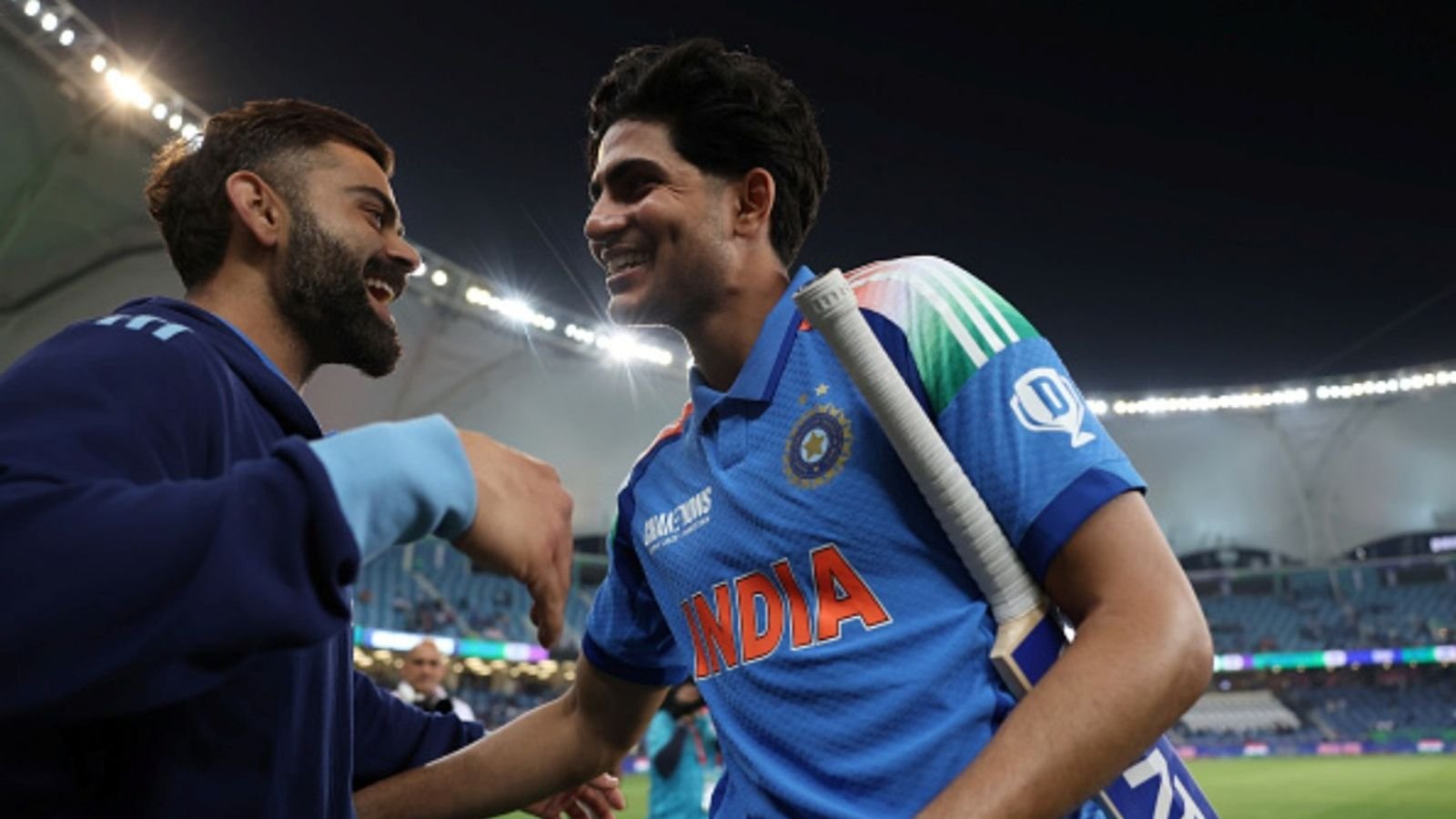
Indian Cricket witnessed another significant changing of the guard as Shubman Gill climbed above Virat Kohli in the latest ICC ODI batting rankings. The achievement comes after Gill’s outstanding performances against Afghanistan, where he combined consistency with match-winning brilliance to strengthen his reputation as one of the finest white-ball batters in the world.
While Kohli’s legacy as one of the greatest ODI players remains unquestioned, Gill’s rise to the No.2 position reflects a broader transformation within Indian cricket. The 26-year-old has evolved from a promising youngster into the centerpiece of India’s ODI batting setup, producing performances that are increasingly defining the team’s future.
The latest ICC rankings update also brought positive news for several Indian players, including Ishan Kishan, Yashasvi Jaiswal, and Arshdeep Singh, all of whom registered significant gains following strong performances against Afghanistan.
How Shubman Gill Overtook Virat Kohli in ICC ODI Rankings
Gill’s rise was powered by a highly productive ODI series against Afghanistan. The Indian captain produced scores of an unbeaten 84 and a magnificent 154, demonstrating both his ability to anchor an innings and accelerate when required.
Those performances helped him gain crucial rating points and move past Kohli into second place among ODI batters.
What makes Gill’s rise particularly impressive is the consistency he has shown across formats over the last few years. Rather than relying on occasional big scores, he has built his ranking through regular contributions in high-pressure situations.
| Player | ICC ODI Batting Ranking | Rating Points |
|---|---|---|
| Daryl Mitchell | No.1 | Leader |
| Shubman Gill | No.2 | 791 |
| Virat Kohli | No.3 | 788 |
| Rohit Sharma | No.4 | Top Four |
| Ibrahim Zadran | No.5 | Top Five |
With only a narrow gap separating the top-ranked batters, every ODI series now has the potential to reshape the rankings landscape.
Why Gill’s Rise Matters Beyond the Rankings
Moving ahead of Virat Kohli is not merely a statistical achievement. It represents a symbolic moment in Indian cricket’s transition toward its next generation of superstars.
For more than a decade, Kohli has been the benchmark for ODI batting excellence. His consistency, chasing ability, and record-breaking performances established him as the face of India’s batting lineup.
Gill’s emergence suggests that India may already have found its next long-term batting leader.
Unlike many young batters who rely heavily on aggressive stroke play, Gill combines classical technique with modern scoring options. This balance allows him to succeed across conditions while maintaining a high strike rate.
His ability to play long innings has become particularly valuable in ODI cricket, where anchoring the middle overs often determines the outcome of matches.
The Evolution of Shubman Gill as India’s ODI Captain
Leadership often brings additional pressure, but Gill appears to be thriving under increased responsibility.
Since taking on a greater leadership role, he has displayed maturity beyond his years. His decision-making, game awareness, and ability to lead from the front have strengthened India’s ODI setup.
Several qualities have contributed to his rapid growth:
- Improved shot selection in pressure situations.
- Greater control against spin bowling.
- Enhanced strike rotation during middle overs.
- Better adaptability across different pitch conditions.
- Consistent conversion of starts into big scores.
These developments explain why many cricket analysts now view Gill as a future contender for the No.1 ODI batting ranking.
Virat Kohli’s Return Could Trigger Another Rankings Battle
Although Gill has moved ahead for now, the battle is far from over.
Kohli missed the Afghanistan series because of a hamstring injury sustained during the IPL 2026 final. With the veteran batter expected to return for the upcoming ODI series against England, he will have an immediate opportunity to reclaim lost ground.
Historically, Kohli has responded strongly after injury breaks, often producing major performances upon his return.
The prospect of Gill and Kohli competing for ranking supremacy could become one of the most compelling storylines in ODI cricket over the coming months.
India’s Batting Depth Continues to Impress
While Gill’s promotion dominated headlines, the latest rankings update revealed another encouraging trend for Indian cricket: exceptional batting depth.
Ishan Kishan’s Remarkable Rise
Ishan Kishan’s explosive century during the Afghanistan series earned him a significant jump in the rankings.
His aggressive approach at the top of the order provides India with a different dimension, particularly in matches where rapid scoring is required.
Kishan’s ability to attack both pace and spin makes him a valuable asset in modern ODI cricket, where scoring rates continue to rise.
Yashasvi Jaiswal’s Massive Leap
Perhaps the biggest mover among Indian batters was Yashasvi Jaiswal.
His century during the final ODI showcased his enormous potential and resulted in a dramatic rise in the rankings.
Although competition for places remains intense, Jaiswal’s performance reinforced the belief that he will play a major role in India’s white-ball future.
| Indian Batter | Ranking Movement | Key Performance |
|---|---|---|
| Shubman Gill | Up 3 Places | 84* and 154 |
| Ishan Kishan | Up 21 Places | Century vs Afghanistan |
| Yashasvi Jaiswal | Up 84 Places | Match-winning ODI hundred |
KL Rahul’s Drop Highlights the Competitive Nature of ODI Cricket
Not every ranking movement favored India.
KL Rahul slipped outside the top 10 after a difficult series, highlighting how quickly rankings can change when competition is intense.
The modern ODI landscape is incredibly competitive, with players from India, England, New Zealand, South Africa, Sri Lanka, and Afghanistan consistently producing high-level performances.
As a result, even a short lean patch can lead to significant ranking fluctuations.
Arshdeep Singh’s Rise Signals India’s Growing Bowling Strength
One of the most encouraging developments for India came in the ODI bowling rankings.
Fast bowler Arshdeep Singh climbed 16 places after an impressive series against Afghanistan. His ability to swing the new ball and execute yorkers during the death overs has made him an increasingly important component of India’s bowling attack.
Arshdeep’s rise reflects years of steady improvement and highlights the depth available to India’s pace unit.
Several factors have contributed to his success:
- Improved control with the new ball.
- Greater consistency in death overs.
- Enhanced tactical awareness.
- Ability to take wickets in crucial phases.
- Success across multiple formats.
For India, having another fast bowler climbing the rankings is a major positive ahead of future ICC tournaments.
India’s Bowling Pipeline Looks Stronger Than Ever
Arshdeep was not the only Indian bowler making progress.
Prasidh Krishna and Washington Sundar also recorded substantial gains, underlining the strength of India’s talent pipeline.
The emergence of multiple bowling options provides selectors with valuable flexibility, particularly when managing workloads and adapting to different conditions.
In modern international cricket, squad depth often determines success over long tournament cycles, and India’s latest rankings surge suggests the team is well-positioned for the future.
What These Rankings Mean for India’s 2027 World Cup Preparations
Although rankings do not guarantee trophies, they offer a useful indicator of player form and team direction.
The latest update provides several encouraging signs for India’s ODI ambitions:
- Gill is evolving into a world-class batting leader.
- Kohli remains among the elite batters globally.
- Young players continue to challenge established stars.
- The pace attack is becoming deeper and more versatile.
- Multiple players are entering peak years simultaneously.
These factors could prove crucial as India builds toward future ICC events and seeks to maintain its position among the world’s leading ODI teams.
Conclusion
Shubman Gill’s rise above Virat Kohli in the ICC ODI rankings is more than just a numerical change. It reflects the emergence of a new leader in India’s batting lineup and highlights the remarkable consistency that has defined his recent performances.
At the same time, the significant gains made by Ishan Kishan, Yashasvi Jaiswal, and Arshdeep Singh underline the growing strength of India’s next generation.
With Kohli set to return, competition for ranking supremacy is likely to intensify. However, regardless of future movements, the latest ICC rankings offer a clear message: Indian cricket possesses both the experience and youthful talent required to remain a dominant force in ODI cricket for years to come.
For breaking news and live news updates, like us on Facebook or follow us on Twitter and Instagram. Read more on Latest Sports on thefoxdaily.com.






COMMENTS 0