Every successful cricket team has a defining moment that changes its future. For Team India, many believe that moment arrived after the crushing semifinal defeat to England at the ICC Men’s T20 World Cup 2022. The loss exposed not just tactical shortcomings but also raised difficult questions about India’s batting philosophy in the shortest format.
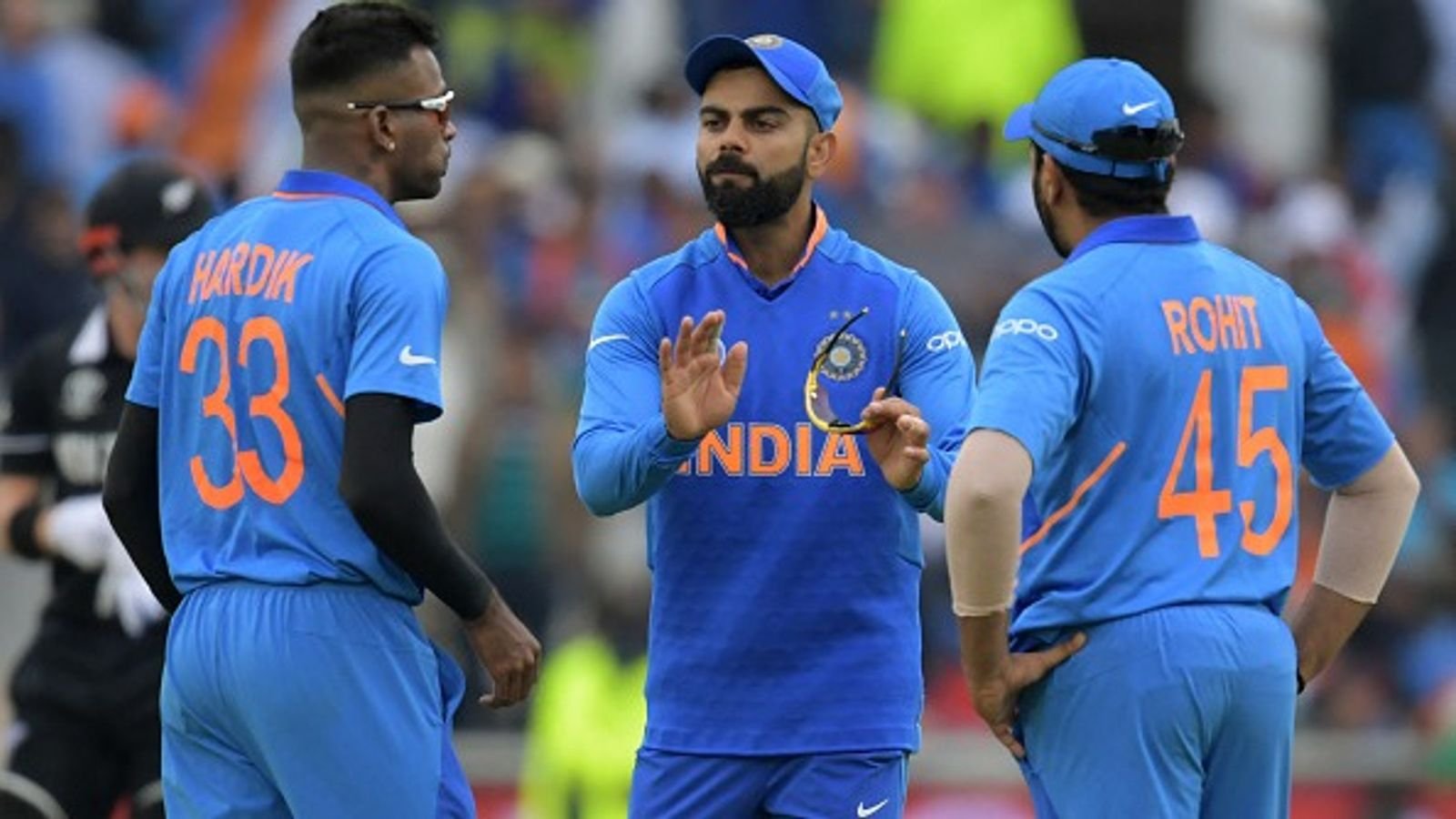
Years later, veteran sports journalist Vikrant Gupta shared an intriguing account of what allegedly unfolded inside India’s dressing room after that defeat. According to Gupta, Hardik Pandya openly challenged India’s senior batting group—including then-captain Rohit Sharma, Virat Kohli, and KL Rahul—urging them to abandon conservative batting and embrace a fearless attacking mindset.
While the account reflects Gupta’s version of events rather than an officially confirmed dressing-room transcript, it aligns with the dramatic transformation India underwent in T20 cricket over the following years. The shift ultimately helped redefine the team’s identity and produced one of the most successful eras in Indian white-ball cricket.
The 2022 T20 World Cup Defeat That Triggered Self-Reflection
India entered the 2022 T20 World Cup with high expectations but suffered a comprehensive 10-wicket defeat against England in the semifinal. The margin of defeat surprised fans and experts alike, particularly because England chased India’s total without losing a wicket.
Beyond the result itself, much of the criticism centered on India’s batting approach. The top order consumed deliveries without consistently maintaining an aggressive scoring rate, leaving the lower middle order to accelerate late in the innings.
That strategy had worked in previous eras, but modern T20 cricket had evolved significantly. Teams were increasingly attacking from the first over, making cautious starts less effective against elite opposition.
Hardik Pandya’s Innings Highlighted a Different Blueprint
Amid India’s disappointing batting display, Hardik Pandya produced one of the team’s brightest performances. His explosive half-century demonstrated that aggressive intent could succeed even under knockout pressure.
His innings highlighted an important contrast. While several batters focused on preserving wickets early, Pandya immediately looked to score at a higher tempo, placing pressure back on England’s bowlers.
Although his effort could not prevent defeat, it became one of the defining performances from India’s campaign and reinforced the growing belief that T20 cricket demanded a different mindset.
The Reported Dressing Room Conversation
According to Vikrant Gupta, Hardik Pandya did not remain silent after the semifinal loss. Instead, he reportedly challenged the team’s senior batters to rethink their approach and play with far greater intent from the beginning of innings.
“Hardik Pandya asked every top-order batter to bat with greater intent instead of leaving everything for the lower order,” according to Vikrant Gupta’s account.
If accurate, the conversation reflected leadership beyond official titles. It suggested that influence inside elite sporting teams often comes from conviction and performance rather than designation alone.
Why India’s Batting Philosophy Needed to Change
T20 cricket has evolved dramatically since its early years.
Earlier approaches often emphasized preserving wickets before launching an assault during the final overs. However, modern analytics have shown that maximizing the powerplay and maintaining aggressive intent throughout the innings generally produces higher totals.
Leading teams increasingly prioritize:
- Positive intent from the opening over.
- Higher boundary percentages.
- Reduced fear of losing early wickets.
- Flexible batting roles.
- Attacking spin as well as pace.
India’s eventual transition reflected these broader global trends rather than simply reacting to one defeat.
How India Reinvented Its T20 Identity
Following the 2022 World Cup, India gradually adopted a noticeably more aggressive batting philosophy.
The emphasis shifted toward proactive stroke-making, higher scoring rates, and encouraging batters to attack favorable matchups instead of simply occupying the crease.
This transformation was visible across multiple bilateral series and major tournaments, where India consistently produced larger totals and maintained pressure throughout entire innings.
| Before the Tactical Shift | After the Tactical Shift |
|---|---|
| Conservative starts | Aggressive powerplay batting |
| Late acceleration | Intent maintained throughout innings |
| Greater focus on wicket preservation | Higher priority on scoring rate |
| Limited attacking freedom | Batters encouraged to play fearless cricket |
Leadership Beyond the Captaincy
One of the most interesting aspects of Gupta’s revelation is that Hardik Pandya was not India’s captain at the time.
Leadership in elite sport often extends beyond official positions. Experienced players influence dressing-room culture through performances, communication, and willingness to confront uncomfortable realities.
Pandya had already established himself as one of India’s most impactful all-rounders, and his confidence in high-pressure situations naturally gave weight to his opinions.
The Captaincy Conversation
Gupta also claimed that Hardik Pandya had become a leading candidate to captain India’s T20 side after the 2022 World Cup and was initially expected to continue in that role through the 2024 tournament.
Ultimately, the selectors retained Rohit Sharma for the 2024 T20 World Cup, while Pandya remained one of the team’s senior leaders.
Following Rohit’s retirement from T20 internationals, however, the leadership eventually passed to Suryakumar Yadav instead of Pandya, illustrating how captaincy decisions often involve multiple strategic considerations beyond individual leadership qualities.
Why Rohit Sharma Also Deserves Credit
Although Hardik’s reported comments have attracted attention, India’s tactical evolution became successful only because the entire team embraced change.
Rohit Sharma himself adjusted his batting style significantly in later tournaments, often attacking from the outset and setting the tone for the innings.
This willingness among senior players to evolve demonstrated one of the hallmarks of great sporting teams—the ability to learn from setbacks rather than resist change.
Virat Kohli’s Adaptability
Virat Kohli has frequently modified his game throughout his career to suit changing formats and match situations.
As T20 cricket became increasingly aggressive worldwide, Kohli also incorporated greater attacking intent while maintaining the consistency that has defined his international career.
His adaptability illustrates that evolution in modern cricket is rarely about abandoning strengths; instead, it involves expanding them.
The Results Spoke for Themselves
The years following the 2022 World Cup witnessed one of India’s most dominant periods in T20 internationals.
According to the available timeline, India enjoyed an extraordinary run of bilateral series victories while adding major ICC and continental trophies.
More importantly, the team’s batting philosophy became noticeably different. Large totals, aggressive starts, and fearless shot selection became recurring themes rather than occasional exceptions.
Why Fearless Cricket Works in Modern T20s
Modern T20 cricket rewards calculated aggression.
Data-driven strategies now emphasize maximizing scoring opportunities rather than minimizing risks. While wickets remain valuable, teams increasingly accept that losing wickets while maintaining a high scoring rate often produces stronger overall results.
This philosophy has been embraced by several leading international sides and successful franchise teams around the world.
| Traditional Approach | Modern T20 Approach |
|---|---|
| Preserve wickets early | Attack favorable matchups immediately |
| Build slowly | Maintain scoring momentum |
| Finish strongly | Score consistently across all phases |
| Lower-risk batting | Calculated aggression |
The Bigger Lesson From India’s Transformation
Whether Hardik Pandya’s dressing-room speech directly initiated the change or simply reflected growing sentiment within the squad, the broader lesson remains significant.
Elite teams rarely improve by ignoring uncomfortable truths. Honest conversations, tactical innovation, and willingness to adapt often separate champions from contenders.
India’s evolution demonstrated how setbacks can become foundations for future success when teams respond constructively.
What This Means for Future Indian Teams
The fearless mindset established during this period is likely to influence India’s approach for years to come. Young cricketers entering the national setup are increasingly encouraged to play positive cricket, trust their natural game, and embrace pressure rather than avoid it.
That cultural shift may ultimately prove more valuable than any individual tactical adjustment.
Conclusion
The reported dressing-room conversation involving Hardik Pandya after India’s 2022 T20 World Cup exit has become an intriguing chapter in the team’s recent history. While the details come from veteran journalist Vikrant Gupta’s account, the larger narrative is supported by India’s remarkable tactical evolution in the years that followed.
From adopting a more aggressive batting philosophy to enjoying sustained success in T20 internationals, India’s response to disappointment showcased the importance of adaptability, leadership, and honest self-assessment. Whether driven by Pandya’s influence, Rohit Sharma’s leadership, or a collective realization within the dressing room, the transformation reshaped one of the world’s strongest cricket teams and established a blueprint that continues to define India’s approach in modern T20 cricket.
For breaking news and live news updates, like us on Facebook or follow us on Twitter and Instagram. Read more on Latest Sports on thefoxdaily.com.






COMMENTS 0