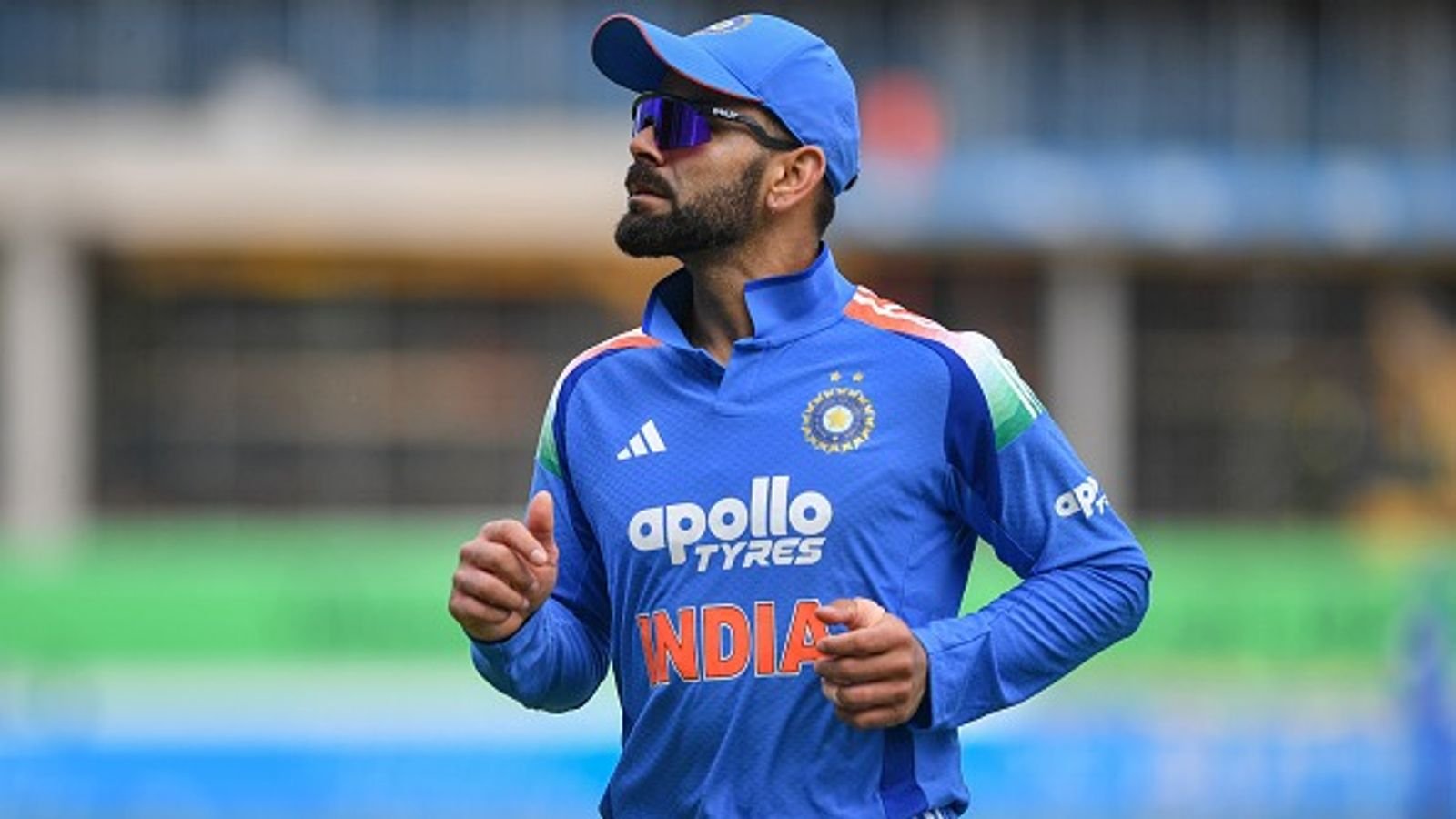
Virat Kohli’s professionalism has earned another major endorsement, with former India batter and BCCI Centre of Excellence head VVS Laxman describing him as an exemplary professional and a role model for young cricketers. Laxman’s comments highlight an aspect of Kohli’s career that extends beyond his statistics: his relentless approach to fitness, preparation and personal standards.
Kohli, now 37, has entered a different phase of his international career after stepping away from Test cricket and T20Is. His international focus is now restricted to ODIs, with the 2027 ODI World Cup emerging as the major target on the horizon.
Despite no longer being India’s all-format captain or playing every international format, Kohli’s influence remains significant. For Laxman, that influence is rooted not only in what the former captain has achieved with the bat but also in the professional habits he has demonstrated throughout his career.
VVS Laxman calls Virat Kohli an exemplary professional
Laxman was unequivocal when discussing Kohli’s professional standards.
“I think there is no doubt that Virat is an exemplary professional. And that’s why he is a great role model. And I think a lot of youngsters or players want to emulate him,” Laxman said during a media interaction.
The statement is significant because Laxman is speaking about qualities that are not necessarily reflected in a conventional scorecard. Runs, averages and centuries measure performance, but professionalism is visible in the habits a player maintains when cameras are not focused on the scoreboard.
Kohli’s reputation for physical conditioning, preparation and intensity has become one of the defining characteristics of his career. His approach helped influence expectations around fitness within Indian cricket and contributed to a broader cultural shift toward athletic preparation.
Why Kohli’s professionalism matters beyond his batting
The easiest way to measure Kohli’s career is through his performances with the bat. However, Laxman’s comments point toward a larger legacy.
A senior international cricketer can influence younger players in several ways. They can provide tactical advice, demonstrate preparation routines, establish standards in training and show how to respond to pressure. Kohli has done all of these during a career spanning multiple generations of Indian cricket.
His influence is particularly noticeable among younger players who grew up watching him represent India. For many of them, Kohli was not simply another senior batter. He represented a particular approach to professional sport: intense preparation, physical fitness and a refusal to treat international cricket casually.
That makes Laxman’s description of Kohli as a role model more meaningful than a conventional compliment about a player’s ability.
Kohli’s fitness culture became part of his cricket identity
One of the clearest elements of Kohli’s professional image has been his commitment to fitness.
During his career, he became closely associated with high fitness standards and athletic fielding. That approach was especially important during his time as India’s Test captain, when he consistently emphasized physical conditioning as part of the team’s preparation.
The importance of this shift goes beyond Kohli himself.
Modern international cricket places enormous physical demands on players. A batter may spend hours at the crease before moving into the field, while a fast bowler may have to repeat high-intensity efforts across multiple days.
Kohli’s career helped reinforce the idea that fitness is not merely an optional advantage for elite cricketers. It is part of maintaining performance over a long international career.
From captaincy to senior statesman
Kohli’s current role is very different from the one he occupied during the peak of his captaincy.
He is no longer India’s Test or T20I captain and has retired from both formats. His international career is now centered on ODI cricket, where his experience remains valuable to a team preparing for the next World Cup cycle.
This transition also changes the way his influence is expressed.
As captain, Kohli could directly establish standards and make tactical decisions. As a senior player, his influence is more indirect. Younger players can observe how he prepares, trains and approaches international cricket without necessarily receiving instructions from him.
That is precisely where Laxman’s comments about emulation become important.
Why younger players want to emulate Virat Kohli
Kohli has become one of the most recognizable figures in modern cricket, and his appeal to younger players extends beyond his batting technique.
A young cricketer trying to build an international career can learn from several aspects of Kohli’s journey:
- Preparation: Kohli’s approach emphasizes being ready before the pressure arrives.
- Fitness: His career has demonstrated the value of physical conditioning for longevity.
- Consistency: Maintaining high standards across seasons is one of the hardest challenges in professional sport.
- Intensity: Kohli has rarely appeared passive on the field, helping establish a recognizable competitive identity.
- Adaptability: His career has required him to evolve as formats, bowling attacks and expectations changed.
These qualities can be copied more easily than a particular batting record. A young player may never reproduce Kohli’s international statistics, but they can attempt to reproduce his preparation and discipline.
Kohli’s ODI future is now the central storyline
With his Test and T20I careers over, the Virat Kohli 2027 World Cup journey has become the most important question surrounding his international future.
Kohli remains part of India’s ODI plans and is expected to return to competitive international action during the September ODI fixtures against the West Indies.
His most recent ODI outings against England provided encouraging signs. He scored 65 at Cardiff and 74 at Lord’s, giving him positive momentum heading into the next phase of his international career.
However, selection for the 2027 World Cup cannot be guaranteed simply because of past achievements.
The practical requirement is straightforward: Kohli will need to continue producing performances that justify his place in India’s ODI side while remaining physically capable of handling the demands of international cricket.
Why ODI rhythm could become crucial for Kohli
The transition from playing multiple formats to concentrating exclusively on ODIs creates both an advantage and a challenge.
The advantage is that Kohli can focus his preparation around one format. He no longer has to move constantly between the different technical and physical demands of Tests, T20Is and ODIs.
The challenge is match exposure.
When an international batter plays fewer matches, maintaining rhythm becomes more difficult. ODI cricket requires a particular balance between risk and control, especially during the middle overs. A player needs enough match practice to instinctively manage changing situations.
This is why the proposed increase in ODI opportunities could be particularly useful for Kohli.
Potential tri-series could help India’s ODI preparation
England and Wales Cricket Board chief Richard Gould has discussed exploring tri-nation ODI series over the next 12 to 16 months.
If such competitions become part of the international calendar, they could provide additional opportunities for India’s ODI specialists to play meaningful 50-over cricket.
For Kohli, a denser ODI schedule would potentially provide more opportunities to build rhythm ahead of the 2027 World Cup.
It could also benefit India more broadly because World Cup preparation is not simply about selecting 15 players. Teams need to develop combinations, establish batting roles and test different bowling options before the tournament begins.
VVS Laxman’s praise also reflects Kohli’s changing legacy
There is an interesting shift taking place in the way Kohli’s career is discussed.
During his playing peak, conversations around him were dominated by statistics, centuries, rankings and comparisons with other batting greats. Now, as his international career becomes more selective, the discussion increasingly includes his influence on Indian cricket.
Laxman’s comments fit into that broader picture.
The former India batter is not simply praising Kohli’s ability to score runs. He is identifying professionalism as one of the qualities that could remain relevant even after Kohli eventually stops playing international cricket.
That may ultimately become one of Kohli’s most lasting contributions.
How Kohli’s influence compares with traditional cricketing legacies
| Aspect | Traditional measure of a great player | Kohli’s broader influence |
|---|---|---|
| Batting | Runs, averages and centuries | High-level performance across a long international career |
| Fitness | Often secondary to technical ability | Made physical preparation a major part of his professional identity |
| Leadership | Captaincy results and tactical decisions | Helped establish a high-intensity and fitness-focused team culture |
| Young players | Technical guidance from senior cricketers | Provides a model of preparation, discipline and professionalism |
| Legacy | Primarily measured through statistics | Influence extends into fitness culture and professional standards |
This comparison helps explain why Laxman’s assessment is relevant. Kohli’s legacy is no longer limited to the runs he scored; it includes the standards associated with his approach to professional cricket.
The 2027 World Cup could define Kohli’s final ODI chapter
For Kohli, the 2027 ODI World Cup represents a potentially defining final chapter in his international career.
The tournament is still ahead, which means plenty can change before the squad is finalized. Form, fitness, competition for places and India’s tactical requirements will all influence the final selection.
Kohli’s experience, however, remains a major asset. A World Cup environment places unusual pressure on players, and experience in high-stakes matches can be difficult to replace.
The key question is whether his current level of performance continues to match the expectations attached to his reputation.
That is where the coming ODI assignments will matter most.
Why Laxman’s words carry particular weight
Laxman is not an outsider commenting on Kohli’s career from a distance. He has been deeply involved in Indian cricket as a former international batter and now as the head of the BCCI Centre of Excellence.
His assessment therefore offers an insight into how Kohli’s professionalism is viewed within the wider cricketing ecosystem.
Calling Kohli an “exemplary professional” suggests that his influence is valued not only for what he produces during matches but also for the example he sets around them.
For a cricket system trying to develop the next generation, that type of influence can be significant.
What Kohli’s next phase could look like
The next stage of Kohli’s career is likely to be less about playing every available international match and more about maximizing his contribution in the games that matter.
That requires careful management of workload, fitness and match exposure.
If Kohli maintains his current standards, his experience could become increasingly valuable as India build toward the 2027 World Cup. Younger players can learn from him while simultaneously preparing to eventually take over the responsibilities carried by India’s senior generation.
That creates an interesting balance: Kohli is still competing for a place, but he is also becoming part of the generation that teaches the next group what international professionalism looks like.
Final outlook
VVS Laxman’s praise of Virat Kohli’s professionalism highlights an important part of the former India captain’s legacy. His influence cannot be reduced to runs, centuries or captaincy records. His commitment to fitness, preparation and discipline has helped shape how modern Indian cricketers approach the professional game.
Kohli’s international career has now entered a selective phase, with ODI cricket his sole remaining international format and the 2027 World Cup the obvious long-term target.
The road to that tournament will not be automatic. Kohli must continue to perform, maintain his fitness and make the most of his ODI opportunities. Upcoming fixtures, including India’s scheduled series against the West Indies, will therefore carry significance beyond individual results.
For younger cricketers, however, Kohli’s value extends beyond whether he reaches another World Cup. As Laxman emphasized, his professionalism itself has become something players want to emulate.
That may ultimately prove to be one of Virat Kohli’s most enduring contributions to Indian cricket: not simply showing the next generation how to score runs, but demonstrating how seriously an elite athlete can approach the craft of playing the game.
For breaking news and live news updates, like us on Facebook or follow us on Twitter and Instagram. Read more on Latest Cricket on thefoxdaily.com.






COMMENTS 0