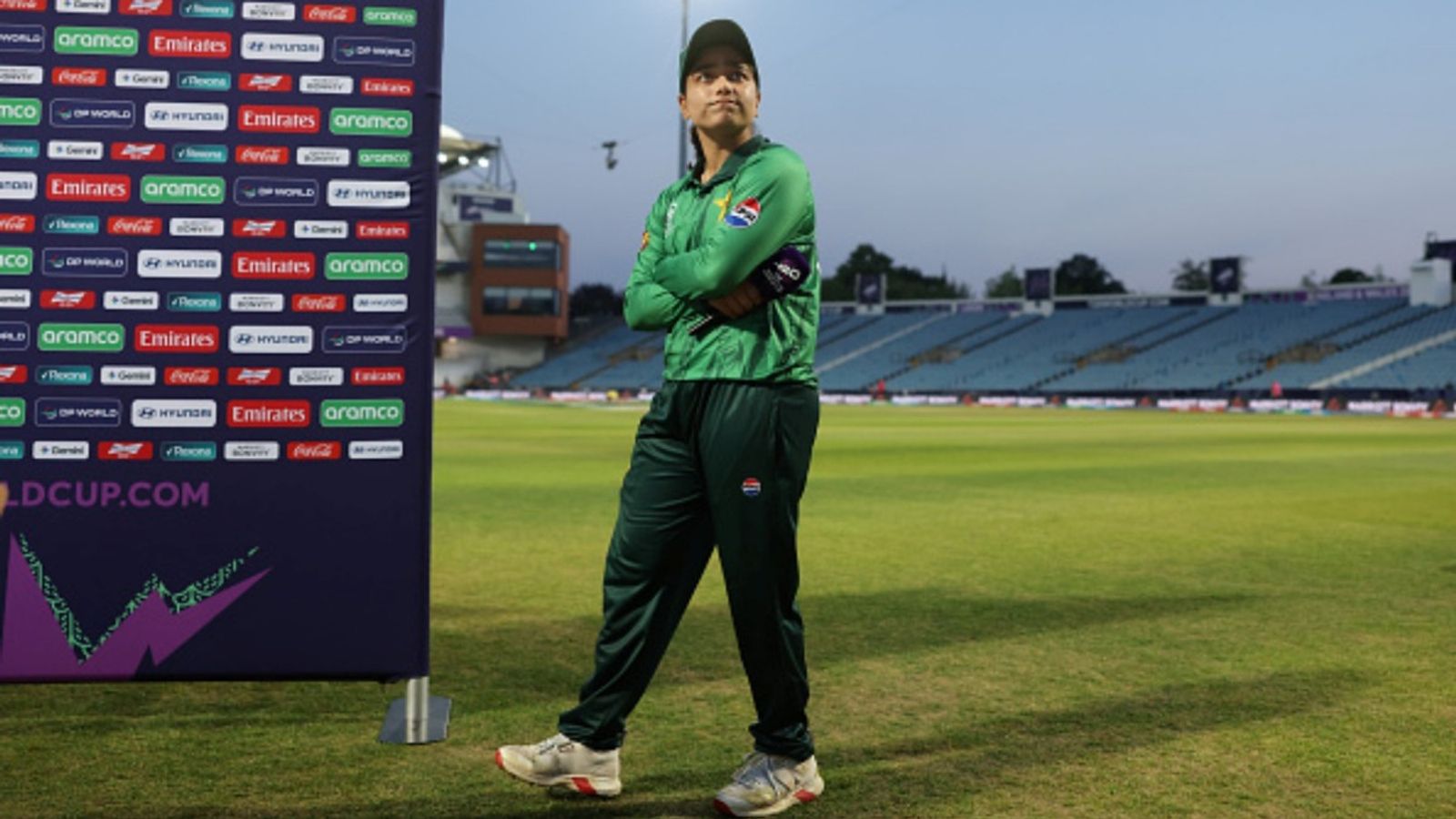
Pakistan’s Women’s T20 World Cup 2026 campaign has become a story of missed opportunities, recurring batting collapses, and mounting frustration. Their latest setback, a comprehensive 113-run defeat against Australia, exposed the challenges that have plagued the team throughout the tournament and left captain Fatima Sana searching for answers.
Following the defeat, Fatima delivered one of the most honest post-match assessments of the tournament, admitting that Pakistan had produced their worst cricket of the competition. The captain’s comments reflected not only disappointment with a single result but also growing concern over a campaign that has consistently failed to meet expectations.
With four consecutive defeats and only one group-stage match remaining, Pakistan now finds itself fighting to avoid finishing the tournament without a victory.
Australia’s Dominance Exposes Pakistan’s Biggest Weaknesses
Australia entered the contest as favorites, but few expected such a one-sided encounter. After being asked to bat first, the defending champions piled up an imposing 199/7, putting immediate pressure on Pakistan’s fragile batting lineup.
The response never materialized.
Pakistan’s innings unraveled quickly as wickets fell at regular intervals. The chase lacked momentum, partnerships, and composure. Eventually, the team was bowled out for just 86 runs in 13.4 overs, suffering one of its heaviest defeats in Women’s T20 World Cup history.
Perhaps the most concerning aspect of the collapse was the manner in which it unfolded. Three run-outs highlighted a lack of communication and confidence, suggesting a team struggling both technically and mentally.
| Match Summary | Australia | Pakistan |
|---|---|---|
| Total Score | 199/7 | 86 All Out |
| Overs Faced | 20 | 13.4 |
| Result | Won by 113 Runs | Lost |
Fatima Sana’s Honest Verdict Reflects Team’s Reality
In modern cricket, captains often search for positives after heavy defeats. Fatima Sana chose a different approach.
“I think we just played our worst cricket in this game, and as a whole team we need to accept that. We need to go back, reflect, and improve ourselves.”
The statement resonated because it acknowledged what many observers had already seen. Pakistan were outplayed in every department—batting, bowling, fielding, and decision-making.
Rather than focusing solely on Australia’s strengths, Fatima emphasized accountability within the squad. That honesty could prove important as Pakistan evaluates what went wrong during the tournament.
The Batting Crisis That Defined Pakistan’s Tournament
If there is one theme that has consistently haunted Pakistan throughout the Women’s T20 World Cup 2026, it is batting inconsistency.
Across four matches, Pakistan’s batting lineup has repeatedly failed to build partnerships or maintain momentum. The numbers paint a worrying picture.
| Opponent | Target/Score | Pakistan Result |
|---|---|---|
| India | 171 Target | 106 All Out |
| South Africa | 126/9 | Lost by 2 Wickets |
| Bangladesh | 124 Target | 100/8 |
| Australia | 200 Target | 86 All Out |
The inability to produce substantial batting performances has placed enormous pressure on Pakistan’s bowlers and fielders. Even competitive bowling displays have been overshadowed by batting collapses that leave little room for recovery.
A Statistical Concern: No Batter Has Reached 100 Tournament Runs
One of the most revealing indicators of Pakistan’s struggles is the absence of a standout batting performer.
After four matches, not a single Pakistan batter has accumulated 100 runs in the tournament. In a competition where successful teams rely heavily on at least one consistent top-order performer, this statistic highlights the lack of sustained contributions.
Only a handful of players have managed to make meaningful impacts, and even those performances have been isolated rather than consistent.
Without a dependable run-scorer anchoring the innings, Pakistan has repeatedly found itself vulnerable to collapses.
Why Pakistan’s Batting Problems Run Deeper Than Technique
While technical shortcomings have played a role, the issue appears to extend beyond batting mechanics.
Several patterns have emerged throughout the tournament:
- Frequent loss of wickets during powerplays.
- Inability to rotate strike consistently.
- Poor conversion of starts into significant scores.
- Pressure-induced decision making.
- Lack of middle-order stability.
- Breakdowns in running between wickets.
These factors suggest a broader challenge involving game awareness, confidence, and execution under pressure.
Modern T20 cricket demands adaptability and intent. Teams that fail to maintain scoring momentum often find themselves trapped in defensive situations, which has repeatedly happened to Pakistan during this tournament.
The Few Positives Pakistan Can Take Forward
Despite the disappointing results, Fatima Sana highlighted several encouraging signs.
The performances of experienced spinners Nashra Sandhu and Sadia Iqbal provided some stability during difficult matches. Their ability to apply pressure and pick up crucial wickets remains an important asset for the team.
Fatima herself has also emerged as one of Pakistan’s most reliable performers. Her unbeaten fifty against South Africa demonstrated leadership and resilience when the batting lineup was collapsing around her.
However, isolated performances alone are not enough to compete consistently at the highest level.
How Other Teams Adapted Better During the Tournament
One of the biggest differences between Pakistan and the tournament’s leading teams has been adaptability.
Australia, India, and South Africa have all shown an ability to recover from difficult situations and adjust their game plans according to match conditions.
Pakistan, by contrast, often appeared locked into reactive cricket rather than proactive cricket.
Whether chasing large totals or defending modest scores, the team struggled to seize momentum during crucial phases of matches.
That inability to control key moments ultimately proved costly throughout the competition.
What This Means for Pakistan Women’s Cricket
The disappointing campaign raises important questions about the future direction of Pakistan women’s cricket.
The talent within the squad is undeniable. Several players have demonstrated the ability to compete against elite opposition. However, the tournament has highlighted a significant gap between potential and execution.
Areas requiring attention include:
- Top-order batting development.
- Mental conditioning under pressure.
- Running between wickets.
- T20 match awareness.
- Power-hitting capabilities.
- Building batting depth.
Addressing these areas will be crucial if Pakistan hopes to challenge consistently in future ICC events.
The Netherlands Match: One Final Opportunity
Despite the disappointing campaign, Pakistan still has one match remaining against the Netherlands.
Although the contest will not change their tournament fortunes significantly, it offers an opportunity to restore confidence and finish on a positive note.
The Netherlands have also endured a difficult campaign, making the match an evenly balanced contest between two teams searching for a breakthrough victory.
For Pakistan, the encounter represents more than just points on the table. It is a chance to demonstrate resilience, learn from mistakes, and carry momentum into future international assignments.
A Bigger Lesson from the 2026 Women’s T20 World Cup
The Women’s T20 World Cup continues to showcase how rapidly international cricket is evolving. Teams can no longer rely solely on individual brilliance. Success increasingly depends on collective contributions, strategic flexibility, and consistency across all departments.
Pakistan’s campaign serves as a reminder that even talented squads can struggle when key areas fail repeatedly. The gap between winning and losing at the highest level is often determined by small moments, partnerships, and decision-making under pressure.
Conclusion
Fatima Sana’s blunt assessment after the defeat to Australia captured the reality of Pakistan’s Women’s T20 World Cup campaign. The 113-run loss was not merely a bad day at the office—it reflected recurring issues that have troubled the team throughout the tournament.
From batting collapses and communication errors to a lack of consistent run-scorers, Pakistan’s shortcomings have been exposed against top-level opposition. Yet within the disappointment lies an opportunity for growth.
With young talent emerging and experienced leaders willing to confront uncomfortable truths, Pakistan now has a chance to rebuild, reassess, and return stronger. The final match against the Netherlands may not change the tournament standings, but it could provide the first step toward a more competitive future.
For breaking news and live news updates, like us on Facebook or follow us on Twitter and Instagram. Read more on Latest Sports on thefoxdaily.com.






COMMENTS 0