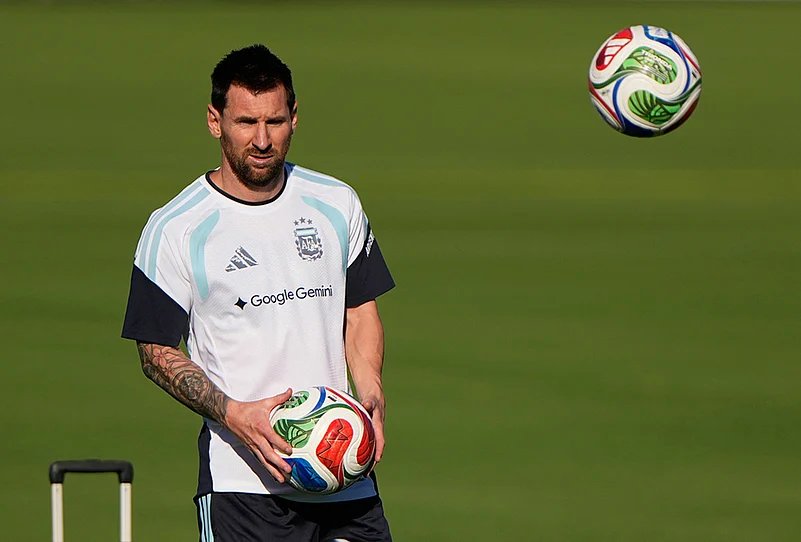
For most footballers, winning a FIFA World Cup marks the perfect ending. For Lionel Messi, it appears to be the beginning of a fascinating new chapter.
After lifting the trophy in Qatar in 2022, many expected Argentina’s captain to step away from international football on the highest possible note. Instead, the eight-time Ballon d’Or winner returned for one more campaign, chasing a feat achieved by only a select few legends: winning consecutive World Cups.
At 39 years old during the 2026 tournament, Messi is no longer the relentless dribbler who terrorized defenders in his early Barcelona years. The explosive acceleration may have diminished, but his influence over matches remains profound.
In fact, Messi’s evolution may be the biggest reason Argentina still believe they can defend their crown.
The difference is simple: Messi no longer plays like Messi once did. He now plays more like Xavi.
From Relentless Dribbler to Master Conductor
Throughout his career, Messi has constantly reinvented himself.
He began as a touchline winger capable of beating multiple defenders. Under Pep Guardiola, he evolved into the revolutionary “false nine.” Later, he became a hybrid creator-goalscorer who dictated games from deeper areas.
Today, Argentina’s captain operates primarily as a roaming playmaker.
Rather than making repeated sprints behind defensive lines, Messi conserves energy, drifting into central spaces where he can influence the game’s rhythm.
His role increasingly resembles that of former Barcelona teammate Xavi Hernández—a player renowned for controlling matches through positioning, awareness, and passing angles.
Messi’s greatest weapon is no longer speed.
It is anticipation.
He sees spaces before they appear, identifies passing lanes others cannot detect, and manipulates defensive structures with subtle movements.
Why Messi’s Transformation Works Perfectly for Argentina
Argentina manager Lionel Scaloni has built a system designed to maximize Messi’s strengths while minimizing the physical demands placed upon him.
Unlike previous Argentina teams that often depended entirely on their captain, this squad shares responsibilities more effectively.
Midfielders cover extra ground, forwards press aggressively, and runners constantly create options around Messi.
This allows him to focus on what he does best: deciding matches.
Argentina’s attacks frequently follow a simple pattern.
- Win possession quickly.
- Move the ball forward with purpose.
- Find Messi in central areas.
- Allow runners to exploit the spaces he creates.
The strategy eliminates the need for prolonged possession sequences and reduces the physical burden on their captain.
Instead of asking Messi to outrun opponents, Argentina ask him to outthink them.
The Numbers Prove Messi Remains Elite
Questions about Messi’s competitiveness because he plays in Major League Soccer overlook one important detail: international football rewards intelligence and efficiency as much as physical intensity.
Messi played a crucial role during Argentina’s qualification campaign, helping the reigning champions finish at the top of the standings.
He also continued to deliver in major tournaments, contributing significantly during the 2024 Copa América campaign.
At club level, his production remains exceptional.
| Competition | Matches | Goals | Assists |
|---|---|---|---|
| 2026 World Cup Qualifiers | — | 8 | 3 |
| MLS 2026 Season | 14 | 12 | 7 |
| 2024 Copa América | — | Key contributor | Multiple chances created |
While he may no longer dominate matches through constant acceleration, Messi continues to influence games through decision-making and execution.
The Hidden Work Done by Argentina’s Supporting Cast
Messi’s new role succeeds because of the players around him.
Argentina’s squad understands that preserving their captain’s energy creates advantages later in matches.
Players such as Julián Álvarez, Lautaro Martínez, Enzo Fernández, and Rodrigo De Paul handle the physically demanding aspects of the game.
They press aggressively, recover possession, and cover defensive spaces when Messi remains higher up the pitch.
Far from viewing this as a burden, they embrace it.
Many members of Argentina’s squad grew up idolizing Messi.
For them, running the extra yards is not a sacrifice—it’s an investment in the player who inspired their football journeys.
The emotional connection within the group has become one of Argentina’s greatest strengths.
Why International Football Still Suits an Older Messi
Tournament football differs significantly from club football.
Success depends less on sustaining peak performance over a 50-game season and more on producing decisive moments in a handful of matches.
This format perfectly suits Messi’s current profile.
He may not press relentlessly for 90 minutes every three days, but he can still decide games with a single pass, a perfectly timed run, or a moment of improvisation.
His reduced workload also allows him to preserve energy for the tournament’s most critical moments.
Few players in football history have possessed Messi’s ability to slow down time when it matters most.
The Xavi Comparison Goes Beyond Passing
Comparing Messi to Xavi is not about suggesting they play identical roles.
Rather, it reflects how Messi now influences games through control instead of chaos.
Like Xavi during Barcelona’s golden era, Messi dictates tempo.
He chooses when Argentina accelerate and when they pause.
He manipulates opponents through positioning rather than speed.
Most importantly, he turns possession into opportunity.
| Prime Messi | Current Messi |
|---|---|
| Explosive dribbling | Game management |
| Frequent pressing | Selective movement |
| Wide attacking positions | Central playmaking role |
| Volume of actions | Quality of actions |
| Physical dominance | Tactical intelligence |
The evolution demonstrates a rare quality among elite athletes: adapting before decline becomes irreversible.
Can Argentina Win Back-to-Back World Cups?
Defending a World Cup title remains one of football’s toughest challenges.
Opponents study champions more closely, expectations rise, and maintaining motivation becomes increasingly difficult.
Yet Argentina possess several advantages.
- An experienced core of players.
- A tactically flexible manager.
- Strong squad chemistry.
- A proven winning mentality.
- The continued influence of Lionel Messi.
Crucially, Argentina no longer depend on Messi to do everything.
Instead, they have created an environment where his intelligence and creativity can flourish.
That balance could make them even more dangerous than they were in Qatar.
Conclusion
Lionel Messi’s quest to defend Argentina’s World Cup crown is not about reliving the past.
It is about redefining greatness.
The player who once overwhelmed opponents with speed and dribbling now dismantles them with vision, timing, and control.
By embracing a more Xavi-like role, Messi has extended his influence at the highest level while allowing Argentina to maximize the strengths of their younger stars.
His legs may not carry him as far as they once did, but his football mind remains unmatched.
And in tournament football, where a single moment can define history, that may be all Argentina need.
For breaking news and live news updates, like us on Facebook or follow us on Twitter and Instagram. Read more on Latest Sports on thefoxdaily.com.






COMMENTS 0