Football often produces remarkable coincidences, but few are as powerful as Lionel Messi returning to MetLife Stadium for the FIFA World Cup 2026 final against Spain.
For most fans, the stadium represents another opportunity for Argentina to defend their world title. For Messi, however, it is the place where one of the darkest moments of his career unfolded. A decade ago, he left the same venue heartbroken, convinced his international journey had come to an end.
Now, at 39 years old, he returns not as a player burdened by disappointment but as a World Cup-winning captain seeking to make history once again.
The Night That Changed Everything in 2016
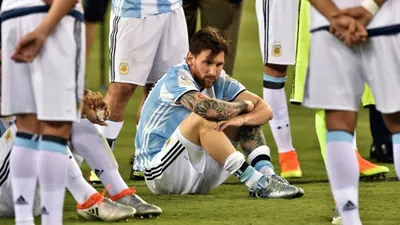
MetLife Stadium was the venue for the 2016 Copa America Centenario final between Argentina and Chile. The match ended goalless after extra time before Chile triumphed in a dramatic penalty shootout.
The defeat was particularly painful for Argentina because it marked their third consecutive major final loss. They had fallen to Germany in the 2014 FIFA World Cup final and lost to Chile in the 2015 Copa America final before suffering another defeat against the same opponents in 2016.
Messi’s misery was compounded when he missed his penalty during the shootout, sending his effort over the crossbar.
Moments later, one of the most shocking announcements in football history followed.
“For Me, the National Team Is Over”
In the emotional aftermath of the defeat, Messi declared his retirement from international football.
“For me, the national team is over,” he famously said.
At just 29 years old, the announcement stunned the football world. Many believed relentless criticism from sections of Argentine supporters and media had finally taken its toll on the country’s greatest player.
The image of Messi sitting alone in the dressing room became a symbol of frustration, heartbreak and unrealized dreams.
How Argentina Convinced Messi to Return
Messi’s retirement did not last long. Public support across Argentina was overwhelming, with fans, former players and even political leaders urging him to reconsider.
Just two months later, he reversed his decision and returned to the national team.
That decision would ultimately transform both his career and Argentina’s football history.
His comeback quickly proved vital during Argentina’s difficult qualification campaign for the 2018 FIFA World Cup.
Facing Ecuador in their final qualifier, Argentina needed a victory to secure their place in Russia. After conceding an early goal, Messi delivered one of the greatest performances of his international career, scoring a stunning hat-trick in a 3-1 victory.
Once again, he had rescued his country when it needed him most.
Disappointment in Russia Before a New Beginning
Although Argentina qualified for the 2018 World Cup, the tournament itself proved disappointing. Under coach Jorge Sampaoli, the team struggled for consistency and was eliminated in the Round of 16.
However, that failure paved the way for significant change.
The Argentine Football Association appointed Lionel Scaloni as interim coach, a decision that initially attracted skepticism. Few expected him to remain in the role long-term.
Instead, Scaloni quietly built a balanced team capable of supporting Messi while not relying entirely upon him.
The Scaloni Era and Argentina’s Revival
Scaloni’s project transformed Argentina into one of the strongest national teams in world football.
Players such as Rodrigo De Paul, Cristian Romero and Emiliano Martínez formed the foundation of a squad that combined defensive discipline with attacking quality.
The breakthrough arrived in 2021 when Argentina defeated Brazil in the Copa America final, ending a 28-year wait for a major international trophy.
For Messi, it was the first major senior title of his international career and a moment that finally silenced many of his critics.
World Cup Glory in Qatar
If the Copa America victory restored belief, the FIFA World Cup 2022 elevated Messi into football immortality.
Argentina defeated France in one of the greatest finals ever played, with Messi scoring twice before lifting the World Cup trophy for the first time.
The triumph completed football’s most coveted achievement and fulfilled a lifelong dream.
Argentina’s success continued with another Copa America title in 2024, further cementing their status as one of the world’s dominant teams.
Another Date With Destiny at MetLife Stadium
Now football’s script has delivered a remarkable twist.
Messi returns to the stadium where he once believed his international career had ended. The tears, disappointment and retirement announcement that defined 2016 have been replaced by trophies, records and redemption.
Argentina’s clash against Spain offers another opportunity for history. A victory would make Argentina only the third nation after Italy and Brazil to win back-to-back FIFA World Cup titles.
It would also provide one final masterpiece in Messi’s extraordinary international journey.
Conclusion
Few athletes receive the opportunity to rewrite painful chapters of their careers. Lionel Messi has already transformed the narrative that once surrounded his international career by winning the Copa America and the FIFA World Cup. Now, returning to the stadium where he retired in despair ten years ago, he stands on the brink of another historic achievement. Whether Argentina triumph or not, MetLife Stadium will forever symbolize both the lowest and most inspirational chapters of Messi’s remarkable football story.
For breaking news and live news updates, like us on Facebook or follow us on Twitter and Instagram. Read more on Latest Sports on thefoxdaily.com.






COMMENTS 0