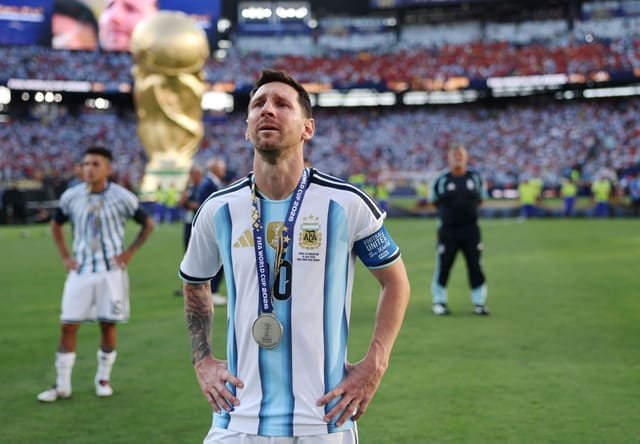
The 2026 FIFA World Cup final continues to generate discussion days after Spain defeated Argentina 1-0 in a dramatic contest. While emotions remain high among supporters, Argentina’s national team video analyst Matias Manna has offered one of the clearest assessments of the final, insisting that Spain deserved their victory. Rather than fueling speculation or conspiracy theories circulating online, Manna emphasized that football should ultimately be judged by what happens on the pitch. His comments provide valuable insight into how Argentina’s coaching staff is processing one of the most painful defeats of the Lionel Scaloni era while also outlining why the team’s long-term project remains firmly on course.
Argentina Coaching Staff Accept Spain’s Dominance in the FIFA World Cup Final
Following Spain’s triumph in the 2026 FIFA World Cup final, numerous debates emerged across social media regarding refereeing decisions, controversial moments, and various conspiracy theories. However, Matias Manna made it clear that Argentina’s technical staff has no interest in shifting blame.
According to Manna, he reviewed the match multiple times to study the tactical aspects instead of focusing on the emotional disappointment. His analysis led him to one straightforward conclusion: Spain controlled the match more effectively and deserved to lift the trophy.
“Spain were far superior.”
That honest admission reflects the analytical approach within Argentina’s coaching setup. Instead of searching for excuses, the staff is evaluating performances objectively to identify lessons that can strengthen the national team in future tournaments.
Why Matias Manna Skipped Reviewing Extra Time
One of the more interesting revelations from Manna was that he intentionally avoided analyzing extra time in detail.
From a tactical perspective, knockout football often changes dramatically once matches extend beyond 90 minutes. Teams become physically exhausted, substitutions alter formations, and emotional decision-making frequently outweighs carefully planned strategies.
Manna explained that his work focuses primarily on tactical structures, pressing systems, passing sequences, defensive organization, and positional play. Since extra time often becomes chaotic, he considered the regulation period far more valuable for technical analysis.
This approach highlights how modern football analysts examine matches differently from fans. While supporters often remember dramatic goals and emotional moments, analysts concentrate on recurring tactical patterns that influence the overall outcome.
Spain’s Tactical Superiority Explained
Spain’s World Cup-winning campaign showcased many qualities that have become synonymous with the country’s football philosophy over the past two decades.
- Excellent ball retention under pressure.
- Disciplined positional structure.
- Quick passing combinations through midfield.
- Effective pressing immediately after losing possession.
- Patience in creating high-quality scoring opportunities.
These strengths allowed Spain to gradually control large portions of the final, limiting Argentina’s attacking rhythm while forcing the South American champions to spend extended periods defending.
The decisive goal ultimately reflected Spain’s ability to remain composed deep into the match when small tactical details often determine championships.
Argentina’s Red Card Changed the Dynamics
Argentina’s challenge became significantly more difficult after Enzo Fernandez received a red card during regulation time.
Playing with ten men in a World Cup final demands exceptional defensive discipline while reducing attacking options. Teams are often forced to sacrifice pressing intensity, defend deeper, and rely on isolated counterattacks.
Although Argentina remained competitive, numerical disadvantage naturally shifted momentum toward Spain, who exploited additional space while maintaining territorial control.
Moments like these illustrate how discipline can become just as important as technical quality during football’s biggest matches.
Rejecting Conspiracy Theories Surrounding the Final
Perhaps the strongest message from Manna concerned the growing influence of misinformation across social media.
Instead of entertaining claims about hidden agendas or controversial narratives, he stressed that football results should be accepted with maturity. Every major tournament produces emotional reactions, but successful teams often recover faster by focusing on performance rather than external speculation.
Manna encouraged supporters to congratulate Spain and move forward, emphasizing that dwelling on conspiracy theories offers little value for players, coaches, or fans.
His comments underline an important principle within elite sport: accountability often creates better long-term development than searching for excuses.
Argentina’s Football Identity Remains Unchanged
Despite losing the biggest match in international football, Manna believes Argentina has established a sustainable football philosophy under Lionel Scaloni.
Rather than abandoning their style after one defeat, he argues that Argentina should continue developing the same principles that delivered major international success in recent years.
The team’s emphasis on intelligent passing, collective movement, technical quality, and tactical flexibility has become embedded throughout multiple age groups, creating continuity between youth development and the senior national team.
This long-term vision may ultimately prove more valuable than reacting emotionally to a single result.
How Argentina’s Youth Development Supports Long-Term Success
Modern international football increasingly rewards nations that maintain consistent playing philosophies across every age category.
Argentina’s coaching structure has invested heavily in ensuring youth teams mirror the tactical identity of the senior squad. This allows young players to transition more smoothly into international football while already understanding positional responsibilities and tactical expectations.
Manna expressed confidence that this football culture will continue for many years, regardless of coaching changes or individual player retirements.
The Scaloni Era Leaves a Lasting Legacy
Lionel Scaloni transformed Argentina from a talented but inconsistent national team into one of world football’s most respected sides.
During his tenure, Argentina developed:
- A clearly defined tactical identity.
- Strong squad unity.
- Defensive organization.
- Collective pressing.
- Confidence in possession.
- A winning mentality in major tournaments.
Even though the World Cup concluded with disappointment, these achievements remain significant foundations for future generations.
What Lionel Messi and Lionel Scaloni’s Future Could Mean
The aftermath of the final has also intensified speculation surrounding the futures of Lionel Messi and Lionel Scaloni.
Both have hinted that their time with the national team may eventually come to an end. Whenever that transition arrives, Argentina will face the challenge of replacing not only legendary individuals but also the leadership culture they helped establish.
Fortunately for Argentina, the broader football project appears designed to outlast any single player or coach, making continuity a realistic objective rather than an ambitious dream.
Comparison: Emotional Reactions vs Analytical Thinking
| Fan Perspective | Coaching Staff Perspective |
|---|---|
| Focuses on controversial incidents. | Focuses on tactical execution. |
| Driven by emotion. | Driven by performance analysis. |
| Looks for external explanations. | Looks for areas to improve. |
| Remembers dramatic moments. | Studies patterns across the entire match. |
Why Manna’s Comments Matter Beyond One Match
Manna’s remarks demonstrate an increasingly important trend in elite football: successful organizations prioritize evidence over emotion.
Instead of allowing disappointment to influence future planning, Argentina’s coaching staff appears committed to learning from defeat. That mindset has historically separated consistently successful national teams from those that struggle to recover after major tournament losses.
Accepting an opponent’s superiority does not diminish Argentina’s achievements. Instead, it creates an opportunity for honest evaluation that can drive future improvement.
Looking Ahead for Argentina and Spain
Spain’s World Cup victory confirms the strength of its current generation and reinforces the nation’s reputation as one of international football’s tactical leaders.
Meanwhile, Argentina enters a new chapter filled with both uncertainty and opportunity. Potential changes involving Lionel Messi and Lionel Scaloni may mark the end of one historic era, but the team’s established football philosophy provides optimism for the future.
If Argentina continues investing in youth development, tactical consistency, and objective performance analysis, the team is well positioned to remain among the world’s elite for years to come.
Conclusion
Matias Manna’s assessment of the 2026 FIFA World Cup final stands out because of its honesty. Rather than embracing conspiracy theories or making excuses, he acknowledged Spain’s superiority while reinforcing confidence in Argentina’s long-term football identity. His comments reflect the professionalism within the national team’s coaching staff and offer an important reminder that lasting success comes from learning, adapting, and respecting deserving opponents. Although the defeat was painful, Argentina’s established philosophy, talented player pipeline, and commitment to continuous improvement suggest that this World Cup final may ultimately become a valuable stepping stone rather than a defining setback.
For breaking news and live news updates, like us on Facebook or follow us on Twitter and Instagram. Read more on Latest Sports on thefoxdaily.com.






COMMENTS 0