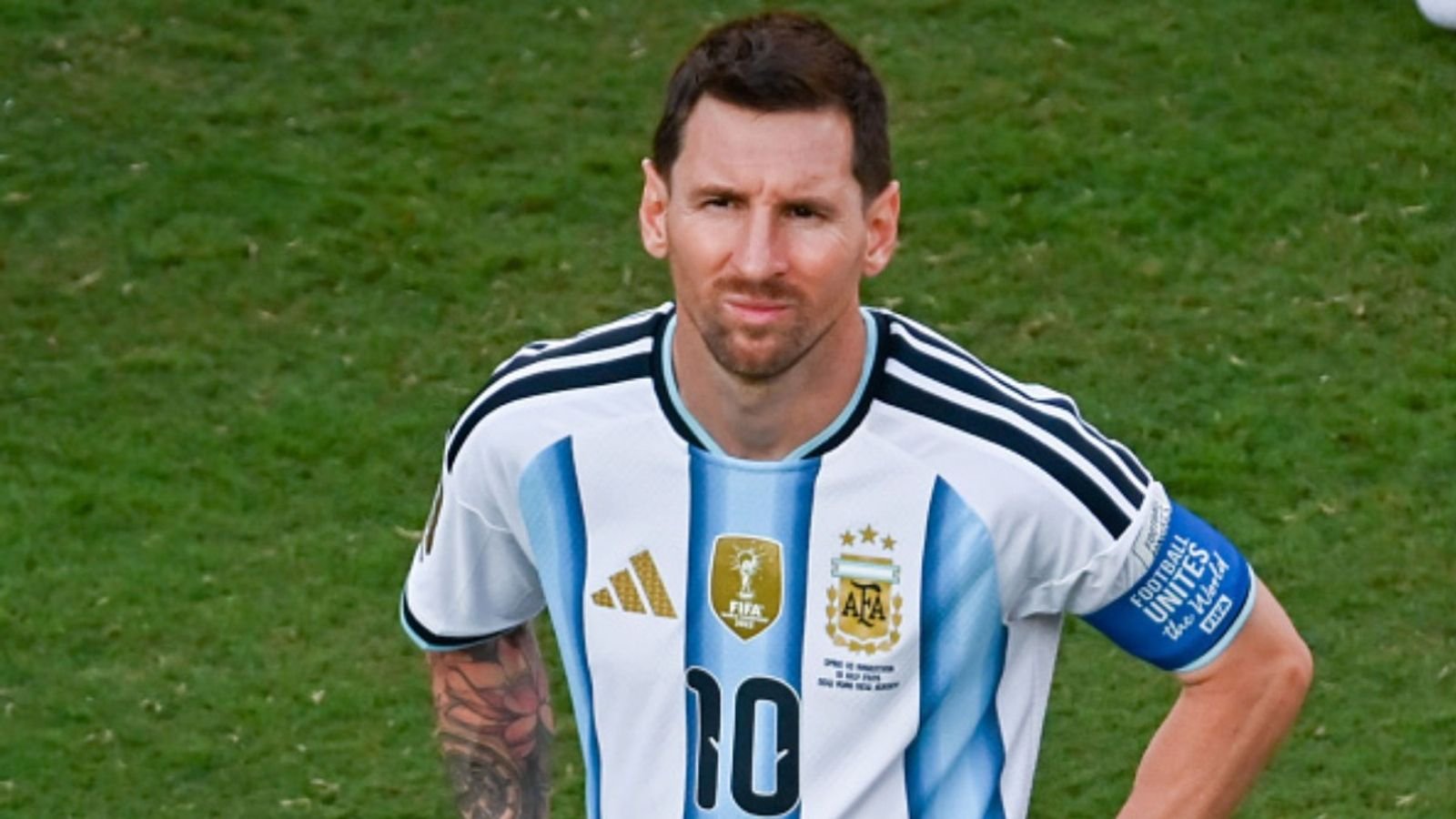
Lionel Messi international retirement has brought an extraordinary Argentina career to an emotional close, but the timing of the announcement reveals an important story beyond football. Messi confirmed on August 31, 2026, that he would no longer represent Argentina, 43 days after the team lost 1-0 to Spain in the 2026 FIFA World Cup final on July 19.
Yet Messi’s decision was not made on August 31. According to the details surrounding his announcement, the Argentina captain had already written his farewell message on July 21, only two days after the World Cup final. He chose not to publish it immediately, however, as his father, Jorge Messi, was seriously ill.
Jorge Messi died in Rosario on August 8 at the age of 68. The family loss changed the circumstances around an already emotional decision, and Messi eventually shared the retirement message with the public on August 31.
The 41-day gap between the date Messi wrote the message and the date he published it therefore does not represent 41 days of uncertainty about whether he would retire. It was largely a period in which a deeply personal decision remained private.
When did Lionel Messi decide to retire from international football?
Messi’s retirement announcement was made public on August 31, but the decision had been forming much earlier. The key date was July 21, when he wrote the farewell message following Argentina’s 1-0 extra-time defeat to Spain in the 2026 World Cup final.
The distinction between making a decision and announcing it publicly is important.
For a player of Messi’s stature, an international retirement announcement is not an ordinary social-media update. It represents the end of more than two decades with Argentina and closes a chapter that included disappointment, criticism, redemption and major trophies.
Messi therefore had no obligation to announce the decision immediately after the final. His priority was personal rather than ceremonial.
Why did Messi delay the retirement announcement?
The main reason was the health of his father, Jorge Messi.
Jorge had been an important figure throughout Lionel Messi’s football journey, serving as his father, adviser and longtime agent. His influence extended from Messi’s early career through his rise to global stardom.
When Jorge’s health deteriorated, Messi chose to keep the retirement message private rather than make the announcement during a period dominated by his family’s personal situation.
Jorge died on August 8 in Rosario at the age of 68. His death added another emotional dimension to the period immediately following the World Cup.
That context helps explain why the retirement announcement came weeks after the final instead of immediately afterward.
The timeline behind Messi’s 41-day delay
| Date | Event | Why it mattered |
|---|---|---|
| July 19, 2026 | Argentina lose 1-0 to Spain in the World Cup final | Messi’s final World Cup appearance ends with Argentina finishing runners-up |
| July 21, 2026 | Messi writes his farewell message | The retirement decision had already been prepared privately |
| August 8, 2026 | Jorge Messi dies aged 68 | The family enters a period of personal grief |
| August 15, 2026 | Messi resumes club duties with Inter Miami | His professional career continues despite his international decision |
| August 30, 2026 | Messi scores four goals against Montreal | He produces a major club performance before the announcement |
| August 31, 2026 | Messi announces international retirement | The farewell message becomes public |
Why the World Cup final did not change his decision
Argentina’s defeat to Spain naturally created speculation about Messi’s future. After reaching another World Cup final at the age of 39, fans wondered whether the disappointment might encourage him to continue until the next major international tournament.
That possibility became particularly interesting because Messi had already experienced a similar emotional crossroads earlier in his Argentina career.
After the 2016 Copa América final defeat to Chile, Messi briefly announced his international retirement before reversing the decision. That earlier experience showed that an emotional reaction immediately after a major defeat does not necessarily represent a permanent decision.
In 2026, however, the circumstances were different.
Messi had already written his farewell message two days after the World Cup final. That suggests the latest decision was not simply a moment of frustration after losing the trophy. It was a conclusion reached after considering his place in the national team and the direction of Argentina’s next generation.
Messi’s own words point toward the next generation
The most important element of Messi’s farewell was not simply that he was leaving. It was his recognition that Argentina already had younger players ready to take responsibility.
That is significant for a national team that has spent years revolving around Messi’s extraordinary influence.
Argentina’s challenge now is not to find another Messi. That would be an unrealistic standard. The more practical objective is to develop a team capable of winning through a broader collective structure.
Messi’s departure therefore creates a leadership transition rather than simply a positional vacancy.
The end of a remarkable Argentina career
Messi leaves international football with 207 appearances and 125 goals for Argentina.
His international career began in 2005 and eventually produced the major trophies that had once seemed out of reach.
He won the 2021 Copa América, the 2022 World Cup and another Copa América in 2024. He also helped Argentina reach the 2014 and 2026 World Cup finals.
The contrast between the beginning and end of his Argentina story is particularly striking.
For years, Messi was judged against the enormous legacy of Diego Maradona and criticised whenever Argentina fell short. The defeats in major finals became part of the narrative surrounding his career.
But the trophies that followed transformed that story.
By the time Messi reached the 2026 World Cup final, his relationship with Argentina had changed completely. He was no longer simply the superstar expected to deliver everything. He had become the leader of a successful generation.
Six World Cups: a record-setting era
Messi’s 2026 tournament was his sixth World Cup appearance, extending a career that began on football’s biggest stage in 2006.
Few players have sustained an international career for long enough to participate in six editions of the World Cup. Even fewer have remained central to their national team’s ambitions across such a long period.
His journey included the disappointment of the 2006 and 2010 tournaments, the heartbreak of the 2014 final, the painful 2018 campaign and the triumph of 2022 before the runner-up finish in 2026.
The final chapter therefore did not have the perfect ending Argentina wanted, but it still completed a remarkable arc.
Why the 2026 final defeat was different from earlier disappointments
Argentina’s 1-0 defeat to Spain hurt because it denied Messi another World Cup triumph, but it did not erase what came before it.
In 2014, the defeat represented an unfinished dream. In 2026, Messi arrived at the final as a World Cup winner already.
That distinction matters.
His legacy was secure before the final began. The 2026 tournament was therefore about adding another achievement rather than proving that he belonged among Argentina’s greatest players.
That is why the defeat, although painful, did not need to define his international career.
The biggest change Argentina faces without Messi
Argentina will now have to operate without the player who has been its primary creative reference point for more than 20 years.
The tactical impact could be substantial.
Messi’s ability to create chances, carry the ball, combine between lines and influence the final third allowed Argentina to build attacking structures around his strengths.
Without him, the team will need to distribute those responsibilities among several players.
That could make Argentina less dependent on one individual and potentially encourage a more balanced attacking structure. But the transition will not be automatic.
The first challenge will be finding a new hierarchy.
Messi’s retirement is not the end of his football career
One important distinction should be made: Messi is retiring from international football, not from professional football altogether.
He will continue playing for Inter Miami in Major League Soccer.
That means fans can still expect to see Messi involved in club football, even though his appearances for Argentina are now over.
His transition from international football also allows him to focus more heavily on his club responsibilities without the demands of international travel and tournament preparation.
His Inter Miami performance added an unusual final twist
Messi returned to club duties with Inter Miami on August 15, shortly after the death of his father.
On August 30, just one day before announcing his international retirement, he produced another remarkable individual performance by scoring four goals in Inter Miami’s 7-1 victory over Montreal.
The sequence was striking: an emotional international farewell had been waiting in the background while Messi continued producing on the club stage.
It also reinforced an important point about the retirement decision. Messi was not announcing the end of his football career. He was choosing to close the Argentina chapter while continuing his career at club level.
What Messi’s retirement means for the 2028 Copa América
Before the announcement, some supporters hoped Messi might remain available for the next Copa América cycle.
Those hopes are now over.
Argentina must begin planning for major tournaments without automatically including the player who has defined its attacking identity for a generation.
The transition could initially be uncomfortable, but it also creates an opportunity for younger players to establish themselves without constantly being compared with Messi during matches.
The next Argentina team will have to develop its own identity.
A comparison with Messi’s first international retirement
| 2016 | 2026 |
|---|---|
| Messi announced retirement after Copa América final defeat | Messi announced retirement after the 2026 World Cup final |
| The decision was later reversed | The latest announcement represents the conclusion of his Argentina career |
| Argentina had not yet won a major senior international trophy with Messi | Argentina had won the 2021 Copa América, 2022 World Cup and 2024 Copa América |
| Messi remained at the heart of Argentina’s next rebuilding phase | Argentina must now move forward without its longtime captain and attacking leader |
The deeper reason Messi’s farewell feels different this time
The biggest difference between 2016 and 2026 is perspective.
In 2016, Messi was walking away from Argentina while still chasing the major senior international trophy that had eluded him. His return kept the possibility of redemption alive.
By 2026, that unfinished business had already been resolved.
Messi had won the Copa América, lifted the World Cup and continued to lead Argentina deep into major tournaments.
His decision now feels less like an escape from disappointment and more like recognition that an era has reached its natural conclusion.
That makes the 41-day delay especially meaningful. The announcement may have come weeks after the final, but the decision itself was already made. Messi simply chose the right moment to make it public.
What comes next for Argentina?
Argentina’s next challenge is to preserve its competitive level while rebuilding its identity.
The national team has already developed a strong collective structure under its recent generation, meaning Messi’s departure does not automatically signal a collapse.
However, replacing his influence will require several players to take on greater responsibility.
The team will need new creative leaders, new attacking combinations and perhaps a different tactical approach. Younger players who previously operated in Messi’s shadow will now have greater freedom to define their roles.
That transition could be one of the most fascinating stories in international football over the next few years.
Conclusion: Messi chose the moment, rather than the final result
Lionel Messi’s international retirement was announced 43 days after Argentina’s World Cup final defeat to Spain, but the story behind the delay is more personal than sporting.
Messi had already written his farewell message on July 21, just two days after the final. He did not immediately publish it because his father, Jorge Messi, was seriously ill. After Jorge died on August 8, Messi eventually chose August 31 to make the decision public.
The timing also makes clear that Messi’s retirement was not simply an emotional response to losing the World Cup final. He had already decided that his Argentina journey was coming to an end.
He leaves with 207 appearances, 125 goals, a World Cup title, two Copa América trophies and a legacy that changed how an entire generation viewed Argentine football.
The perfect final result may have escaped him in 2026, but the larger story does not depend on one match. Messi’s Argentina career had already reached its defining destination.
Now comes the difficult part for Argentina: learning how to play without the player who has been at the centre of its football story for more than two decades.
“`0
For breaking news and live news updates, like us on Facebook or follow us on Twitter and Instagram. Read more on Latest Football on thefoxdaily.com.




COMMENTS 0