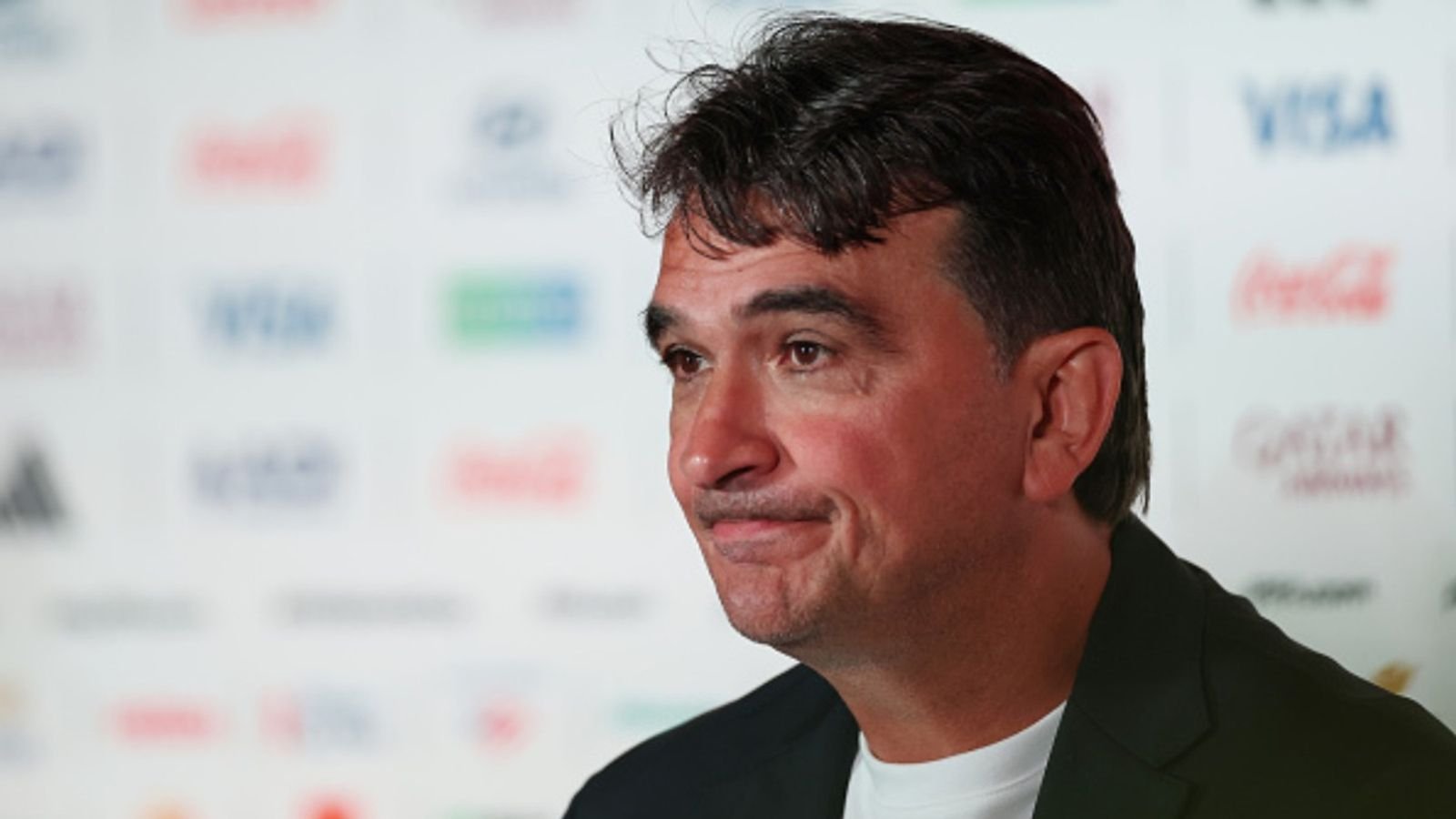
Every successful Football generation eventually reaches a moment of transition. For Croatia, that moment has arrived with the departure of Zlatko Dalic, the manager who guided the nation through the most successful period in its football history.
Following Croatia’s elimination from the FIFA World Cup 2026, Dalic officially stepped down as national team manager, bringing an end to a remarkable tenure that lasted nearly nine years. His resignation closes a chapter that saw Croatia evolve from a talented underdog into one of international football’s most respected and feared teams.
While World Cup exits often trigger coaching changes, Dalic’s departure carries greater significance than a typical managerial transition. It represents the conclusion of an era defined by historic achievements, tactical discipline, and a football identity that consistently allowed Croatia to compete against nations with far larger populations and resources.
As Croatian football begins preparing for its next chapter, the focus inevitably turns toward Dalic’s extraordinary legacy and the challenge of replacing one of the most influential figures in the country’s sporting history.
The End of a Historic Nine-Year Journey
When Zlatko Dalic took charge of Croatia in October 2017, expectations were relatively modest compared to what followed.
The national team possessed talented players, but consistency at major tournaments remained a challenge. Croatia had produced world-class footballers for decades, yet translating that talent into sustained international success was far from guaranteed.
Dalic quickly changed that narrative.
Within months of his appointment, he guided Croatia through one of the most memorable World Cup campaigns ever produced by a nation of its size. What began as a promising tournament evolved into a historic run that captured global attention.
That achievement would become the foundation of a managerial reign that transformed Croatia’s position within world football.
How Dalic Changed Croatian Football
Great international managers are often remembered not only for winning matches but for establishing a lasting identity.
Dalic succeeded because he gave Croatia both belief and structure.
His teams became known for several defining characteristics:
- Exceptional mental resilience.
- Tactical flexibility.
- Strong midfield control.
- Collective discipline.
- Ability to perform under pressure.
Perhaps most importantly, Croatia developed a reputation for thriving in difficult situations. Whether facing football superpowers or navigating knockout-stage pressure, Dalic’s teams consistently displayed confidence and composure.
Those qualities became trademarks of modern Croatian football.
The 2018 World Cup: Croatia’s Greatest Achievement
No discussion of Dalic’s legacy can begin anywhere other than the FIFA World Cup 2018.
That tournament fundamentally altered perceptions of Croatian football.
Entering the competition, Croatia was viewed as a dangerous outsider. By the end, they had become one of the stories of the decade.
Led by a golden generation of players, Croatia reached its first-ever World Cup final, defeating several highly regarded opponents along the way.
The journey captured the imagination of football fans worldwide.
Although Croatia ultimately fell short in the final, reaching that stage represented the greatest achievement in the nation’s football history.
For Dalic, it instantly secured his place among Croatia’s sporting icons.
Proving Success Was No Fluke
Many international teams experience one exceptional tournament before fading from contention.
Dalic ensured Croatia avoided that fate.
Four years after reaching the World Cup final, Croatia returned to the global stage and once again exceeded expectations.
The team’s third-place finish at the 2022 FIFA World Cup demonstrated that the success of 2018 was not a fortunate anomaly but the result of a sustainable footballing project.
Maintaining competitiveness across multiple tournament cycles is one of the most difficult achievements in international football.
Dalic accomplished exactly that.
Why Croatia Became a Model for Smaller Football Nations
One of the most fascinating aspects of Croatia’s rise under Dalic is how it challenged conventional assumptions about football success.
Compared with traditional powers such as France, Germany, Brazil, or England, Croatia operates with a significantly smaller population and talent pool.
Yet under Dalic, the nation repeatedly competed with and often defeated those giants.
This success highlighted several important lessons:
- Strong player development can overcome population disadvantages.
- Team chemistry often outweighs individual star power.
- Tactical organization remains critical at major tournaments.
- Leadership and culture influence performance significantly.
- Mental strength can determine knockout-stage outcomes.
As a result, Croatia became an example frequently studied by other emerging football nations seeking sustainable success.
The Numbers Behind Dalic’s Success
While trophies and memorable matches define legacies, statistics help illustrate the scale of Dalic’s impact.
| Achievement | Result |
|---|---|
| Appointed | October 2017 |
| World Cup 2018 | Runner-up |
| World Cup 2022 | Third Place |
| Major Tournament Qualifications | Consistent Success |
| Win Percentage | More Than 50% |
| Tenure Length | Nearly 9 Years |
These figures reflect a level of consistency rarely achieved in international football, where managers often struggle to survive beyond a single tournament cycle.
Why the 2026 World Cup Exit Still Hurts
Despite Croatia’s accomplishments, the conclusion of the 2026 World Cup campaign leaves a sense of unfinished business.
Expectations were high entering the tournament.
Although Croatia remained competitive, elimination before the latter stages represented a disappointing outcome for a nation accustomed to deep World Cup runs.
Such expectations are, in many ways, a testament to Dalic’s success.
Before his appointment, reaching the latter stages of major tournaments was viewed as an ambitious target. Under his leadership, anything less began to feel like underachievement.
That shift in expectations reflects how dramatically Croatia’s standards evolved.
The Leadership Style That Defined an Era
Dalic’s influence extended beyond tactics.
Players and officials frequently praised his calm leadership style and ability to unite squads containing strong personalities.
International football presents unique challenges because managers have limited time with players compared to club coaches.
Success often depends on building trust quickly and creating a positive team environment.
Dalic excelled in those areas.
His approach fostered unity while allowing experienced leaders within the squad to take ownership of performances on the field.
The result was a team culture that consistently delivered results during high-pressure moments.
What Croatia Must Do Next
Replacing a successful manager is rarely straightforward.
The challenge facing the Croatian Football Federation extends beyond identifying a capable coach.
The next manager must navigate several key priorities:
- Managing generational transition.
- Integrating younger players.
- Maintaining Croatia’s competitive identity.
- Preparing for future major tournaments.
- Preserving the culture established during Dalic’s tenure.
The transition becomes even more complicated because expectations remain exceptionally high.
Future coaches will inevitably be compared to the most successful manager in national team history.
The Importance of Transitioning the Golden Generation
Another major challenge involves squad evolution.
Several players who formed the backbone of Croatia’s recent successes are approaching the latter stages of their international careers.
Successfully replacing experienced leaders while maintaining competitiveness will be crucial.
The strongest football nations continually refresh their squads without sacrificing performance.
Whether Croatia can achieve that balance may determine its trajectory over the next decade.
A Comparison With Croatia’s Previous Eras
To fully appreciate Dalic’s impact, it is useful to compare his tenure with previous periods in Croatian football history.
| Era | Key Achievement |
|---|---|
| 1998 Generation | World Cup Third Place |
| 2000s Period | Regular Tournament Qualification |
| Dalic Era | World Cup Final and Third Place Finish |
While Croatia enjoyed memorable moments before Dalic, no previous manager matched the combination of longevity, consistency, and achievement that characterized his reign.
The Global Impact of Dalic’s Success
Dalic’s accomplishments resonated beyond Croatia.
His work became a case study in effective international management.
Analysts frequently highlighted Croatia as proof that clear identity, player development, and strong leadership could compensate for structural disadvantages.
In an era increasingly dominated by financial power and vast resources, Croatia’s achievements offered a refreshing reminder that football remains a sport where organization and belief can still produce extraordinary outcomes.
Could Dalic Return to Management Soon?
The end of Dalic’s Croatia tenure is unlikely to mark the end of his coaching career.
Managers with his résumé rarely remain out of football for long.
His international experience, tournament success, and reputation for building cohesive teams make him an attractive candidate for both national teams and club projects.
While his immediate focus may be on taking a break following nearly a decade in one of football’s most demanding roles, speculation regarding his next destination is likely to begin quickly.
How History Will Remember Zlatko Dalic
Ultimately, legacies are not determined solely by trophies.
They are defined by impact.
Dalic transformed Croatia from a respected football nation into a genuine global contender. He delivered the country’s greatest World Cup achievement, sustained excellence across multiple tournament cycles, and established standards that future generations will strive to maintain.
Few managers leave behind a stronger body of work.
His contribution extends beyond victories and medals. He changed expectations, inspired players, and elevated Croatian football to heights previously considered unattainable.
Conclusion
Zlatko Dalic’s resignation following Croatia’s FIFA World Cup 2026 exit marks the conclusion of one of the most successful managerial eras in international football. Over nearly nine years, he guided Croatia to historic achievements, including a World Cup final appearance and another podium finish, while establishing the nation as a consistent force among football’s elite.
Although the timing of his departure follows a disappointing World Cup campaign, that result does little to diminish an extraordinary legacy. Dalic leaves as Croatia’s most successful manager, a respected leader, and a central figure in the country’s sporting history.
The challenge now shifts to the Croatian Football Federation and the next generation of players. Replacing Zlatko Dalic will not be easy, but the foundations he leaves behind ensure that Croatian football remains positioned to compete on the world stage for years to come.
For breaking news and live news updates, like us on Facebook or follow us on Twitter and Instagram. Read more on Latest Sports on thefoxdaily.com.





COMMENTS 0