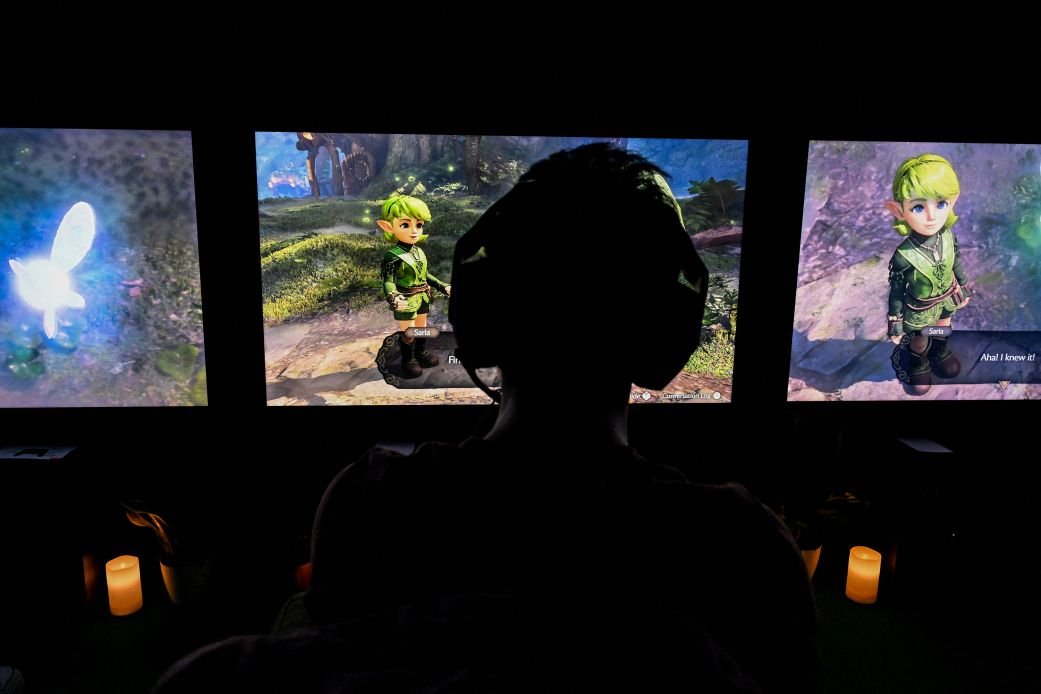
Nintendo is turning to one of its most celebrated Video Games to strengthen its position during the holiday shopping season. Nearly three decades after the original release of The Legend of Zelda: Ocarina of Time, the gaming giant is preparing a modernised remake for the Switch 2, betting that nostalgia and updated gameplay will encourage consumers to buy its latest console.
The strategy comes as Nintendo faces an increasingly competitive gaming market, with higher hardware prices, rising memory costs and the growing popularity of free-to-play games putting pressure on traditional console businesses.
The timing also places Nintendo’s latest Zelda release alongside Grand Theft Auto VI, one of the most anticipated video game launches in the industry. Although the two franchises attract different audiences, their proximity has created an unusual comparison between Nintendo’s family-friendly gaming identity and the more mature entertainment associated with GTA.
The contrast was even highlighted in a segment on Saturday Night Live that aired on October 3. The sketch featured Link, the central character from The Legend of Zelda, alongside Jason from Grand Theft Auto VI. While Link described spending his day in the fictional world of Hyrule buying magic beans and playing his ocarina, Jason talked about stealing cars and spending money at a strip club.
Beyond the humour, the comparison highlighted Nintendo’s willingness to compete during a holiday season dominated by expectations surrounding GTA VI. Rather than introducing an entirely new franchise, Nintendo is relying on a familiar character and a game that already has a strong place in gaming history.
The approach reflects a strategy the company has followed for decades: bringing back established characters and franchises in new formats across successive generations of consoles, while extending their presence into movies, concerts and theme parks.
That wider strategy has also contributed to Nintendo’s financial performance. The company reported a 52% year-over-year increase in gross profit during its second-quarter earnings, despite a decline in sales of its latest Switch 2 console. Income connected to the Super Mario Galaxy Movie was among the factors supporting its performance.
Why Nintendo is relying on Zelda to boost Switch 2 sales
The Nintendo Switch 2 had a strong start following its launch in June 2025, with roughly 24 million consoles sold. However, Nintendo now needs to give consumers additional reasons to purchase the newer system, particularly because the original Switch already has a large library of games.
According to the company’s latest earnings report, Switch 2 hardware sales declined 34.4% year-over-year. The comparison is partly influenced by the previous year’s launch period, when many consumers purchased the console shortly after it became available.
Maintaining sales momentum therefore depends heavily on the games Nintendo releases for its newer platform. Exclusive titles are especially important because they give players access to experiences that may not be available on competing consoles.
The Switch 2 launched with Mario Kart World, followed by releases from established franchises such as Donkey Kong Bonanza, Fire Emblem: Fortune’s Weave and Pokémon Pokopia.
These titles have their own audiences, but Nintendo’s most recognisable franchises remain Mario and Zelda. The company is now looking to use the popularity of The Legend of Zelda: Ocarina of Time to attract existing fans as well as players who may be discovering the series for the first time.
Mat Piscatella, executive director of games coverage at market research firm Circana, described the original Ocarina of Time as one of the best games ever made. He expects the majority of Switch 2 owners to purchase the new version.
That expectation reflects the game’s long-standing reputation and the opportunity to introduce its story to a new generation of players. For Nintendo, the remake offers a way to connect the emotional appeal of a classic title with the capabilities of its latest console.
What makes the new Ocarina of Time different?
The original The Legend of Zelda: Ocarina of Time was released in 1998 for the Nintendo 64. Over the years, Nintendo has brought the game to other platforms, including the GameCube, Wii U and Nintendo 3DS.
The upcoming version is not being presented as a simple re-release. Nintendo has updated several elements, including controls, dialogue and graphics, while seeking to retain the familiar characters and central story that made the original popular.
The updated experience also draws on gameplay developments introduced in more recent entries in the franchise, particularly The Legend of Zelda: Breath of the Wild and Tears of the Kingdom.
This approach is important because Nintendo must appeal to two different groups of players. Long-time fans may want to revisit a familiar adventure, while newer players may expect modern controls, visuals and gameplay features.
By combining the original game’s identity with newer design elements, Nintendo is attempting to make the remake relevant to both audiences.
The company is also expanding its Zelda-related activities beyond the game itself. It launched a 40th anniversary Zelda-themed Switch 2 console in late October, although the special edition is currently sold out. A Zelda orchestra concert and a movie are also planned for next year.
These activities form part of Nintendo’s broader strategy of turning its established gaming properties into experiences that extend beyond consoles.
Devon Pritchard, president of Nintendo of America, said the company sees an opportunity to offer different experiences that connect with existing players while introducing the Zelda franchise to new generations.
“It’s a broad opportunity to provide different experiences that connect with the players and fans, and then open up the door to Zelda for new generations of players to come in,” Pritchard said in an interview with CNN.
Nintendo’s approach to competition from GTA 6
The release of the new Zelda game shortly before Grand Theft Auto VI places Nintendo in the spotlight during a period when the Gaming Industry is expecting enormous interest in another major franchise.
GTA VI is widely expected to become one of the biggest video game launches of all time. Its popularity could create a major moment for the industry, but Nintendo’s strategy is based on the belief that Zelda and Grand Theft Auto appeal to different types of players.
Joost van Dreunen, a professor at New York University’s Stern School of Business who has written about the gaming industry, said Nintendo may not need to worry too much about direct competition because the two games target different audiences.
However, van Dreunen also raised a longer-term question about Nintendo’s ability to retain players as its audience grows older. Some consumers who grew up playing Nintendo games may eventually seek more mature content, potentially creating a challenge for the company’s established identity.
This raises an important question for Nintendo: how can it continue appealing to generations of players without losing the family-friendly character and recognisable franchises that have supported its business for decades?
The Zelda remake is part of the company’s immediate answer. Rather than abandoning its established identity, Nintendo is trying to keep familiar franchises relevant through updated experiences and different forms of entertainment.
Rising console prices are creating challenges for the gaming industry
Nintendo’s holiday strategy is unfolding against a difficult backdrop for the wider video game industry. Rising memory prices and hardware production costs have forced console manufacturers to reconsider pricing, making it more expensive for consumers to enter the gaming market.
Nintendo increased the price of the Switch 2 from $450 to $500 in September. The move came amid a shortage of memory components that has affected Nintendo and other console manufacturers.
According to Circana’s Mat Piscatella, consumer spending on gaming hardware across all console manufacturers in the United States was down 9% so far this year compared with the same period last year.
The higher cost of consoles is only one part of the problem. Video games themselves increasingly cost between $70 and $80, adding to the overall expense of owning a gaming system.
The new Zelda game’s digital edition is priced at $60, while the physical edition costs $70. Although the title is priced below some other major releases, it still represents an additional expense for consumers who have already paid for a console.
These costs could make players more selective about the games they purchase, particularly when free-to-play alternatives are available.
Free games such as Fortnite and Roblox add pressure
Traditional console manufacturers are also competing with games that do not require players to purchase an expensive title before starting. Free-to-play multiplayer games such as Fortnite have become popular alternatives, offering ongoing experiences that can keep players engaged without an upfront game purchase.
Roblox is another example of a gaming platform that attracts audiences outside Nintendo’s console ecosystem. Its popularity highlights the growing competition for players’ time and spending.
Joost van Dreunen described the changing market as creating a divide between consumers who can afford expensive hardware and premium gaming experiences and those who cannot.
This divide creates a challenge for Nintendo because affordability has traditionally been an important part of its appeal. The company has often positioned its consoles as alternatives to more expensive systems, making it accessible to a wider range of consumers.
As hardware and software prices rise, convincing families and casual players to purchase a new console becomes more difficult. Nintendo must therefore demonstrate why the Switch 2 and its exclusive games justify the additional expense.
Why Nintendo may be better positioned to handle memory shortages
Despite the rising costs affecting the industry, Nintendo may have an advantage over some of its competitors because its consoles do not require the same level of computing power as systems produced by Sony and Microsoft.
According to Piscatella, this could help Nintendo manage the effects of the memory shortage more effectively than manufacturers whose consoles rely on more powerful hardware.
The price differences between the major consoles also illustrate the competitive landscape. Microsoft’s Xbox Series X digital edition is listed at $750 on its website, while Sony’s PlayStation 5 starts at $649. Microsoft also offers the less expensive Xbox Series S for $500.
These prices reflect increases announced by both companies earlier in the year. While the higher-end systems offer different hardware capabilities, their costs also make them less accessible to some consumers.
However, the memory shortage has made it harder for manufacturers to produce affordable electronics across the industry. This is particularly relevant for Nintendo because lower-cost devices have traditionally helped the company reach consumers who do not want to pay premium console prices.
Will Nintendo launch a cheaper Switch 2 Lite?
Nintendo previously addressed affordability concerns by introducing the Switch Lite in 2019, two years after the original Switch launched in 2017. The smaller and less expensive device was designed for consumers who primarily wanted a portable gaming experience.
With the Switch 2 becoming more expensive, some consumers may expect the company to eventually introduce a lower-cost alternative. However, Nintendo of America president Devon Pritchard did not comment on whether the company was planning a Switch 2 Lite.
Pritchard also did not provide details about how long Nintendo intends to support the first-generation Switch. The original console remains an important part of the company’s business, with approximately 156 million units sold.
That installed user base presents both an opportunity and a challenge. Nintendo can continue serving millions of existing customers through its older platform, but it also needs to persuade them that upgrading to the Switch 2 offers enough additional value.
The availability of a large game library on the original Switch makes that decision more complicated. Consumers who already own the older console may see less urgency to upgrade unless new releases and exclusive features give them a clear reason.
Nintendo’s bigger bet: Building long-term relationships with players
The remake of Ocarina of Time is part of a wider strategy built around the lasting appeal of Nintendo’s characters and franchises. Instead of relying entirely on new intellectual properties, the company continues to revisit familiar worlds and introduce them to new audiences.
The success of this approach is increasingly visible outside gaming. Movies, concerts and theme parks allow Nintendo to connect with fans in different ways while keeping its characters relevant beyond individual console generations.
The Super Mario Galaxy Movie’s contribution to Nintendo’s recent financial performance also demonstrates the potential value of extending gaming franchises into other entertainment formats.
For Nintendo, the challenge is to make these experiences meaningful enough that fans remain connected to its characters and continue returning to its games.
When asked about the kind of impact Nintendo wants its games to have, Pritchard pointed to the relationship between the company and its players.
“It goes back to that relationship with the player and fan,” she said. “We want to build these experiences that connect with people that they want to come back to time and time again.”
Why the holiday season matters for Nintendo
The upcoming holiday season represents an important opportunity for Nintendo to maintain momentum behind the Switch 2. The company has already established a substantial user base, but it must continue delivering exclusive games that encourage consumers to purchase the console.
Ocarina of Time offers several advantages: a recognised name, a long-established fan following and the opportunity to combine a classic adventure with modern gameplay. Its release also gives Nintendo a major franchise to promote alongside its anniversary-themed console and wider Zelda entertainment plans.
However, the company faces several challenges. Higher hardware prices could discourage new buyers, while free-to-play games continue competing for players’ attention. Nintendo must also convince existing Switch owners that the newer console offers enough value to justify an upgrade.
The company’s long-term strategy has relied on the strength of its characters and the loyalty of its fanbase. The new Zelda remake will test how effectively that approach can drive demand in a gaming market where consumer spending habits and competition are changing.
For Nintendo, the holiday bet is not simply about bringing back a nearly 30-year-old game. It is about proving that its most recognisable franchises can continue attracting players across generations and give consumers a reason to choose the Switch 2.
For breaking news and live news updates, like us on Facebook or follow us on Twitter and Instagram. Read more on Latest Technology on thefoxdaily.com.



COMMENTS 0