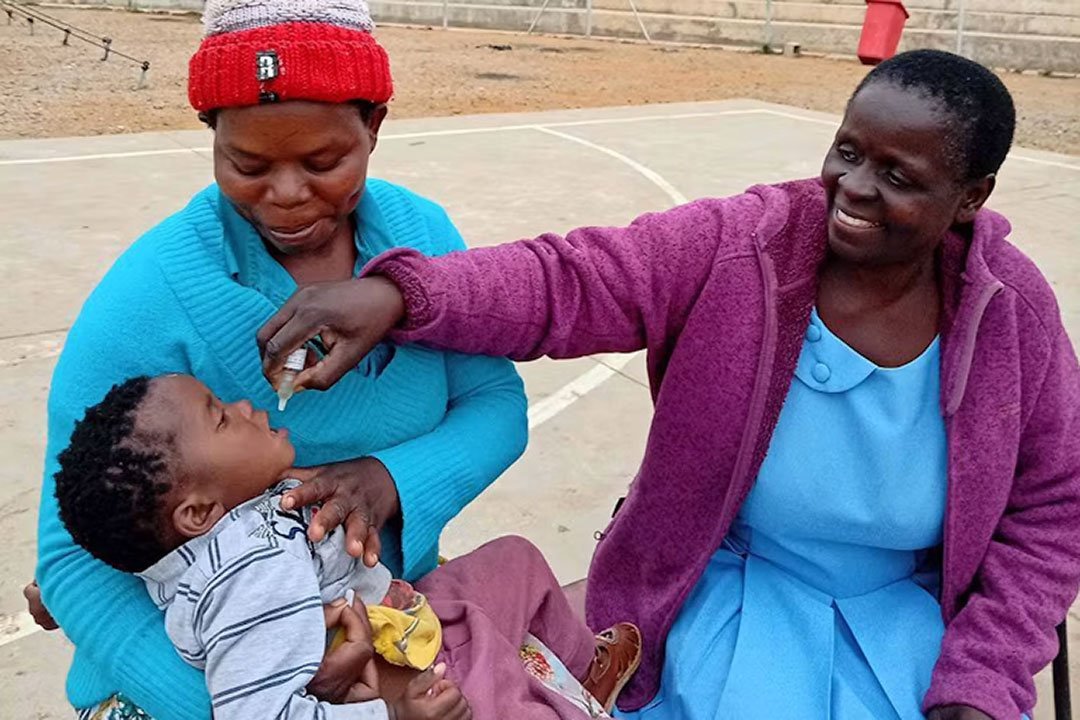
Keeping vaccines and medicines at the correct temperature is essential for maintaining their safety and effectiveness. Yet the infrastructure needed to preserve vaccines during storage and transport remains a major challenge for immunisation programmes, particularly in remote areas and communities with unreliable electricity.
A potential breakthrough emerged in April 2025, when UK biotechnology company Stablepharma began the first human trial of a tetanus-diphtheria vaccine designed to remain stable without refrigeration. The development has renewed interest in technologies that could make vaccines easier to transport and distribute in places where cold-storage facilities are limited.
Researchers are exploring whether these vaccines could help healthcare workers reach populations that are difficult to serve through conventional immunisation programmes. The potential benefits include greater flexibility during outreach campaigns, reduced dependence on refrigerated transport and fewer logistical barriers to delivering vaccines during emergencies.
However, a vaccine that does not require refrigeration is not automatically ready for widespread use. Researchers must establish its safety, effectiveness, stability under real-world conditions and affordability before countries can consider introducing it into routine immunisation programmes.
Immunisation experts Charles Shey Wiysonge and Chinwe Juliana Iwu-Jaja have highlighted the opportunities and practical challenges associated with this emerging technology, particularly in African settings where infrastructure and access to healthcare vary considerably.
Why Is Vaccine Storage Such a Major Challenge?
Vaccines often travel through several stages before reaching the person they are intended to protect. A typical distribution journey may begin at a manufacturer, continue through refrigerated transport and national storage facilities, and then move to district cold rooms and health facility refrigerators before reaching an outreach session.
This process can take several months. Throughout much of the journey, vaccines must remain within a specified temperature range to preserve their quality. Most routinely used vaccines generally require storage between 2 degrees Celsius and 8 degrees Celsius, while some products need substantially lower temperatures.
The uninterrupted system used to maintain these conditions is known as the cold chain. It relies on refrigerators, freezers, reliable electricity, temperature-monitoring equipment and suitable transport arrangements.
Maintaining the cold chain also requires cold boxes, conditioned ice packs, vehicles, fuel, maintenance technicians and healthcare workers trained to handle vaccines correctly. Every stage must operate reliably to ensure that vaccines reach patients in usable condition.
If vaccines are exposed to excessive heat or accidentally frozen, their potency may be affected. Temperature excursions can make a vaccine unsuitable for use or leave its quality uncertain, creating potential wastage and additional costs for healthcare programmes.
These risks are particularly difficult to manage in remote communities, conflict-affected areas and health facilities that experience frequent electricity interruptions. Even when vaccines are available, inadequate storage and transport infrastructure can prevent them from reaching the people who need them.
How Conflict and Electricity Shortages Disrupt Immunisation
Conflict can place additional pressure on vaccine distribution systems by damaging infrastructure, disrupting transport routes and limiting access to fuel and electricity.
Sudan provides an example of the problem. After fighting erupted in April 2023, UNICEF reported that unstable electricity supplies and shortages of fuel for generators had compromised the central cold chain holding millions of vaccine doses.
Such disruptions demonstrate how immunisation programmes can be affected by circumstances beyond the availability of vaccines themselves. A country may have procured sufficient doses, but interruptions in storage conditions can threaten the quality of those supplies.
Remote communities face a different but related challenge. Healthcare workers conducting outreach sessions must transport vaccines in cold boxes containing conditioned ice packs and monitor temperatures throughout the journey.
The equipment adds weight and takes up space. Outreach teams must also work within the period for which their vaccines can be safely transported and used under the applicable handling rules.
These requirements can restrict how far teams travel and how long they remain in a community. When journeys are difficult or settlements are widely dispersed, the need to maintain the cold chain can limit the reach of vaccination campaigns.
Reducing dependence on refrigeration could make some of these operations easier. However, the extent of the benefit would depend on which vaccines could be used without refrigeration and how the new products performed under local conditions.
Existing Measures Help Vaccines Withstand Temperature Challenges
Immunisation programmes already use several methods to manage temperature exposure and improve flexibility. Two important examples are vaccine vial monitors and the controlled temperature chain.
What Is a Vaccine Vial Monitor?
A vaccine vial monitor is a small, heat-sensitive label attached to a vaccine vial. It changes colour in response to cumulative heat exposure, helping healthcare workers determine whether the vial remains suitable for use under the relevant guidelines.
The monitor provides a practical way to assess whether a vaccine has experienced too much heat during transport or storage. It can help workers avoid discarding usable doses unnecessarily while identifying vials that should no longer be administered.
However, a vaccine vial monitor has important limitations. It does not directly measure the vaccine’s potency, and it cannot detect damage caused by freezing. Those risks must be managed through separate temperature-control procedures.
How Does the Controlled Temperature Chain Work?
The controlled temperature chain, or CTC, allows certain specifically approved vaccines to be kept outside the standard 2 degrees Celsius to 8 degrees Celsius range for a limited, monitored period immediately before administration.
This approach gives healthcare workers greater flexibility during vaccination campaigns, particularly when refrigeration is difficult to maintain during the final stage of delivery.
However, CTC does not mean that a vaccine can be stored indefinitely at room temperature. The approach applies only to products approved for this use and requires compliance with the specified temperature limits and time restrictions.
Fridge-free vaccines represent a potentially more substantial development because the aim is to eliminate the need for refrigeration throughout prolonged storage and distribution, rather than allowing only a limited period outside the conventional cold chain.
How Does the New Fridge-Free Vaccine Technology Work?
Researchers have tested a refrigeration-independent formulation of an existing tetanus-diphtheria vaccine known as SPVX02. The technology uses trehalose, a naturally occurring sugar that helps protect certain plants and organisms during drying.
In this formulation, the vaccine is freeze-dried with trehalose to produce a powder. Instead of requiring continuous refrigeration during storage, the powder is designed to remain stable at ambient temperatures. Before administration, it is mixed with water and prepared for injection.
The approach aims to preserve the vaccine’s quality while reducing dependence on refrigerators, refrigerated transport and other cold-chain equipment.
Laboratory stability data reported before the human trial indicated that the formulation could remain stable for at least 24 months at temperatures of up to 30 degrees Celsius.
If these results are supported by further evidence, the technology could offer advantages for countries where maintaining cold storage throughout the distribution network is expensive or difficult.
However, the reported stability findings do not establish that the vaccine can withstand every environmental condition encountered during distribution in Africa. Higher temperatures, fluctuating conditions and repeated heat exposure require careful evaluation before the product can be considered suitable for widespread use.
What Did the First Human Trial Find?
According to the supplied report, the first human trial of the fridge-free tetanus-diphtheria vaccine began in April 2025. The trial’s findings were published in the medical journal eClinicalMedicine in September 2026.
The study involved 60 healthy adults in the United Kingdom who were randomly assigned to receive either the experimental fridge-free formulation or one of two licensed tetanus-diphtheria vaccines.
The experimental formulation was reported to be well tolerated and to generate strong immune responses. These findings provide an early indication that the technology may be capable of preserving the vaccine’s ability to stimulate an immune response without conventional refrigerated storage.
Nevertheless, the trial was relatively small and involved healthy adults in the UK. The results do not establish how the vaccine would perform across larger or more diverse populations, including the groups and settings that could benefit most from improved temperature stability.
Further research is needed to evaluate safety and immune responses in broader populations, as well as the practical requirements associated with storage, preparation and administration.
The product is therefore not yet ready for widespread use in African immunisation programmes. Additional clinical studies and regulatory assessments would be necessary before health authorities could make decisions about its introduction.
How Fridge-Free Vaccines Could Benefit African Countries
If subsequent studies produce favourable results and regulators approve the technology, fridge-free vaccines could make immunisation delivery more flexible in several African settings.
Reaching Remote and Nomadic Communities
In the Sahel and the Horn of Africa, mobile vaccination teams often need to reach pastoralist and nomadic communities whose movements and dispersed settlements can make routine healthcare difficult to organise.
A vaccine that does not require continuous refrigeration could reduce the equipment and logistical support needed for some outreach activities. Teams might have greater flexibility in planning journeys without depending on the same arrangements for ice-pack preparation and cold-box management.
However, refrigeration is only one of several barriers to vaccination in these communities. Distance, transport availability, staffing and access to healthcare services would continue to influence whether people receive their recommended doses.
Improving Delivery in Islands and Mountainous Regions
Island communities, mountainous areas and sparsely populated regions can present significant transportation challenges. Long journeys and difficult routes may make maintaining the cold chain more complicated.
Temperature-stable vaccines could provide additional flexibility during transport and reduce the need for refrigerated storage at every stage. This could be particularly useful where health facilities are separated by long distances or where deliveries are infrequent.
The actual benefit would depend on the vaccine’s approved storage conditions and the environmental temperatures encountered along each route.
Supporting Vaccination During Humanitarian Emergencies
Conflict and humanitarian emergencies can disrupt electricity supplies, damage health facilities and make transport unreliable. In these circumstances, keeping vaccines refrigerated may become particularly difficult.
Fridge-free products could potentially be positioned closer to displaced populations and other communities affected by emergencies without relying on continuous refrigeration during storage and distribution.
Such flexibility could help vaccination teams respond when conventional cold-chain infrastructure is disrupted. However, secure transport, trained staff, appropriate medical supplies and access to affected communities would remain essential.
Reducing Pressure on Urban Health Facilities
Rapidly growing cities and large vaccination campaigns can put pressure on existing refrigerator capacity. Health facilities may need to store vaccines for several programmes while ensuring that each product remains within its approved temperature range.
Introducing suitable fridge-free vaccines could reduce demand for refrigerated storage for those particular products, potentially freeing up capacity for other vaccines that still require the cold chain.
However, one temperature-stable product would not remove the need for conventional refrigeration across an entire immunisation programme. Most facilities would continue to need cold-chain equipment for other vaccines.
Potentially Lowering Costs and Environmental Impact
Reducing refrigeration requirements could lower some of the costs associated with vaccine distribution, including electricity, fuel, specialised transport and equipment maintenance.
It could also reduce energy use and the environmental footprint associated with maintaining refrigerated storage and transport networks.
These potential savings would need to be weighed against the price of the new vaccine formulation, the cost of procurement and preparation, and any additional requirements associated with its use.
Without reliable cost-effectiveness data, it is too early to conclude that fridge-free vaccines would necessarily be cheaper than existing products in every setting.
Africa Already Has Experience With Temperature-Stable Vaccines
Africa is not starting from scratch when it comes to reducing the cold-chain burden. The meningitis A vaccine MenAfriVac provides an established example of how controlled temperature chain strategies can support vaccination campaigns.
MenAfriVac was authorised for use at temperatures of up to 40 degrees Celsius for four days immediately before administration under a controlled temperature chain.
Its use in Benin demonstrated how vaccinators could reach remote populations with a lighter logistical burden. The approach offered greater flexibility during the final stage of delivery while remaining within the vaccine’s approved handling conditions.
Other vaccines have also received World Health Organization prequalification for use under controlled temperature chain arrangements. These include vaccines against human papillomavirus, typhoid and cholera, according to the supplied report.
These examples show that immunisation programmes can adapt storage and distribution methods when a vaccine has the necessary evidence and regulatory approval.
The emerging fridge-free approach seeks to go further by aiming to remove the need for refrigeration during prolonged storage and distribution. However, that broader ambition requires product-specific evidence and approval rather than an assumption that all vaccines can be handled in the same way.
Why Fridge-Free Vaccines Are Not a Complete Solution
Despite their potential, fridge-free vaccines would not eliminate all the logistical challenges facing immunisation programmes. Their benefits would depend on the products available, the populations being served and the practical conditions under which vaccination takes place.
Most Other Vaccines Would Still Need Refrigeration
Healthcare workers commonly administer several vaccines during the same visit or campaign. If only one vaccine becomes independent of refrigeration, the remaining products may still require cold boxes, ice packs and temperature monitoring.
Health systems would therefore need to operate mixed arrangements, following different handling requirements for different products. This could complicate inventory management and staff training, particularly during the transition to wider use of temperature-stable vaccines.
For many countries, the earliest benefits may come from greater flexibility during last-mile outreach rather than the complete removal of cold rooms and refrigerated distribution networks.
Temperatures in Africa Can Exceed 30 Degrees Celsius
The reported laboratory data indicate stability for at least 24 months at temperatures of up to 30 degrees Celsius. However, ambient temperatures in many African settings can rise above that level.
Claims about stability at higher or fluctuating temperatures, including after repeated heat exposure, would need independent verification under realistic storage and transport conditions.
Health authorities would need clear evidence that a vaccine can maintain its quality under the specific conditions in which it is expected to be used. Until then, the reported stability results should not be interpreted as proof that the formulation can withstand every African climate or distribution environment.
Reconstitution Creates Additional Handling Requirements
The experimental formulation is supplied as a powder that must be mixed with the specified sterile liquid before injection. This process, known as reconstitution, introduces handling requirements that do not disappear simply because refrigeration is no longer necessary.
Healthcare workers must use the correct liquid and quantity, prepare the vaccine properly and maintain appropriate infection-control practices. Errors during preparation can create dosing problems or contamination risks.
Once reconstituted, the vaccine may also have to be used within a specified period, with unused doses discarded according to the applicable instructions. The exact requirements would depend on the final approved product information.
Training, clear instructions and appropriate supplies would therefore remain essential for safe administration.
Affordability and Regulation Will Be Decisive
Even if a fridge-free vaccine proves effective and easier to distribute, countries will need to assess whether it is affordable and offers sufficient value compared with existing products.
Procurement decisions must account for the cost of the vaccine itself as well as storage, transport, preparation, wastage and staff training. Potential savings in refrigeration could be offset if the new formulation is significantly more expensive or requires additional resources.
Countries would also need reliable forecasting, procurement systems, stock management, safety surveillance and regulatory oversight. Temperature stability cannot replace the broader systems needed to ensure that the right vaccine reaches the right person at the right time.
Healthcare Access and Public Trust Still Matter
Vaccine technology alone cannot overcome shortages of healthcare workers, inaccessible health facilities, missed opportunities for vaccination or public mistrust.
Even where vaccines can be transported more easily, communities still need accessible services, trained staff and clear information about the benefits and safety of immunisation.
Fridge-free vaccines should therefore be viewed as a potential tool for strengthening delivery rather than a substitute for investment in healthcare infrastructure and vaccination programmes.
What Research Is Needed Before Wider Adoption?
The first human trial provides an early indication that the experimental formulation warrants further investigation, but additional evidence will be needed before it can be introduced into routine immunisation programmes.
Future studies should include larger and more diverse populations, particularly the intended users of the vaccine. Researchers will need to establish whether the encouraging early findings hold across different demographic groups and in settings that reflect the conditions in which the product might be used.
Evaluation should also extend beyond clinical safety and immune responses. Practical questions include whether healthcare workers can prepare and administer the vaccine reliably, whether communities and health professionals find the approach acceptable, and whether the product reduces delivery costs or vaccine wastage.
Researchers and health authorities will also need to examine whether the technology improves vaccination coverage and equity. A reduction in refrigeration requirements would be particularly valuable if it enabled services to reach populations that conventional delivery systems repeatedly fail to serve.
Regulatory review will be essential before the vaccine can be adopted. Each product requires its own evidence, and the findings for one temperature-stable formulation cannot automatically be applied to other vaccines or temperature-sensitive medicines.
Could Fridge-Free Vaccines Change Immunisation in Africa?
Fridge-free vaccine technology offers a potential way to reduce one of the practical barriers to delivering immunisation in difficult settings. By reducing dependence on continuous refrigeration, it could give vaccination teams more flexibility when serving remote communities, operating in emergencies and managing long distribution routes.
Existing controlled temperature chain programmes show that carefully approved changes to vaccine handling can improve delivery under specific conditions. The new technology aims to extend that flexibility by enabling prolonged storage without refrigeration.
However, the experimental tetanus-diphtheria vaccine still requires further clinical development and regulatory assessment. Its reported stability at temperatures of up to 30 degrees Celsius does not resolve questions about higher temperatures, real-world distribution, cost or implementation.
For African health systems, the key question is not simply whether a vaccine can remain stable outside a refrigerator. It is whether the technology can be deployed safely, affordably and effectively in ways that improve access to vaccination.
The most meaningful breakthrough would be one that helps health services protect more people, particularly those who are repeatedly missed by existing immunisation programmes. Fridge-free vaccines could contribute to that goal, but their success will depend on evidence, investment and the ability of health systems to translate technological progress into better access to care.
For breaking news and live news updates, like us on Facebook or follow us on Twitter and Instagram. Read more on Latest World on thefoxdaily.com.





COMMENTS 0