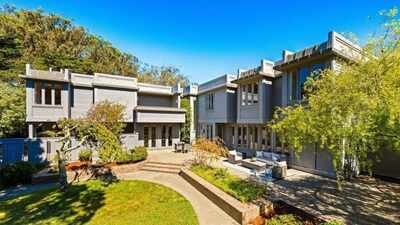
A luxury estate in San Francisco has sold for $28.5 million, exceeding its original asking price by $10 million in a deal that highlights intense competition in the city’s high-end property market as the artificial intelligence boom continues to reshape housing demand.
The eight-bedroom mansion, located in the upscale Presidio Wall neighborhood, was listed for $18.5 million on October 2 and sold for $28.5 million on October 22, according to the property listing. The $10 million premium over the asking price marks a significant sale in a city where housing costs have become increasingly difficult to manage for many residents.
The property features an unusually large footprint for San Francisco, including a private garden and a three-car garage. Built in 1966, the home was designed by Whisler-Patri, a prominent San Francisco architectural firm that SF Gate described as having once been among the city’s most active architectural offices.
San Francisco Mansion Sells for $10 Million Above Asking Price
The sale illustrates the competition surrounding desirable properties in San Francisco, particularly at the upper end of the housing market. The mansion’s final price was approximately 54% higher than its original $18.5 million listing price, reflecting the substantial premium achieved in the transaction.
Properties with generous outdoor space and extensive parking can be especially distinctive in a densely developed city. The Cherry Street estate combines eight bedrooms with a private garden and a three-car garage, features that contribute to its unusual scale within the local housing market.
The property had also remained in the same family for more than 40 years before the sale. According to the San Francisco Business Times, the sellers were the Janice R. Lurie Trust and the Robert A. Lurie Trust. Robert Lurie previously owned the San Francisco Giants.
The transaction comes amid broader attention on San Francisco’s real estate market, where demand for expensive homes has increased alongside the growth of the artificial intelligence industry.
AI Boom Adds Pressure to San Francisco Housing Market
San Francisco’s expanding AI sector has brought highly paid employees and renewed economic activity to the region. However, the influx of workers and competition for housing have also contributed to concerns about affordability.
The Guardian reported earlier this month that housing costs had risen to levels that can make finding a home challenging even for people earning six-figure salaries. The pressure reflects the difficulty of securing housing in a market where prices and demand can outpace what many workers can comfortably afford.
While the $28.5 million estate occupies the luxury end of the market, its sale comes against this wider backdrop of housing competition. High-value transactions do not directly represent conditions across every segment of the market, but they provide an indication of the prices buyers are prepared to pay for distinctive properties in sought-after locations.
The relationship between the technology sector and San Francisco housing is not limited to individual luxury purchases. The concentration of well-paid workers in the region can increase competition for homes, particularly when housing supply does not expand at the same pace as demand.
The mansion’s sale price, however, should be understood as the outcome of a specific transaction. The available details do not establish how much of the premium was directly attributable to AI-related demand rather than the property’s location, size, architectural history or other factors.
Luxury Home Competition Intensifies Across the City
Competition in San Francisco has extended beyond the market for multimillion-dollar estates. The San Francisco Chronicle reported that more than 140 homes in the city sold for at least $1 million above their asking prices during the first six months of the year.
The figure, based on data from Compass cited by the newspaper, represented a substantial increase from the same period a year earlier, when only eight homes reportedly sold for $1 million or more above their asking prices.
The Chronicle also reported that almost 92% of single-family homes sold above their asking prices in September. The figures suggest that buyers have been competing aggressively for properties across a broader section of San Francisco’s residential market, rather than only at the highest price levels.
Selling above asking price does not necessarily mean that every property is becoming more expensive by the same amount. The final price of an individual home depends on factors such as its location, condition, size, initial listing price and the level of competition among prospective buyers.
Nevertheless, the reported number of transactions above asking price points to a market in which sellers have been able to attract offers that exceed their advertised prices. The Cherry Street estate’s $10 million premium represents an especially striking example of that dynamic.
1966 Property Designed by Whisler-Patri
The mansion was built on Cherry Street in 1966 and designed by Whisler-Patri, a prominent architectural firm associated with San Francisco. SF Gate described the practice as previously being one of the city’s most active architectural offices.
The estate’s design and scale distinguish it from many residential properties in San Francisco. Its eight bedrooms, private garden and three-car garage provide substantial space in a city where residential lots and homes can be comparatively compact.
Such features may contribute to a property’s appeal among buyers seeking privacy and room beyond the interior of the home. However, the reported sale details do not identify the individual factors that determined the winning offer or explain why the final price exceeded the listing by $10 million.
The estate’s long ownership history also sets the transaction apart. Having remained in one family for more than four decades, the home was eventually sold through the Janice R. Lurie Trust and Robert A. Lurie Trust, according to the San Francisco Business Times.
What the Sale Reveals About San Francisco Real Estate
The Cherry Street transaction highlights the prices that can be achieved for distinctive properties in San Francisco’s competitive housing market. The mansion’s final sale price of $28.5 million was $10 million above its original asking price, while reports from local media indicate that bidding competition has also been visible in sales involving single-family homes more broadly.
The growth of the AI Industry provides important context for the market. Highly compensated technology workers can add purchasing power and increase demand for housing in the areas where they live and work. In a city already facing affordability challenges, that demand can intensify competition for available homes.
However, the sale alone cannot establish how much AI-related wealth influenced the outcome. The property’s architectural background, unusually large footprint, private garden, garage and location may also have played a role. The available information does not identify the buyer or provide details about the bidding process.
What is clear is that the mansion achieved a final price substantially above its advertised value at a time when San Francisco’s property market is drawing attention for both luxury sales and broader affordability concerns. The transaction adds another example to reports of intense competition among buyers, even as housing costs remain a challenge for residents across different income levels.
Key Facts About the $28.5 Million San Francisco Estate
- Final sale price: $28.5 million.
- Original asking price: $18.5 million.
- Premium above asking: $10 million, or approximately 54% of the original listing price.
- Listing date: October 2.
- Sale date: October 22.
- Location: Cherry Street in San Francisco’s Presidio Wall neighborhood.
- Property details: Eight bedrooms, a private garden and a three-car garage.
- Year built: 1966.
- Architectural firm: Whisler-Patri.
- Previous ownership: The property had been in one family for more than 40 years.
- Reported sellers: The Janice R. Lurie Trust and Robert A. Lurie Trust.
Frequently Asked Questions
How much did the San Francisco mansion sell for?
The eight-bedroom estate sold for $28.5 million, which was $10 million above its original asking price of $18.5 million.
When was the estate listed and sold?
The property was listed on October 2 and sold on October 22, according to its listing.
Where is the $28.5 million estate located?
The mansion is located on Cherry Street in San Francisco’s Presidio Wall neighborhood.
What features does the mansion have?
The estate has eight bedrooms, a private garden and a three-car garage. It was built in 1966 and designed by the architectural firm Whisler-Patri.
How is the AI boom affecting San Francisco housing prices?
The growth of the AI industry has brought highly paid workers to the region, adding to housing demand and competition. Reports have highlighted rising costs and bidding wars, although the available information does not establish how much AI-related demand contributed to this particular estate’s sale price.
How many San Francisco homes sold for at least $1 million above asking price in the first half of the year?
The San Francisco Chronicle reported that more than 140 homes sold for at least $1 million above their asking prices during the first six months of the year, citing Compass data. A year earlier, the reported figure was eight.
For breaking news and live news updates, like us on Facebook or follow us on Twitter and Instagram. Read more on Latest World on thefoxdaily.com.






COMMENTS 0