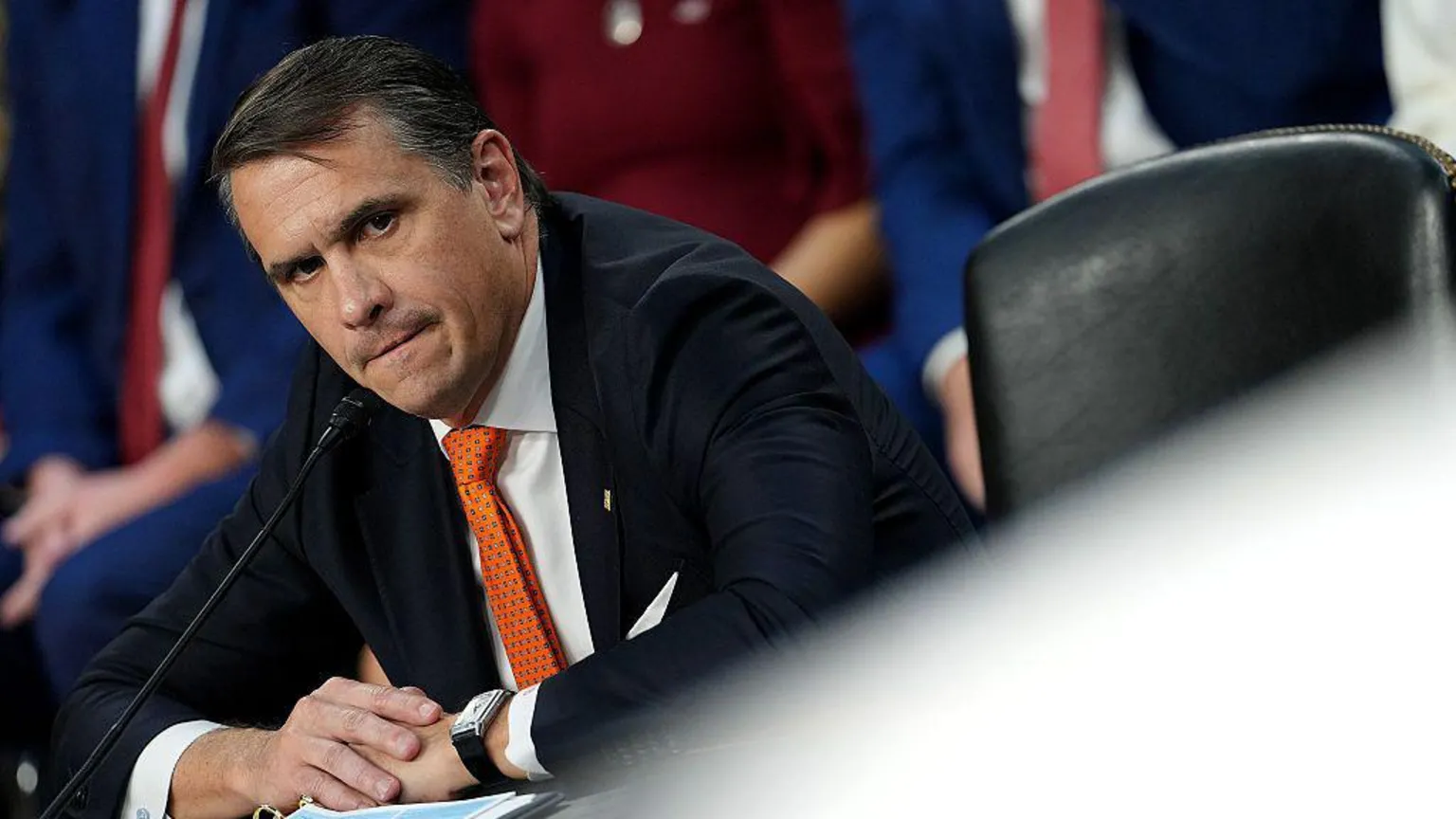
Todd Blanche, currently serving as Acting US Attorney General, appeared before the Senate Judiciary Committee for his confirmation hearing as he seeks permanent leadership of the US Department of Justice (DOJ). The hearing quickly became a high-profile examination of the department’s recent controversies, including the delayed release of the Jeffrey Epstein investigation files, a recently voided settlement involving the Internal Revenue Service (IRS), and concerns over the Justice Department’s independence under President Donald Trump.
As Trump’s former criminal defense attorney, Blanche entered the hearing facing unusually intense scrutiny over whether he could separate his previous legal representation of the president from the impartial responsibilities required of the nation’s chief law enforcement officer. While Republicans largely focused on management issues and DOJ reforms, Democrats repeatedly questioned his independence and oversight of politically sensitive investigations.
The hearing offered important insight into the challenges Blanche would face if confirmed, particularly as the Justice Department continues handling politically charged investigations, constitutional issues, and one of its most closely watched document releases in recent years.
Who Is Todd Blanche?
Todd Blanche is an experienced criminal defense attorney who represented Donald Trump in several major criminal cases before joining the Justice Department. Following the dismissal of former Attorney General Pam Bondi, Blanche assumed the role of Acting Attorney General while awaiting Senate confirmation for the permanent position.
If confirmed, Blanche would oversee federal law enforcement agencies including the FBI, federal prosecutors, antitrust enforcement, civil rights litigation, national security investigations, and criminal prosecutions across the United States.
A Central Question: Can Blanche Remain Independent?
The dominant theme throughout the hearing was whether Blanche could exercise independent judgment despite previously serving as Trump’s personal attorney.
Lawmakers questioned whether his close legal relationship with the president could influence Justice Department decisions involving politically sensitive investigations.
Blanche emphasized that his professional role as Trump’s lawyer should not be confused with a personal friendship.
He explained that his relationship with Trump developed strictly through legal representation and maintained that serving as Attorney General would require independent decision-making guided by the law rather than political loyalty.
The Epstein Files Dominated the Hearing
No issue generated more discussion than the Justice Department’s handling of documents related to convicted sex offender Jeffrey Epstein.
The department has faced criticism over:
- Slow public release of investigative records.
- Heavy redactions in released documents.
- Concerns raised by victims and advocacy groups.
- Questions surrounding investigative transparency.
- Handling of related prosecutions.
Blanche acknowledged that mistakes occurred during the document review process.
According to his testimony, Justice Department staff reviewed millions of pages under tight deadlines, and a small percentage of redactions later required correction.
Perhaps the most notable moment came when Blanche apologized for those mistakes, stating that errors should not have occurred and expressing regret to survivors affected by the process.
Why the Epstein Files Matter Beyond This Hearing
The Epstein investigation remains one of the most closely scrutinized criminal cases in recent American history. Public confidence in the Justice Department has become closely tied to perceptions of transparency surrounding the release of investigative records.
For many lawmakers, the issue is not simply about document production but about institutional credibility.
The handling of sensitive files involving high-profile individuals continues to shape broader debates over accountability, public trust, and victims’ rights.
The Controversial IRS Settlement
Another significant topic involved a recently invalidated settlement between President Trump, his businesses, and the Internal Revenue Service.
The proposed agreement had included provisions that drew bipartisan criticism, including a planned “anti-weaponisation fund.”
Following a federal judge’s decision to nullify the settlement, senators pressed Blanche to clarify whether the fund remained active.
Blanche stated that he was confident the fund would not proceed, a response that appeared to reassure several Republican senators who had expressed concern over the proposal.
Blanche Addresses Trump’s Political Future
During questioning, senators also raised constitutional issues regarding speculation about a possible third presidential term for Donald Trump.
Blanche stated that, in his view, the US Constitution does not permit President Trump to seek another presidential term in 2028.
His answer demonstrated a willingness to acknowledge constitutional limits despite previously representing Trump in multiple legal matters.
Moments of Tension During the Hearing
Although Blanche generally maintained a calm and measured tone, several exchanges became noticeably confrontational.
Some Democratic senators challenged him aggressively on issues involving FBI leadership, media industry investigations, and politically sensitive DOJ decisions.
At times, Blanche objected to rapid questioning, arguing that he was not being given adequate opportunity to respond before additional questions were asked.
These exchanges highlighted the increasingly polarized environment surrounding Justice Department oversight.
Leadership Style Compared With Previous Attorneys General
Observers noted a contrast between Blanche’s approach and that of his predecessor.
Rather than adopting an openly combative style throughout the hearing, Blanche generally relied on detailed legal explanations, procedural arguments, and technical responses.
This approach may reflect both his background as a defense attorney and his effort to reassure senators concerned about the department’s impartiality.
| Major Issue | Blanche’s Position |
|---|---|
| Relationship with Donald Trump | Professional attorney-client relationship, not personal friendship. |
| Epstein file mistakes | Acknowledged errors and apologized. |
| IRS settlement controversy | Stated the disputed fund would not move forward. |
| Trump third term | Said the Constitution does not permit another presidential run in 2028. |
| Justice Department independence | Promised decisions would follow the law. |
Why This Confirmation Matters
The Attorney General leads one of the most powerful institutions in the federal government.
The office oversees:
- Federal criminal investigations.
- National security prosecutions.
- Civil rights enforcement.
- Public corruption cases.
- Antitrust litigation.
- Constitutional legal challenges.
Given ongoing political investigations and heightened public scrutiny, the next Attorney General will likely influence the direction of federal law enforcement during a particularly contentious period in American politics.
Beyond individual controversies, the hearing centered on a broader question: whether the Justice Department can maintain public confidence by demonstrating independence, transparency, and accountability regardless of political leadership.
What Happens Next?
The Senate Judiciary Committee will first vote on whether to advance Blanche’s nomination to the full Senate.
If approved by the committee, the nomination will proceed to the Senate floor, where lawmakers will vote on final confirmation.
Republican support currently appears sufficient to give Blanche a favorable path forward, although debate over the Epstein files and broader concerns about DOJ independence are expected to remain central topics throughout the confirmation process.
Conclusion
Todd Blanche’s confirmation hearing highlighted the complex challenges facing the Justice Department as it navigates politically sensitive investigations, institutional reforms, and questions about public trust. While Blanche acknowledged mistakes in the handling of the Epstein files, defended his independence from President Trump, and addressed several controversial issues directly, senators from both parties made clear that his leadership will continue to face close scrutiny.
As the confirmation process moves forward, the outcome will have significant implications not only for Blanche’s future but also for the direction of federal law enforcement, the credibility of the Justice Department, and the balance between legal independence and political accountability in the years ahead.
For breaking news and live news updates, like us on Facebook or follow us on Twitter and Instagram. Read more on Latest World on thefoxdaily.com.






COMMENTS 0