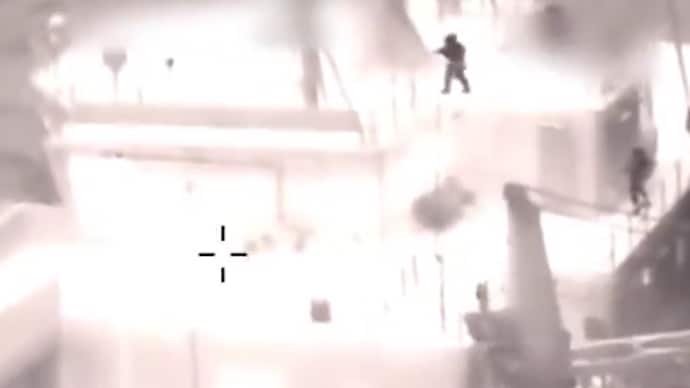
In a dramatic high-seas operation that looked straight out of a Hollywood thriller, United States military and Coast Guard forces seized an oil tanker in the Caribbean Sea, uncovering explosives, firearms, and illicit cargo. The operation, carried out in international waters, is the latest escalation in Washington’s crackdown on what it calls “ghost fleets” transporting sanctioned Venezuelan oil across global shipping routes.
US Secretary of Homeland Security Kristi Noem described the mission as “owning the sea” while sharing unclassified video footage of the raid. The visuals show a meticulously coordinated assault involving armed boarding teams, helicopters, and explosive breaching techniques used to gain entry to the vessel.
According to officials familiar with the operation, Coast Guard personnel first approached the tanker covertly before deploying explosive charges to breach secured access points. Moments later, a helicopter hovered overhead as additional commandos descended onto the deck via ropes, swiftly taking control of the ship and neutralizing potential threats.
“The ghost fleets will not outrun justice,” Noem said while commenting on the seizure. “They will not hide behind fake flags or fabricated paperwork. The United States Coast Guard will enforce US and international law, intercept sanctioned oil vessels, and cut off funding streams tied to criminal activity, including narco-terrorism.”
The seized tanker, identified as Olina, is believed to be part of an underground maritime network moving Venezuelan crude oil in defiance of US sanctions. Investigators say the vessel attempted to conceal its origin through deceptive tracking practices and false nationality claims—common tactics employed by so-called shadow fleets.
The Caribbean and Atlantic maritime corridors have become increasingly tense as the Trump administration intensifies efforts to restrict Venezuela’s oil exports, particularly shipments allegedly destined for china and Russia. The seizure of the Olina marks the fifth tanker intercepted under this expanded enforcement campaign.
Just days earlier, US forces captured another oil tanker flying a Russian flag after a two-week pursuit in the Atlantic Ocean. Reports indicated that Moscow may have dispatched a submarine during the standoff, underscoring how close these maritime operations are coming to triggering broader geopolitical confrontations. That vessel reportedly carried a crew of 28, including at least three Indian nationals.
In a separate but related operation, US authorities also detained the tanker M/T Sophia, accusing it of engaging in illicit maritime activities connected to sanctioned oil transfers. These back-to-back seizures highlight the scope and intensity of Washington’s maritime enforcement strategy.
US officials maintain that these actions are lawful and necessary to disrupt illegal oil revenues that allegedly fund destabilizing activities. However, critics warn that aggressive interdictions in international waters could inflame diplomatic tensions and raise questions about the limits of unilateral sanctions enforcement.
The Olina’s capture comes in the wake of the Trump administration’s surprise overnight raid that led to the ouster of Venezuelan President Nicolas Maduro. Since then, the US has sought to exert tighter control over the global distribution of Venezuelan oil, signaling that maritime enforcement will remain a central pillar of its foreign policy.
As the Atlantic grows increasingly militarized, analysts say these operations mark a new phase in economic warfare—one where helicopters, commandos, and boarding teams are used not just to police the seas, but to reshape global energy flows. Whether this strategy succeeds without triggering unintended escalation remains an open question.
For breaking news and live news updates, like us on Facebook or follow us on Twitter and Instagram. Read more on Latest World on thefoxdaily.com.



COMMENTS 0