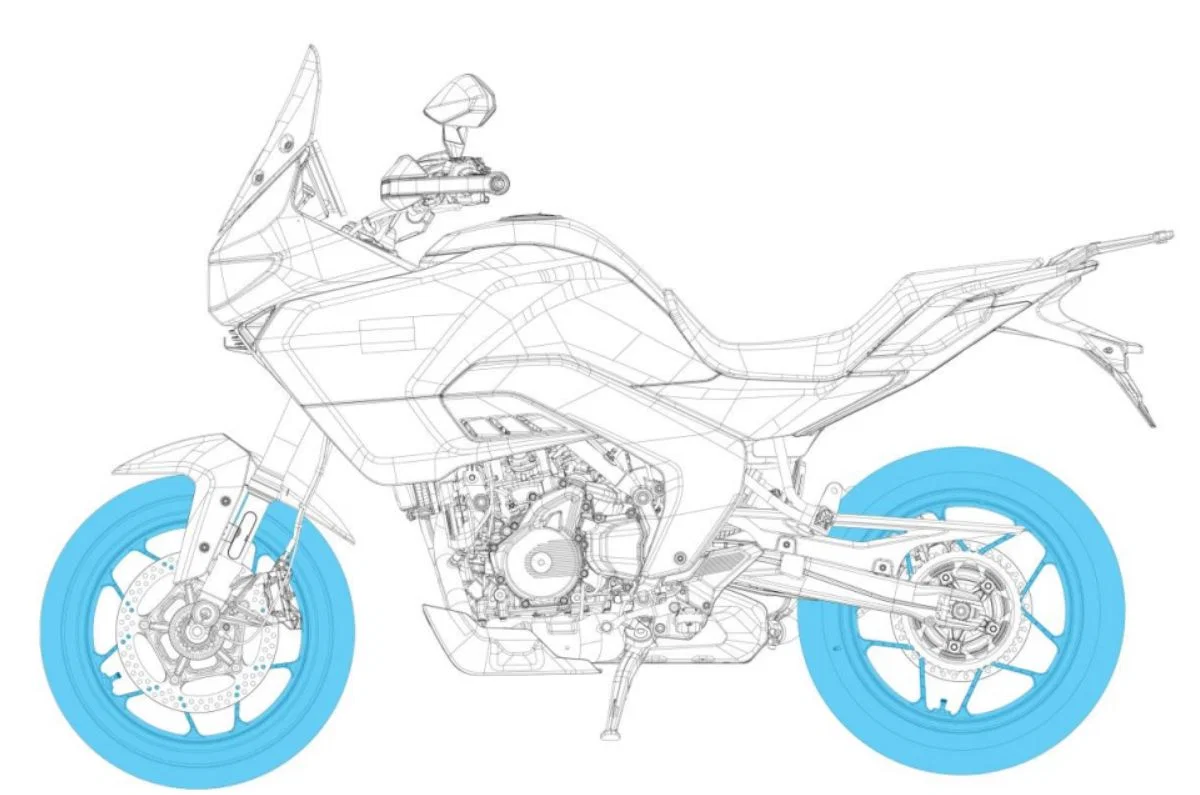
Norton Motorcycles has patented its upcoming Atlas adventure motorcycle in India, signalling further progress towards the brand’s return to the Indian market. The company had previously patented the Manx R in the country earlier this year, and has now registered the Atlas alongside it.
The Norton Atlas is an adventure-focused motorcycle powered by a 585cc liquid-cooled parallel-twin engine. It was developed alongside the road-oriented Atlas GT, with both motorcycles sharing their platform and engine but offering different hardware and riding characteristics.
While a patent does not confirm an official launch date, it indicates that Norton is taking steps to protect its product design and intellectual property in India. The motorcycles are manufactured locally at TVS Motor Company’s Hosur facility, which could also help the brand price them competitively when they arrive.
Norton Atlas Patented: What To Expect
The Norton Atlas is designed as an adventure motorcycle for riders who want a combination of road performance and touring ability. Its 585cc parallel-twin engine produces 70hp and 57.5Nm, placing it in the middleweight motorcycle category.
The Atlas shares its mechanical foundation with the Atlas GT, but the two motorcycles have different wheel sizes, suspension setups and seat heights. While the standard Atlas is aimed at adventure riding, the GT is designed primarily for road use.
Both motorcycles also get a comprehensive electronics package, including an IMU-based rider-aid system, and a large touchscreen instrument display. These features give the Atlas range a more premium equipment package than what buyers might expect from a conventional middleweight adventure motorcycle.
585cc Parallel-Twin Engine Produces 70hp
Powering the Norton Atlas is a 585cc, liquid-cooled, parallel-twin engine that produces 70hp at 9,300rpm and 57.5Nm of torque at 7,300rpm. The engine is paired with a six-speed gearbox.
Norton has also equipped both motorcycles with a bi-directional quickshifter and a slipper clutch as standard. The quickshifter allows gear changes without using the clutch, while the slipper clutch helps manage rear-wheel behaviour during aggressive downshifts.
| Engine Specification | Norton Atlas |
|---|---|
| Engine capacity | 585cc |
| Engine type | Liquid-cooled parallel-twin |
| Maximum power | 70hp at 9,300rpm |
| Maximum torque | 57.5Nm at 7,300rpm |
| Gearbox | 6-speed |
| Quickshifter | Bi-directional |
| Clutch | Slipper clutch |
The engine is housed in a steel trellis frame, with the powerplant also acting as a stressed member. The motorcycle uses a cast aluminium swingarm, while suspension duties are handled by KYB components.
At the front, the Atlas gets a fully adjustable upside-down fork. At the rear, it features a monoshock with a remote preload adjuster. This setup is intended to offer adjustment for different riding conditions and luggage loads.
Norton Atlas vs Atlas GT: What Are The Differences?
The Norton Atlas and Atlas GT share their engine and overall platform, but their intended uses are different. The standard Atlas is the more adventure-oriented motorcycle, while the Atlas GT is designed for riders who spend most of their time on paved roads.
The most noticeable difference is the front wheel size. The Atlas gets a 19-inch front wheel, which is more suitable for adventure-oriented riding, while the Atlas GT uses a smaller 17-inch front wheel that favours road-focused handling.
There are also differences in suspension travel and seat height. The Atlas gets slightly more suspension travel and a taller seat height of 845mm. The Atlas GT, meanwhile, has a more accessible 815mm seat height and slightly less suspension travel.
| Feature | Norton Atlas | Norton Atlas GT |
|---|---|---|
| Positioning | Adventure-focused | Road-focused |
| Front wheel size | 19-inch | 17-inch |
| Seat height | 845mm | 815mm |
| Suspension travel | Slightly more | Slightly less |
| Engine | 585cc parallel-twin | 585cc parallel-twin |
The differences mean that buyers will need to choose between the two based on their riding requirements. The Atlas should appeal to those who want a more adventure-oriented setup, while the GT could be a better fit for regular road use and touring on paved routes.
Electronics And Features: 8-Inch Touchscreen Display
Both Norton motorcycles come with a comprehensive electronics package. A six-axis IMU supports several rider-assistance systems, including cornering ABS, traction control and cornering traction control. Multiple riding modes are also available.
The six-axis IMU helps the motorcycle’s electronic systems understand its movement and lean angle, allowing certain rider aids to respond according to riding conditions. Features such as cornering ABS and traction control can be particularly useful when riding on changing road surfaces.
Another major highlight is the 8-inch touchscreen TFT display. Similar to the unit offered on the Norton Manx R, it gives the Atlas range a modern instrument setup. The large screen is expected to provide access to riding information and motorcycle settings, although the complete India-specific feature list has not yet been announced.
Norton Atlas India Launch: What We Know So Far
The Norton Atlas and Atlas GT are manufactured in India at TVS Motor Company’s Hosur plant. Their local production is significant because it could help Norton manage manufacturing costs and offer competitive pricing in the Indian market.
The Indian launch has been anticipated for some time, and the latest patent registration adds another indication that the brand’s plans for the market are progressing. However, patent filings are not launch announcements and do not guarantee that a motorcycle will arrive at a particular time.
There is currently no confirmed India launch date for either motorcycle. The Atlas range is expected to arrive after the brand’s UK introduction, but Norton has not officially announced the Indian launch schedule.
Expected India Launch Timeline
We expect the Norton Atlas range to launch in India later this year, although this remains an estimate rather than an officially confirmed timeline. The Royal Enfield Himalayan 750 is also expected to make its debut at the RE Motorverse, scheduled to take place from November 27 to 29. The Atlas could arrive after that event, depending on Norton’s launch plans.
Since both Norton motorcycles are already manufactured locally, their introduction in India could be easier to manage than importing them as completely built units. However, the final launch timeline and market-specific specifications remain unconfirmed.
Norton Atlas Expected Price In India
In the UK, the Norton Atlas range starts at GBP 8,250, which is approximately Rs 10.22 lakh based on the exchange rate at the time of writing. This is the overseas starting price and should not be treated as the expected Indian showroom price.
Because the motorcycles are manufactured at TVS’ Hosur facility, Norton could price them more aggressively in India. The Atlas is currently listed with an expected price of around Rs 5.70 lakh in India, but the final price will only be known when the company officially launches the motorcycle.
Local manufacturing could give Norton an opportunity to compete in the premium middleweight motorcycle segment. However, actual pricing will depend on the final specifications, equipment, localisation levels and positioning of the Indian models.
Which Bikes Could Rival The Norton Atlas In India?
Once launched, the Norton Atlas could attract buyers looking for a premium adventure motorcycle with a parallel-twin engine and modern electronics. Its positioning will depend heavily on its final price and equipment package.
The Royal Enfield Himalayan 750 could become an important rival if its pricing and specifications place it in a similar category. Other adventure motorcycles, including the KTM 390 Adventure, may also feature in buyers’ comparisons, although they occupy a different engine-capacity segment.
The Atlas GT could appeal to a different set of buyers who prefer road-focused motorcycles rather than adventure-oriented machines. Its 17-inch front wheel and lower seat height could make it more suitable for riders prioritising road handling and everyday usability.
Should You Wait For The Norton Atlas?
The Norton Atlas looks promising on paper, particularly because of its 585cc parallel-twin engine, adjustable KYB suspension and extensive electronics package. The availability of two distinct versions also gives buyers the choice between an adventure-focused motorcycle and a road-biased alternative.
However, there are still important details to confirm before making a purchase decision. These include the final India specifications, pricing, availability, service network and ownership costs. The brand’s long-term after-sales support will also be an important consideration for buyers entering the premium motorcycle segment.
For now, the patent registration is a positive development for enthusiasts waiting for Norton’s Indian comeback. With local manufacturing already in place, the Atlas and Atlas GT could become interesting additions to the country’s premium motorcycle market.
Would you consider the Norton Atlas over established adventure motorcycles such as the KTM 390 Adventure or wait for the upcoming Royal Enfield Himalayan 750? Share your expectations and thoughts.
For breaking news and live news updates, like us on Facebook or follow us on Twitter and Instagram. Read more on Latest Automobile on thefoxdaily.com.




COMMENTS 0