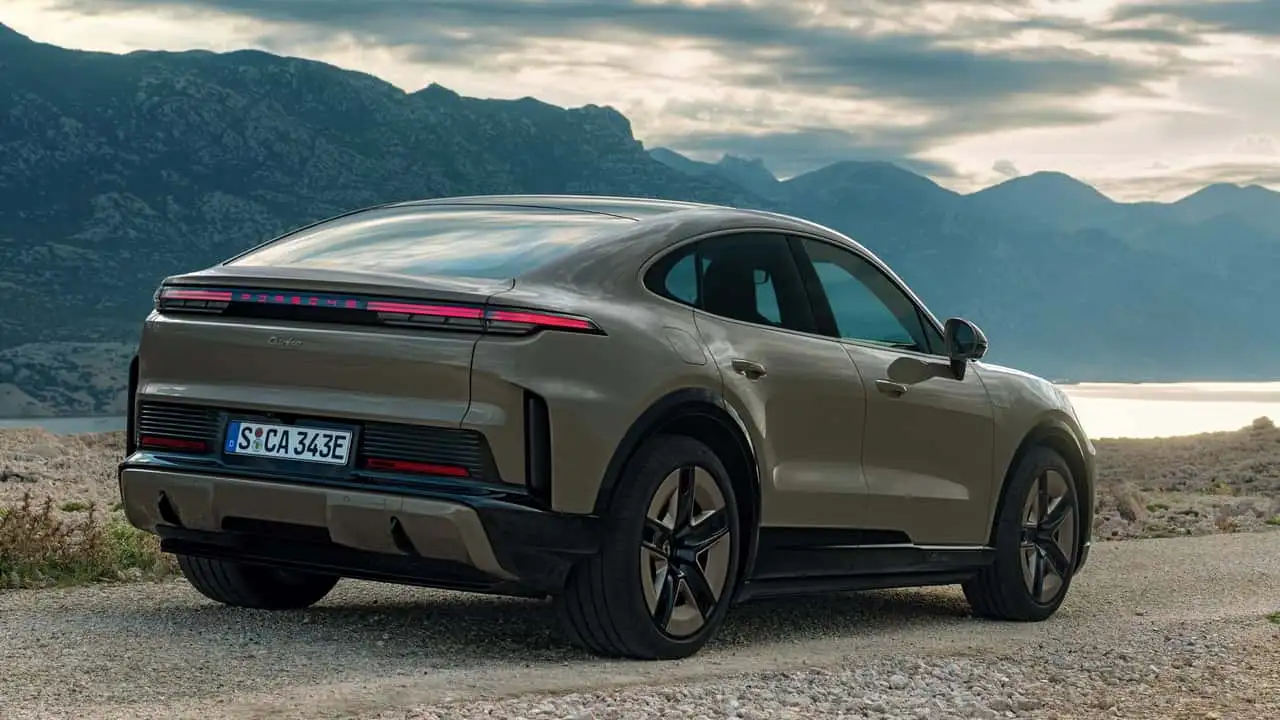
For decades, Porsche has been one of the automotive industry’s most successful examples of balancing exclusivity with commercial success. However, changing market conditions, slowing global demand, increasing competition from Chinese automakers, and uncertainty surrounding electric vehicle adoption are forcing the German luxury brand to rethink its strategy.
Instead of chasing record-breaking sales numbers, Porsche is embracing a different approach: selling fewer vehicles while generating higher profits from each one. The strategy represents one of the most significant shifts in the company’s modern history and could redefine how luxury automakers compete in an increasingly complex global market.
While some manufacturers continue to prioritize volume growth, Porsche believes its future success depends on strengthening margins, preserving brand exclusivity, and focusing on high-value products that deliver greater profitability even if total deliveries decline.
Why Porsche Is Changing Its Business Model
Porsche’s latest strategic shift comes after a challenging period for the company.
In 2023, Porsche achieved its strongest sales performance ever, delivering more than 320,000 vehicles globally. At the time, demand remained strong across key markets, and the company appeared well-positioned to capitalize on the growing popularity of luxury SUVs and performance vehicles.
However, the market environment changed rapidly.
A slowdown in China, one of Porsche’s most important regions, significantly affected sales performance. Local Chinese manufacturers introduced increasingly sophisticated electric and luxury vehicles at competitive prices, creating stronger competition than international brands had previously faced.
At the same time, regulatory challenges in Europe affected key Porsche models, reducing availability and limiting sales opportunities.
| Year | Global Deliveries | Business Trend |
|---|---|---|
| 2023 | 320,221 Vehicles | Record-Breaking Sales |
| 2025 | 279,449 Vehicles | Demand Decline Begins |
| 2026 (Q1) | 60,991 Vehicles | 15% Drop Year-on-Year |
The numbers reveal a clear trend: the era of uninterrupted growth can no longer be taken for granted.
The Luxury Industry’s New Reality: Profit Matters More Than Volume
Porsche’s strategy reflects a broader principle that has long defined successful luxury brands.
Unlike mass-market manufacturers, luxury companies do not necessarily need to sell more products every year to increase profits. Instead, they focus on creating highly desirable products that command premium prices and generate stronger margins.
This approach has been successfully used by luxury fashion houses, watchmakers, and ultra-premium automotive brands for decades.
By reducing production capacity and focusing on high-margin vehicles, Porsche aims to maintain financial strength while preserving the exclusivity that makes the brand attractive in the first place.
The strategy also helps protect residual values, improve brand perception, and reduce the risks associated with overproduction.
China: The Biggest Challenge Facing Porsche
Perhaps the most important factor influencing Porsche’s new strategy is the rapidly changing Chinese automotive market.
For years, China served as a major growth engine for global luxury brands. Rising incomes, expanding urban populations, and growing enthusiasm for premium vehicles created tremendous opportunities.
Today, the situation is very different.
Chinese manufacturers have evolved from low-cost alternatives into serious technology leaders. Domestic brands are producing advanced electric vehicles equipped with cutting-edge software, competitive performance, and attractive pricing.
This has intensified competition across virtually every automotive segment.
Luxury buyers who once automatically preferred European brands now have more alternatives than ever before.
For Porsche, adapting to this reality requires a more disciplined and profitability-focused business model.
The Return of the Porsche 718 Is More Important Than It Appears
One of the most significant developments in Porsche’s future product strategy is the planned return of the 718 sports car lineup.
The Boxster and Cayman have long served as entry points into Porsche ownership, attracting younger enthusiasts and first-time customers.
Industry observers expect the next-generation models to offer both combustion-engine and fully electric variants, giving customers greater flexibility while helping Porsche navigate the transition toward electrification.
This dual-powertrain strategy reflects changing market realities.
While electric vehicles continue to grow in popularity, many performance-car enthusiasts remain passionate about traditional internal combustion engines. Offering both options allows Porsche to satisfy a broader customer base without alienating loyal buyers.
Why Porsche Is Slowing Its Electric-Only Ambitions
Earlier in the decade, many automakers predicted a rapid shift toward fully electric transportation.
Although EV adoption continues to expand globally, consumer demand has developed more gradually than some manufacturers expected.
Several challenges have emerged:
- Charging infrastructure gaps in many regions.
- Concerns about long-distance travel.
- Higher purchase prices for some EV models.
- Battery supply chain complexities.
- Continued demand for high-performance combustion engines.
As a result, Porsche is increasingly adopting a balanced approach that includes electric, hybrid, and traditional powertrain options.
This flexibility could prove advantageous as consumer preferences continue evolving.
The Future of the Large Porsche K1 SUV Remains Uncertain
Among Porsche’s future projects, few have generated as much speculation as the proposed three-row luxury SUV known internally as the K1.
Originally envisioned as a flagship electric SUV positioned above the Cayenne, the project has reportedly undergone multiple revisions as market conditions changed.
The uncertainty surrounding the model highlights a broader challenge facing automakers worldwide: predicting future customer demand in an era of rapid technological change.
Luxury SUV sales remain strong in key markets such as North America and the Middle East, making a large Porsche SUV appear attractive from a business perspective.
However, balancing development costs, regulatory requirements, and shifting consumer preferences complicates decision-making.
Why SUVs Continue to Drive Porsche’s Growth
Although Porsche is famous for sports cars like the 911, SUVs have become the company’s commercial backbone.
Models such as the Cayenne and Macan transformed Porsche from a niche sports-car manufacturer into a global luxury powerhouse.
The SUV segment offers several advantages:
- Higher profit margins.
- Broader customer appeal.
- Greater practicality for families.
- Strong demand in emerging markets.
- Opportunities for hybrid and electric variants.
Future Porsche growth will likely remain closely linked to the success of its SUV portfolio.
The Upcoming Macan Replacement Could Be a Game Changer
Another critical component of Porsche’s future strategy is the development of a new compact luxury crossover expected to replace the first-generation Macan.
The original Macan became one of Porsche’s most successful products by combining sports-car dynamics with SUV practicality.
The next-generation replacement will face enormous expectations.
Industry analysts believe it could become Porsche’s highest-volume product, particularly if it successfully combines performance, electrification, connectivity, and everyday usability.
Its success may play a crucial role in determining whether Porsche can maintain profitability while reducing overall production volumes.
Deeper Cooperation With Audi: A Cost-Saving Necessity
Developing modern vehicles has become significantly more expensive.
Manufacturers must invest heavily in software development, battery technology, autonomous driving systems, cybersecurity compliance, emissions regulations, and advanced manufacturing processes.
To manage these costs, Porsche plans to strengthen cooperation with Audi.
Shared platforms, powertrains, software systems, and engineering resources can reduce development expenses while accelerating product launches.
This strategy mirrors a growing trend across the automotive industry, where collaboration increasingly determines long-term competitiveness.
Could More Workforce Reductions Be Coming?
Porsche’s leadership has acknowledged the need for stronger cost control measures.
As the company adjusts production levels and restructures operations, workforce optimization remains a possibility.
While no final decisions have been publicly confirmed, management is expected to finalize a broader cost-reduction strategy in the coming months.
The challenge will be balancing efficiency improvements with maintaining the engineering excellence and craftsmanship that define the Porsche brand.
What Porsche’s Strategy Means for Customers
For consumers, Porsche’s shift toward profitability over volume could have several implications.
| Potential Impact | Customer Outcome |
|---|---|
| Lower Production Volumes | Greater Exclusivity |
| Premium Product Focus | Higher Feature Content |
| Multi-Powertrain Strategy | More Customer Choice |
| Shared Technology | Improved Innovation |
| Cost Optimization | More Sustainable Business Operations |
While vehicle prices may remain high, customers could benefit from more advanced products and a stronger emphasis on quality and exclusivity.
The Bigger Industry Trend: Quality Over Quantity
Porsche’s strategy may signal a broader shift across the luxury automotive sector.
As electrification, software development, and regulatory compliance become increasingly expensive, manufacturers may find it difficult to pursue unlimited volume growth.
Instead, success may depend on delivering highly profitable products that strengthen brand identity and customer loyalty.
Luxury brands that focus on value creation rather than volume expansion could prove more resilient during periods of economic uncertainty.
Conclusion
Porsche’s decision to prioritize profitability over sales volume represents a major strategic transformation for one of the world’s most iconic automotive brands. Facing weaker demand, increased competition, and changing consumer preferences, the company is choosing to focus on stronger margins, premium products, and long-term sustainability rather than chasing record delivery numbers.
The return of the 718 lineup, continued investment in SUVs, deeper cooperation with Audi, and a renewed commitment to combustion-engine options demonstrate a pragmatic approach to an industry undergoing profound change.
While challenges remain, Porsche’s strategy reflects a simple but powerful philosophy: in the luxury market, success is not measured solely by how many vehicles are sold, but by how much value each vehicle creates. If executed successfully, selling fewer cars may ultimately make Porsche stronger, more exclusive, and more profitable than ever before.
For breaking news and live news updates, like us on Facebook or follow us on Twitter and Instagram. Read more on Latest Automobile on thefoxdaily.com.




COMMENTS 0