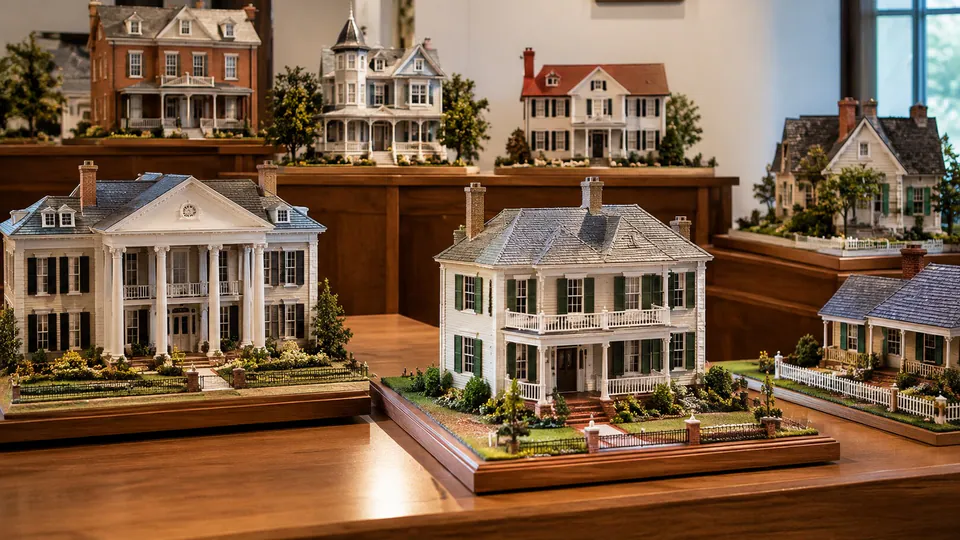
What began as a simple retirement hobby became a remarkable family legacy when Aaron Friedman spent nearly two decades creating eight elaborate miniature houses. After selling his business in the late 1970s, Friedman took up the project following a suggestion from his daughter-in-law to build a dollhouse for his eldest granddaughter.
Friedman had no previous experience building miniatures, but his first creation soon inspired a much larger undertaking. Over the following years, he built eight detailed miniature homes, each designed to capture the appearance and character of a real house. Today, the collection is preserved in the Aaron and Sarah Friedman Miniature Gallery at the History Museum of Mobile in Alabama.
Friedman, who lived from 1915 to 1997, transformed his retirement into an opportunity to develop a new skill and create something lasting for his family. His miniature houses are admired for their architectural detail, carefully furnished interiors and the personal stories behind each creation.
How a Retirement Hobby Became a Family Legacy
Friedman’s miniature-building journey began with a house intended for his eldest granddaughter, Rachel. As he developed his skills, the project expanded to include a miniature home for each of his granddaughters and another for his wife, Sarah.
Each house required at least a year of planning and construction, making the collection a demanding long-term undertaking. Friedman worked on a scale of one inch to one foot, meaning every architectural feature had to be carefully proportioned to resemble its full-sized counterpart.
Rather than simply assembling miniature furniture and walls, Friedman aimed to reproduce the appearance and atmosphere of actual homes. His approach required patience, careful observation and attention to architectural features that could easily be overlooked in a smaller model.
The project also became a shared creative pursuit for Aaron and Sarah. Sarah helped plan and decorate the interiors, contributing handmade rugs, pillows, chair cushions and other needlework. Their family friend Pearl Brook created many of the window treatments, bedspreads and additional decorative elements.
The collection therefore represents more than one person’s craftsmanship. It reflects the contributions of family members and friends who helped turn Friedman’s original idea into an extensive body of work.
Miniature Houses Recreated With Extraordinary Detail
The eight miniature houses stand out for the realism of their construction. Their exterior features include wooden siding, fired-brick facades, handmade stone tiles and carefully designed roof coverings. Doors and windows can be moved, while small electrical systems power miniature chandeliers and lamps.
Each house has its own architectural character, and the interiors reflect different styles of decoration. One example features Victorian design, with elaborate wallpaper, textiles and furniture. Other rooms incorporate more modern interiors, giving the collection a variety of visual styles.
The level of detail extends beyond architecture. Dining rooms contain miniature china cabinets, while kitchen cupboards hold tiny food items and vegetables appear on counters. Flower arrangements add colour to rooms, and books and newspapers sit on bedside tables.
Other details help make the houses feel lived in. Slippers are placed beside beds, toys are scattered around nursery rooms, and bathrooms feature monogrammed towels. Glasses resting on books and family photographs displayed above fireplaces recreate the everyday atmosphere of a real home.
These small objects help distinguish Friedman’s work from ordinary model houses. Instead of concentrating exclusively on walls, roofs and furniture, he incorporated the everyday details that make a home feel personal and occupied.
How Aaron Friedman Researched and Built the Houses
Creating realistic miniature houses required more than technical skill. Friedman studied the real homes he wanted to recreate, photographed them and used those observations to guide his miniature construction.
This research-based approach helped him reproduce architectural features and interior arrangements with greater accuracy. The work involved decisions about proportions, materials, decoration and the placement of objects within each room.
At a scale of one inch to one foot, even a small difference in dimensions could affect the appearance of an entire room. Friedman therefore had to pay close attention to the relationship between architectural elements and furnishings.
The functioning electrical systems, movable doors and windows, handmade decorations and carefully arranged household objects demonstrate the complexity of the undertaking. Each house required sustained effort to bring its individual design to life.
The collection also shows how miniature construction can combine several disciplines, including architecture, interior design, woodworking, research and decorative craftsmanship. Its appeal lies not only in the small scale of the buildings but also in the thought that went into making them convincing representations of real homes.
The Aaron and Sarah Friedman Miniature Gallery in Mobile
The Aaron and Sarah Friedman Miniature Gallery forms part of the permanent exhibitions at the History Museum of Mobile. It preserves all eight miniature houses, allowing visitors to appreciate the collection beyond the family for whom it was originally created.
The gallery gives the houses a public role while retaining their connection to Friedman’s personal life. Each creation reflects a project that began with a gift for a granddaughter and gradually developed into a collection representing years of work.
The houses also offer visitors an opportunity to examine architectural and interior-design details from a close perspective. Features that might be overlooked in a full-sized building become prominent when reproduced at miniature scale.
The collection’s continued display ensures that Friedman’s craftsmanship and the story behind it remain part of Mobile’s cultural heritage. Its significance comes from both the technical achievement of building eight detailed homes and the personal relationships that inspired their creation.
Why the Miniature Houses Continue to Fascinate Visitors
Miniature houses can attract attention through their scale, but Friedman’s collection offers something more: a detailed record of domestic life recreated through craftsmanship. The tiny furniture, carefully arranged rooms and realistic building materials encourage visitors to look closely at each house.
The collection also demonstrates how ordinary spaces can be transformed into subjects of artistic study. Kitchens, bedrooms, dining rooms and living areas become intricate displays of design when every feature must be recreated at a fraction of its original size.
Because Friedman based his work on real houses and included personal touches throughout the interiors, the miniatures communicate a sense of everyday life rather than presenting architecture as an abstract exercise.
The family photographs and the involvement of Sarah and Pearl Brook add another dimension to the collection. They connect the physical objects to the people who inspired, supported and contributed to the project.
A Lasting Lesson About Creativity After Retirement
Aaron Friedman’s story illustrates how retirement can provide an opportunity to explore interests that might otherwise remain undeveloped. Although he began without experience in miniature construction, he gradually built the skills needed to complete an ambitious project spanning nearly 20 years.
His original goal was modest: to create a dollhouse for his granddaughter. That idea eventually grew into eight elaborate houses that required years of research, construction and decoration.
The project also became a family undertaking, with Sarah and a close friend contributing handmade furnishings and decorative details. Their involvement helped make the collection a shared expression of creativity and affection.
Today, the miniature houses preserved at the History Museum of Mobile stand as a reminder that a personal hobby can develop into something with lasting cultural and emotional value. Friedman’s work continues to bring together architecture, craftsmanship and family history, ensuring that a retirement project inspired by a simple suggestion remains part of Mobile’s heritage.
For breaking news and live news updates, like us on Facebook or follow us on Twitter and Instagram. Read more on Latest Business on thefoxdaily.com.

COMMENTS 0