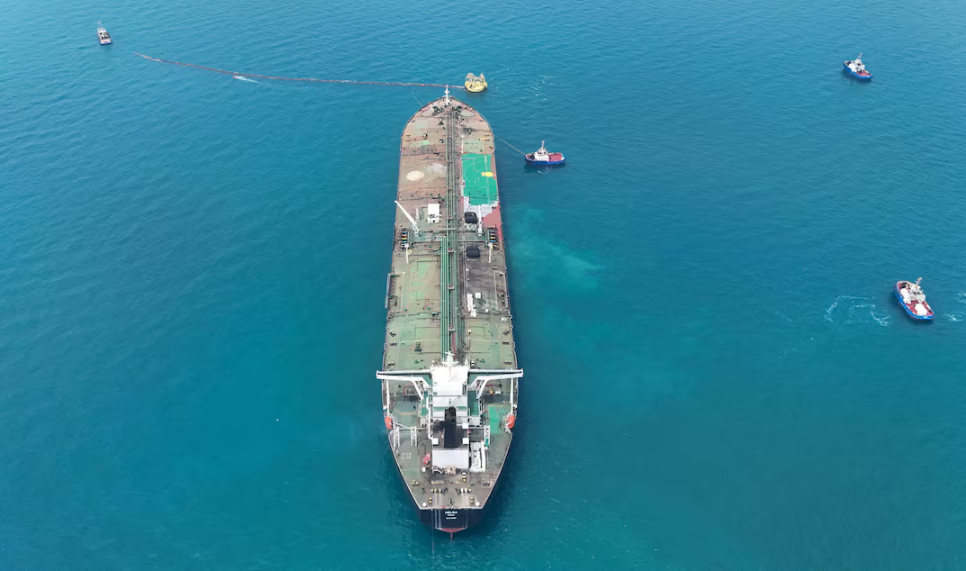
ADNOC, the Abu Dhabi National Oil Co, has emerged as a major buyer of discounted Iraqi crude as the Iran war disrupts traditional oil flows across the Middle East. The UAE state-owned energy company has purchased millions of barrels from Iraq’s state oil marketing company, SOMO, according to people familiar with the transactions.
The purchases highlight how the current supply disruption is reshaping crude trading in the region. While some producers and exporters are struggling to move oil because of shipping and infrastructure constraints, large trading arms with access to logistics and international markets are finding opportunities to secure barrels at unusually steep discounts.
ADNOC’s trading arm was the biggest lifter of Iraqi crude in August and September, according to Iraqi energy sources. The activity has also helped support Iraqi exports after shipments were severely reduced during earlier stages of the war.
ADNOC’s Iraqi Crude Purchases: What We Know
The scale of ADNOC’s buying is significant. One Iraqi source said ADNOC agreed to purchase 32 million barrels in August at discounts ranging from $24.90 to $27 a barrel. For September, the company agreed to buy another 40 million barrels, including 10 million barrels at an $18 discount and 30 million barrels at a $25 discount.
However, agreed volumes and physically lifted volumes are not necessarily the same. Export constraints meant ADNOC did not lift the entire August allocation. Another Iraqi source said SOMO allocated 32 million barrels to ADNOC in August, but ADNOC lifted about 20 million barrels because of export limitations and difficulties faced by Basra Oil Company in securing enough crude.
ADNOC had lifted about 14 million Iraqi barrels by September 15, according to the source.
| Period | ADNOC Purchase/Allocation | Reported Discount | Key Issue |
|---|---|---|---|
| August | 32 million barrels agreed | $24.90–$27 per barrel | Only about 20 million barrels reportedly lifted because of export constraints |
| September | 40 million barrels agreed | $18–$25 per barrel | About 14 million barrels lifted by September 15 |
| September–October | About 20 million barrels bought in tenders | $25–$27 per barrel | Additional discounted Iraqi crude secured |
Why Is Iraqi Oil Being Sold at Such Large Discounts?
The unusually large discounts are closely connected to the disruption of Middle East oil logistics. The war has affected shipping routes, export infrastructure and the ability of producers to move crude normally.
Iraq is one of the region’s major oil producers, but its southern exports depend heavily on infrastructure around Basra and access to maritime shipping routes. When transportation capacity becomes constrained, sellers can face pressure to reduce prices to encourage buyers to take available cargoes.
This creates a different situation from a conventional oil shortage. Global benchmark prices can rise sharply because traders fear lost supply, while particular grades or cargoes in locations facing logistical bottlenecks can simultaneously trade at substantial discounts.
For a large trading operation such as ADNOC’s, the gap between benchmark prices and discounted physical barrels can create a potentially attractive trading opportunity, provided the company can arrange storage, transportation and eventual sales.
ADNOC Is Becoming More Important as a Global Oil Trader
The Iraqi purchases also underline ADNOC’s expanding role beyond simply producing crude. Its trading operations give the UAE energy group greater flexibility to buy oil from other producers, move cargoes through international markets and manage supply disruptions.
That flexibility becomes particularly valuable during periods of geopolitical uncertainty. A producer focused only on its own output may have limited options when a particular export route is disrupted. A trading company with access to multiple grades and supply sources can potentially redirect purchases toward locations where barrels are available at more attractive prices.
The Iraqi deals therefore represent more than a single set of crude purchases. They demonstrate how national oil companies are increasingly combining production, trading and logistics capabilities to navigate volatile energy markets.
Iraq’s Export Problems Remain a Major Constraint
The reported purchases also reveal an important limitation: buying crude does not automatically mean that all contracted barrels can be exported.
ADNOC was allocated 32 million barrels in August but reportedly lifted only about 20 million. The difference illustrates the importance of physical infrastructure in the oil market.
Crude needs to move through pipelines, storage facilities, terminals and tankers before reaching refiners. If one part of that chain becomes constrained, barrels can remain stranded or require alternative routes.
Basra Oil Company was reportedly unable to secure sufficient crude to fulfil the entire allocation. That suggests that the disruption was not simply a question of finding buyers. Iraq also faced challenges in physically assembling and exporting the volumes being offered.
Why the Discounts Matter for Oil Traders
A discount of $25 a barrel is substantial when benchmark crude prices are around $100 or more. However, the headline discount should not automatically be interpreted as guaranteed profit.
Traders must account for shipping costs, insurance, storage, financing, quality differences and the risk that cargoes cannot be lifted on schedule. During a geopolitical crisis, these costs can change quickly.
The key economic question is therefore not simply how cheap Iraqi crude is compared with Brent. It is whether the total delivered cost remains attractive after transportation and risk costs are included.
For companies with sophisticated trading and logistics capabilities, however, periods of market dislocation can produce opportunities that are unavailable during normal market conditions.
Other Major Buyers Are Also Moving Into Iraqi Crude
ADNOC is not the only company taking advantage of discounted Iraqi barrels. Iraqi crude has attracted interest from several major international and state-linked oil buyers.
Previous Iraqi tenders reportedly attracted Chinese state-owned companies including PetroChina and Zhenhua Oil, along with TotalEnergies, Vitol, Trafigura, Mercuria and Cathay Petroleum.
The diversity of buyers is important because it shows that the discounts are influencing physical oil markets beyond the UAE. Asian refiners and global trading houses may be particularly interested when discounted Iraqi crude improves the economics of their refinery feedstock or trading portfolios.
| Buyer | Role in the Market | Why Iraqi Barrels May Matter |
|---|---|---|
| ADNOC | Producer and global trading operation | Access to discounted physical crude and trading opportunities |
| PetroChina | Chinese state oil company | Potential refinery supply and trading flexibility |
| Zhenhua Oil | Chinese oil trading company | Access to competitively priced crude |
| TotalEnergies | Integrated global energy company | Portfolio optimisation and refinery supply |
| Vitol, Trafigura and Mercuria | Global commodity traders | Physical trading and arbitrage opportunities |
How This Could Affect Global Oil Prices
The Iraqi crude purchases come at a particularly sensitive moment for the global oil market. Oil prices have already risen sharply because of attacks on energy infrastructure, disruptions to shipping and uncertainty around the Strait of Hormuz.
That creates two competing forces.
- Supply disruption: Reduced exports and damaged infrastructure can push global benchmark prices higher.
- Discounted physical barrels: Buyers may find cheaper crude in locations where producers need to move oil despite logistical constraints.
- Trading diversification: Large energy companies can redirect purchases and reduce dependence on a single supply route.
- Logistics risk: Even inexpensive crude may be difficult or expensive to transport during a regional conflict.
The result can be a fragmented oil market in which benchmark prices rise while individual grades trade at unusually wide discounts.
ADNOC’s Strategy Shows Why Trading Matters During a Crisis
ADNOC’s activity also illustrates why trading has become an increasingly important part of the strategy of major national oil companies.
Physical oil trading provides a way to respond to changing regional flows. If one source becomes unavailable or expensive, traders can seek alternative supplies. If another producer suddenly offers crude at a large discount because of logistical pressure, trading operations can move quickly to evaluate the opportunity.
This flexibility can become especially valuable when geopolitical disruptions last for weeks or months rather than days.
At the same time, the current market demonstrates that physical access is just as important as financial capital. A trader may secure a large volume on paper but still face difficulties if ports, pipelines, vessels or insurance arrangements are unavailable.
What the Iraqi Oil Deals Signal for the Middle East Market
The transactions point to a broader restructuring of regional oil flows. Traditional supply routes have become less reliable, encouraging producers, traders and refiners to search for alternative arrangements.
Iraq’s discounted barrels provide one example of how supply can be redirected even during a major regional disruption. Instead of crude simply disappearing from the international market, some barrels can move toward buyers willing to accept higher logistical risks.
For Iraq, maintaining export volumes is crucial because oil remains central to government finances and the country’s broader economy. For buyers, discounted Iraqi crude can provide an opportunity to lower feedstock costs if the barrels can be transported successfully.
What to Watch Next
Several factors will determine whether ADNOC’s Iraqi purchases remain a temporary trading opportunity or become a larger feature of the regional oil market.
- Actual lifting volumes: Contracted volumes may continue to differ from barrels physically exported.
- Basra export capacity: Improvements or further constraints could materially change Iraqi crude availability.
- Shipping conditions: Tanker availability, insurance and security risks will influence delivered crude costs.
- Oil-price spreads: The size of discounts against international benchmarks will determine the attractiveness of Iraqi barrels.
- Other buyers: Continued participation by Chinese refiners and global traders could strengthen demand for discounted Iraqi crude.
- Iran-war developments: Any improvement or deterioration in regional security could quickly alter supply routes and trading economics.
Bottom Line
ADNOC’s purchase of millions of barrels of discounted Iraqi crude shows how the Iran war is reshaping the physical oil market. The UAE energy giant has secured large volumes through SOMO tenders, while export constraints have prevented some contracted barrels from being lifted.
The unusually steep discounts create opportunities for sophisticated traders, but they also reflect the logistical problems facing Iraq and other regional producers. With companies such as PetroChina, Zhenhua Oil, TotalEnergies and major commodity traders also showing interest, Iraqi crude is becoming an important source of flexibility in a highly disrupted market.
The bigger story is that today’s oil crisis is not simply about how much crude exists underground. It is increasingly about where barrels are available, how cheaply they can be purchased, and whether they can be physically transported to the world’s refineries. ADNOC’s Iraqi buying activity provides a clear example of how those factors are reshaping global energy trading.
For breaking news and live news updates, like us on Facebook or follow us on Twitter and Instagram. Read more on Latest Business on thefoxdaily.com.


COMMENTS 0