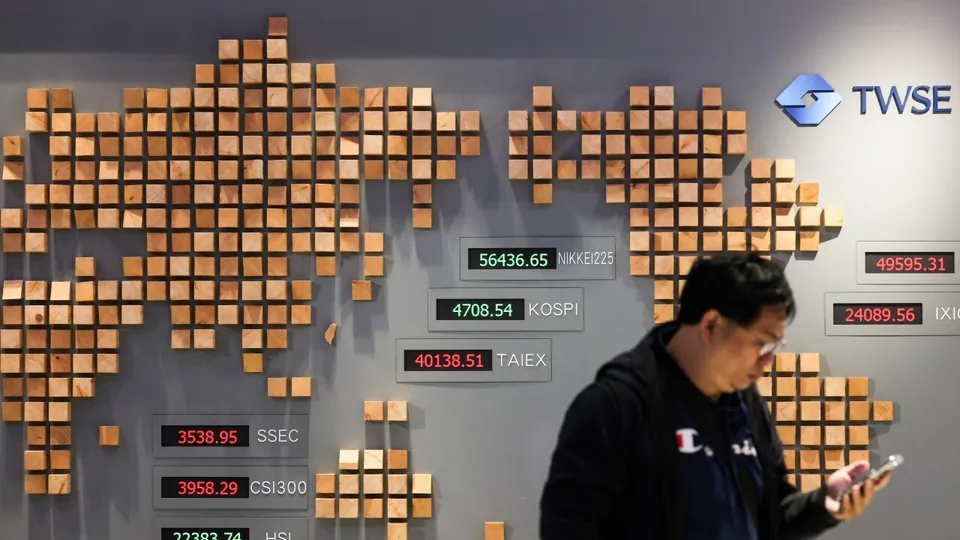
Asia’s Artificial Intelligence boom continues to support export growth, semiconductor earnings and investment in data centre infrastructure, despite increasing volatility in global stock markets. While investors have become more concerned about whether the massive spending on AI technology can be sustained, economic indicators across the region suggest that demand for key technology products remains strong.
The recent swings in global markets, triggered partly by developments surrounding Nvidia Chief Executive Jensen Huang, have highlighted the growing uncertainty surrounding the AI investment cycle. Investors have moved between optimism about the technology’s long-term potential and concerns that expectations may have become too high. However, the latest export and corporate earnings trends indicate that the economic benefits of AI-related demand are still reaching major Asian economies.
Countries such as Taiwan, South Korea, Japan, China and Singapore are important suppliers of the semiconductors, memory chips and specialised equipment required to build and operate Data Centres. As investment in artificial intelligence infrastructure continues, these economies remain closely connected to the global technology expansion.
AI Demand Continues to Support Asian Export Growth
Exports provide one of the clearest indications of how the AI boom is affecting Asian economies. Data centres require large quantities of advanced semiconductors, memory chips and high-tech equipment. Much of this supply comes from manufacturers based in Asia, making the region a central part of the global AI infrastructure supply chain.
Taiwanese semiconductor manufacturers, South Korean memory chip producers and technology equipment suppliers in countries including Japan, China and Singapore are benefiting from demand linked to data centre construction. These products are essential for companies seeking to expand computing capacity and develop increasingly powerful AI systems.
According to Paul Cavey, who runs East Asia Econ, a consulting firm providing economic data and analysis on the region, the available figures remain particularly strong for Taiwan. His assessment highlights the continued importance of semiconductor exports in measuring the strength of the AI-driven technology cycle.
Export performance is especially significant because it provides evidence of actual commercial demand rather than relying entirely on stock market valuations or investor expectations. Although financial markets can react sharply to changing sentiment, export orders and shipments offer a more direct indication of activity across the technology supply chain.
Taiwan and South Korea Benefit From Semiconductor Demand
Semiconductor manufacturers are among the biggest beneficiaries of the global AI expansion. Advanced AI systems require powerful processors and large quantities of high-performance memory, increasing the importance of companies capable of manufacturing these specialised components.
Taiwan Semiconductor Manufacturing Co. (TSMC) occupies a central position in the semiconductor supply chain. The company manufactures advanced chips used by major technology businesses, including those developing AI processors. Its manufacturing capabilities make Taiwan an important supplier to the global technology industry.
South Korea is also benefiting through its leading memory chip manufacturers, particularly Samsung Electronics and SK Hynix. Their products are used in computing systems that require substantial memory capacity and high-speed data processing.
Strong profits at these companies demonstrate how demand for AI infrastructure is translating into financial gains for manufacturers. The expansion of data centres has increased the importance of advanced memory and processing components, supporting revenue and profitability across parts of the Semiconductor Industry.
However, the benefits are not limited to higher shipment volumes. Rising demand has also contributed to increases in the prices of certain technology components. This means export earnings can grow through a combination of more products being shipped and higher prices being received for those products.
Chip Prices Become an Important Indicator of the AI Cycle
While semiconductor demand remains strong, some economists are beginning to monitor changes in chip prices for signs that the current expansion could be approaching a more mature stage.
The rapid growth in AI investment has created intense demand for advanced processors and memory products. When supply struggles to keep pace with demand, prices can rise sharply, increasing the export earnings and profits of manufacturers.
However, a recent stabilisation in chip prices has raised questions about whether the strongest phase of the current demand cycle may be slowing. A period of price moderation does not necessarily indicate that AI demand is weakening, but it could suggest that the market is gradually adjusting after an unusually strong increase.
For semiconductor manufacturers, the relationship between prices, production volumes and customer orders will be important. Even if shipments continue to increase, slower price growth could affect the pace of revenue expansion. Investors are therefore likely to examine both sales volumes and pricing trends when assessing the sustainability of semiconductor earnings.
The broader concern is that global economic growth is becoming increasingly dependent on investment in artificial intelligence. If spending on data centres, chips and computing infrastructure slows significantly, economies that have benefited from the technology boom could experience weaker exports and investment activity.
Global Economy Also Receives Support From AI Investment
The AI investment cycle is not limited to Asia. The United States is also experiencing economic benefits from expanding technology infrastructure, particularly through investment in data centres and related facilities.
Revised figures showed that the US economy grew at an inflation-adjusted annual rate of 4.3% in the third quarter, compared with the previously reported rate of 3.4%. Investment in nonresidential buildings, a category that includes data centres, increased at an annualised rate of 16%.
These figures underline the scale of spending associated with the expansion of AI infrastructure. Data centres require substantial investment in buildings, electrical systems, cooling equipment, networking technology and computing hardware.
The connection between US investment and Asian exports is particularly important. American technology companies may lead the development and deployment of AI systems, but much of the hardware required to operate them is manufactured in Asia. Consequently, an increase in US data centre spending can generate demand for products supplied by companies across the Asian technology ecosystem.
This international relationship also means that a slowdown in US technology investment could affect manufacturers and exporters far beyond the American market.
Southeast Asia Emerges as a Data Centre Investment Hub
Asia is not only supplying the components used in data centres abroad. Several countries in the region are increasingly becoming destinations for data centre construction and investment.
Malaysia and Thailand are among the Southeast Asian economies attracting data centre development. Their growing role reflects the broader expansion of digital infrastructure across the region, as technology companies seek locations to establish computing facilities and support demand for cloud services and AI applications.
Data centre projects can generate economic activity through construction, equipment purchases, electricity infrastructure and related services. They may also attract additional investment from technology companies and businesses that depend on reliable computing capacity.
For host economies, these developments can support investment and create demand for skilled workers and infrastructure services. However, data centres also require substantial electricity, cooling capacity, water resources and reliable connectivity. The ability to provide these facilities can influence whether planned projects move forward at the expected pace.
The expansion of Southeast Asia’s data centre industry therefore represents both an opportunity and a potential source of vulnerability. Economies that attract large projects can benefit from increased investment, but they may also become more exposed to changes in global technology spending and regulatory decisions.
US Export Restrictions Create Uncertainty for Regional Data Centres
The outlook for Southeast Asia’s data centre expansion faces another challenge: tighter US restrictions aimed at limiting China’s access to advanced artificial intelligence computing capabilities.
The United States has sought to restrict the availability of advanced chips and computing resources that could be used by Chinese AI laboratories. These measures have implications for regional data centre operators because facilities in Southeast Asia can be part of the wider international computing infrastructure.
Nvidia reportedly instructed partners in the region to pause shipments to Malaysia, Thailand, Singapore and Indonesia amid the changing restrictions. The development raised questions about how US export controls could affect the supply of advanced computing hardware to projects operating across Southeast Asia.
The United States has also tightened export rules to limit Chinese access to some of the most advanced semiconductor technology. These restrictions reflect the growing connection between the global chip industry, international trade policy and competition over artificial intelligence development.
For Southeast Asian countries, the situation creates uncertainty. They are seeking to attract investment and strengthen their positions as regional technology hubs, but restrictions affecting chip shipments could complicate project planning and equipment procurement.
If data centre construction slows because of supply constraints or regulatory uncertainty, some economies could lose an important source of investment growth. The scale of any impact will depend on how companies adjust their supply chains and whether projects can continue using hardware and infrastructure that comply with applicable rules.
AI-Driven Stock Market Volatility Raises Consumer Spending Concerns
Asian stock markets have experienced significant fluctuations as investors reassess the outlook for artificial intelligence companies and the broader technology sector. Periods of strong optimism have pushed technology-related shares higher, while concerns about valuations and future returns have triggered sharp reversals.
The recent market turbulence illustrates how sensitive investor sentiment has become to developments involving major technology companies and their executives. The uncertainty is not necessarily evidence that demand for AI products has collapsed. Instead, it reflects questions about whether the enormous investments being made today will generate sufficient financial returns in the future.
The technology rally has also attracted new investors and encouraged greater participation in stock picking. Strong market performance can create a positive wealth effect, potentially supporting household confidence and spending.
However, the relationship can work in the opposite direction. A sustained decline in share prices could reduce household wealth and make consumers more cautious about discretionary purchases. Economists have warned that this could become an additional concern for Asian economies where domestic spending has remained relatively subdued.
This creates a potential economic link between technology valuations and consumer behaviour. Even households that do not directly invest in semiconductor companies may feel the effects of a prolonged market downturn through changes in confidence and spending decisions.
Why Asia Could Be Vulnerable to an AI Investment Slowdown
The growing importance of AI-related exports and data centre investment has strengthened the technology sector’s contribution to economic activity across Asia. At the same time, it has increased the region’s exposure to a single major source of global investment demand.
Semiconductor manufacturers, equipment suppliers and data centre developers benefit when technology companies increase spending. But if those companies reconsider their investment plans, the effects could spread across several industries and countries.
A slowdown could affect semiconductor orders, chip prices, equipment exports and construction projects. Countries with a large concentration of technology-related exports may be particularly sensitive to changes in global demand.
The International Monetary Fund and other economic institutions have raised broader concerns about the risks associated with excessive dependence on the AI industry. If investment expectations become disconnected from the financial returns that businesses can generate, a correction could affect not only technology shares but also wider economic activity.
Nevertheless, the current strength of export data suggests that the AI boom continues to generate substantial commercial activity. The possibility of a future slowdown should therefore be distinguished from evidence of an immediate collapse in demand.
What to Watch in the Coming Months
Several indicators will help determine whether the AI boom can maintain its momentum across Asia. Semiconductor export growth, memory chip prices, corporate earnings and new data centre investment announcements will remain important measures of underlying demand.
Developments in US export restrictions will also matter, particularly for Southeast Asian economies seeking to attract international data centre projects. Changes in the rules governing advanced chips could influence where companies build computing facilities and how they source equipment.
Another important factor will be the ability of technology companies to convert AI investment into sustainable revenue. Continued infrastructure spending may support suppliers in the near term, but long-term growth will depend on whether businesses and consumers adopt AI services at a scale that justifies the cost of building and operating the systems.
Conclusion: Asia’s AI Economy Remains Strong Despite Market Anxiety
Asia’s technology-driven economic expansion remains supported by strong semiconductor demand, rising export earnings and growing investment in data centre infrastructure. Taiwan and South Korea continue to benefit from their central roles in chip manufacturing, while Southeast Asian countries are attracting projects that could strengthen their positions in the global digital economy.
At the same time, the recent volatility in stock markets and signs of stabilisation in chip prices show why investors are becoming more cautious. The concentration of investment around artificial intelligence creates opportunities for manufacturers and exporters, but it also exposes economies to the risk of a future spending slowdown.
For now, export activity and corporate earnings indicate that the AI boom remains an important source of growth across Asia. Whether that momentum can continue will depend on sustained demand for advanced chips, the direction of global data centre investment, regulatory developments and the ability of AI businesses to turn heavy infrastructure spending into lasting economic returns.
For breaking news and live news updates, like us on Facebook or follow us on Twitter and Instagram. Read more on Latest Business on thefoxdaily.com.






COMMENTS 0