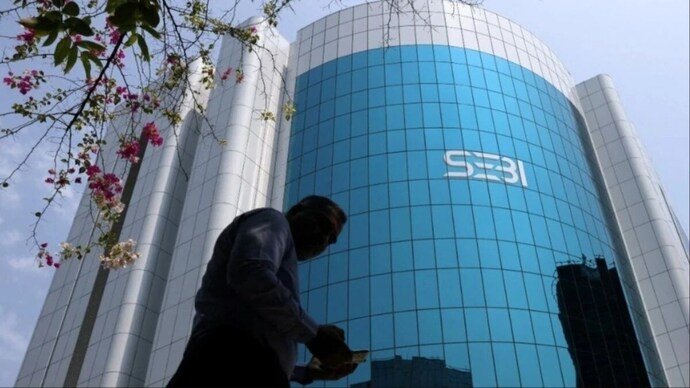
The Securities and Exchange Board of India (SEBI) has barred Le Lavoir Ltd chairman Ashok Dilipkumar Jain and 13 other persons and entities from dealing in the company’s shares over suspected stock price manipulation, questionable funding of preferential warrants and the alleged diversion of funds raised through the issue.
In an ex-parte interim order dated November 26, the market regulator said its examination had identified prima facie concerns involving coordinated trading activity, the funding of preferential warrants allotted to Jain and connected persons, and the subsequent movement of a substantial portion of the proceeds to other entities.
SEBI also flagged disclosure lapses involving the termination of business arrangements that Le Lavoir had previously announced to stock exchanges. The regulator said the company had not adequately informed investors when certain hotel service contracts ended.
The interim action comes shortly before the reported expiry of the lock-in period on November 29 for shares and warrants held by Jain and connected entities. SEBI expressed concern that the individuals and entities could sell their holdings after the restriction expired, potentially benefiting from the stock’s earlier price movement before the regulator completed its examination.
The regulator has clarified that its observations are preliminary and do not constitute final findings of violations. The noticees have been given an opportunity to respond and request a personal hearing.
What SEBI’s Interim Order Says
SEBI has restrained Jain from accessing the securities market and prohibited him from buying, selling or otherwise dealing in securities, directly or indirectly. The regulator has also prohibited Le Lavoir from raising further capital.
The other 13 noticees have been barred from buying, selling or dealing in Le Lavoir shares, either directly or indirectly. The restrictions will remain in force until further orders.
SEBI has given all noticees 21 days from receipt of the order to submit their replies or objections and indicate whether they want a personal hearing. The regulator will consider their explanations and the available evidence before reaching further conclusions.
The order focuses on several interconnected areas: trading activity between January 2023 and December 2025, communications involving Jain, the funding arrangements behind the preferential warrant issue, the use of proceeds and the company’s disclosures about business contracts.
SEBI Flags Sharp Rise in Le Lavoir Share Price and Trading Volume
SEBI’s examination covered trading activity in Le Lavoir shares between January 1, 2023 and December 12, 2025. The regulator said it began examining the company after encountering relevant material during an investigation into Sunshine Capital Ltd.
The regulator analysed the stock’s price and trading volume across different periods. Its findings showed that Le Lavoir’s closing share price increased from Rs 30.65 at the end of December 2022 to Rs 120 during the first phase of the examination.
During the second phase, the share price rose from Rs 86.74 on March 14, 2024 to Rs 428.60 on December 6, 2024. These movements attracted regulatory attention because they coincided with higher trading activity and transactions involving entities SEBI identified as connected with Jain.
The regulator also compared average daily trading volumes with the period before the examination. During the first phase, average daily volume was approximately three times the earlier average. In the second phase, it remained around twice the pre-examination level.
SEBI examined how individual traders contributed to the stock’s last traded price (LTP), which is the price at which the most recent transaction took place. It identified several entities that it said were connected with Jain through call detail records and other material.
According to the order, these entities contributed to positive LTP movements and trading volumes during periods when the share price increased. Some transactions involved orders for only one share or a small number of shares, including instances in which the first trade of the day was executed above the prevailing market price.
SEBI acknowledged that an isolated single-share transaction or a positive contribution to LTP does not automatically establish fraudulent activity. However, it said the repeated nature of the orders, their timing, their price impact and the relationships between the traders and Jain needed to be assessed collectively.
During the first phase, entities identified as connected with Jain accounted for 25% of the market’s positive LTP contribution. Their net LTP contribution was 4.3 times the cumulative net LTP contribution of the market, according to the order.
These connected entities also accounted for approximately 16.29% of trading volume during the first phase and 11.21% during the second phase. SEBI said the trading patterns raised concerns about possible coordination among the participants.
WhatsApp Chats Refer to a Three-Fold Share Price Target
Communications between Jain and Surendra Jain, promoter and director of Sunshine Capital, formed another part of SEBI’s examination. The regulator said it relied on WhatsApp conversations retrieved from Surendra Jain’s device during a search conducted in December 2024.
According to the interim order, the messages included discussions about Le Lavoir shares, potential price targets, recommendations to purchase the stock and proposed corporate developments.
In a message dated January 3, 2024, Jain referred to the possibility of the share price increasing at least three times from its prevailing level. SEBI compared this communication with the subsequent movement in the stock.
Le Lavoir’s share price rose from Rs 104.30 on January 3, 2024 to Rs 254.15 on May 18, 2024, before reaching Rs 428.60 on December 6, 2024.
The order also referred to messages dated April 29, 2024, in which Jain recommended buying the shares in the Rs 138-140 range. Another message on May 7, 2024 referred to a price range of Rs 170-179.
SEBI said the communications, when considered alongside trading data, warrant funding patterns and the movement of issue proceeds, raised questions about Jain’s possible role in coordinating or facilitating the activities of other persons and entities.
The messages are part of the regulator’s preliminary assessment rather than a final determination of wrongdoing. Their significance will need to be evaluated alongside the complete evidence and explanations submitted by the noticees.
SEBI Questions Funding of Rs 10.46 Crore Preferential Warrant Issue
A substantial portion of SEBI’s order examines Le Lavoir’s preferential issue of convertible warrants. The company allotted warrants to several individuals and entities in two tranches during October 2025.
Out of 15.81 lakh warrants issued, Jain received 4.88 lakh. His wife, Kajal Ashok Jain, and daughter, Viha Ashok Jain, were each allotted 1.95 lakh warrants.
The regulator examined whether the allottees independently arranged the money required to subscribe to the warrants or whether their payments were funded by Jain or people connected with him.
One transaction involved Sonali Abhaykumar Parmar, who received an allotment of 60,000 warrants and was required to pay an initial subscription amount of approximately Rs 39.71 lakh.
SEBI’s examination of bank statements showed that Rs 30 lakh was transferred from the joint bank account of Jain and Kajal Jain to Kirti Dilipkumar Jain, identified in the order as Jain’s sister. Another Rs 10 lakh was transferred the following day.
Kirti subsequently transferred the money to Parmar, who paid approximately Rs 39.71 lakh to Le Lavoir for the warrant subscription. SEBI said it found no other transfers from Kirti to Parmar during the period examined and concluded that the entire initial subscription amount appeared to have been funded by Jain and his family through the intermediary account.
Another transaction involved V P Jaware Gowda, who received 78,000 warrants and was required to pay an initial subscription amount of approximately Rs 51.62 lakh.
SEBI found that Rs 31.38 lakh had been transferred to Gowda by Sheeba Swapna, whom the regulator identified as connected with Jain through call detail records. The amount was transferred from Gowda’s bank account to Le Lavoir within minutes, according to the order.
Taking these transactions into account, SEBI said approximately Rs 6.21 crore, representing 59.37% of the total initial subscription money received by Le Lavoir, came from Jain, his family members and Parmar, whose subscription was allegedly funded entirely by Jain and his family.
The regulator said the funding trail raised concerns about whether the preferential allotment had been structured to consolidate shareholding among Jain and persons acting in concert with him.
Rs 8.88 Crore Transferred to Three Entities Raises Questions
SEBI also examined how Le Lavoir used the money raised through the preferential warrant issue. The company received approximately Rs 10.46 crore in initial subscription payments from the two October 2025 tranches.
Of this amount, around Rs 1.92 crore was placed in a term deposit, while approximately Rs 8.88 crore was transferred to three entities: Ghantiram Foods Pvt Ltd, Shree Vrajendra Foods Pvt Ltd and Slone Infosystems Ltd.
The transfers identified by SEBI were:
- Ghantiram Foods Pvt Ltd: Approximately Rs 3.20 crore.
- Shree Vrajendra Foods Pvt Ltd: Approximately Rs 2.33 crore.
- Slone Infosystems Ltd: Approximately Rs 3.35 crore.
The regulator questioned the nature and purpose of these transactions, particularly in view of the business activities and financial movements of the recipient entities.
Ghantiram Foods and Large Cash Withdrawals
Le Lavoir operates in laundry and allied services, while Ghantiram Foods was incorporated in June 2025 and stated that it was engaged in food processing and flour milling. Le Lavoir had acquired a 64.5% stake in the company in July 2025.
SEBI found that several transfers from Le Lavoir to Ghantiram Foods were followed by substantial cash withdrawals on the same day or the following day.
For example, after receiving Rs 25 lakh from Le Lavoir on November 10, 2025, Ghantiram Foods withdrew Rs 20 lakh in cash on the same day. The regulator identified other transactions with similar patterns.
A visit to Ghantiram Foods’ registered address did not result in the company being traced. At another address listed on its website, SEBI found a warehouse containing only a few packets of wheat or flour and one worker, who could not provide bills or supporting documents.
These observations raised questions about the recipient company’s actual operations and the purpose for which it received money from Le Lavoir.
Transfers to Shree Vrajendra Foods and Slone Infosystems
SEBI also questioned approximately Rs 2.33 crore transferred to Shree Vrajendra Foods. Its analysis of bank statements indicated that transfers from Le Lavoir were followed by cash withdrawals of substantially similar amounts on the same or subsequent days.
The third recipient, Slone Infosystems, received approximately Rs 3.35 crore. SEBI noted that one of its directors, Rajesh Srichand Khanna, was connected with Jain through calls and call detail records.
The regulator said the purpose of the transfers to Slone Infosystems and the ultimate use of the money required further examination. Taken together, the transactions raised concerns about whether the funds raised from investors were being used in accordance with the company’s stated objectives.
SEBI Examines Further Transfers After Warrant Conversion
The regulator also investigated how Le Lavoir used the remaining 75% consideration received after 2.28 lakh warrants were converted into equity shares on March 30, 2026.
During March 2026, the company received approximately Rs 4.53 crore from Jain, Kajal Jain and Viha Jain. According to the order, Le Lavoir subsequently transferred money to Dhanashree Electronics and Ghura Industries.
Approximately Rs 2.61 crore was paid to Dhanashree Electronics towards loan repayment, while Rs 1.55 crore was transferred to Ghura Industries as vendor advances.
SEBI questioned the loan repayment to Dhanashree Electronics because Le Lavoir’s bank statements for the 2025-26 financial year did not show receipt of the corresponding loan amount from that entity during the year.
The regulator also noted that Dhanashree Electronics’ annual reports for 2023-24 and 2024-25 did not appear to support the loan repayment recorded by Le Lavoir.
In the case of Ghura Industries, a sole proprietorship, SEBI traced transfers of Rs 65 lakh and Rs 90 lakh through multiple entities before the money eventually reached Jain’s bank account.
These transactions raised concerns about whether the preferential issue proceeds were used for the purposes disclosed by Le Lavoir, which included machinery purchases and working capital requirements.
Undisclosed Termination of Hotel Contracts Raises Governance Concerns
Beyond trading activity and fund transfers, SEBI identified disclosure-related concerns involving two hotel service arrangements announced by Le Lavoir.
In April 2025, the company announced an association with Hotel Fariyas to provide laundry services. However, Fariyas Hotels told SEBI that the services continued for only around 15 days and that there was no formal agreement between the parties.
According to the order, Le Lavoir did not subsequently inform stock exchanges that the arrangement had ended.
A second arrangement involved Hotel Tunga Regency. Le Lavoir announced a three-year contract in April 2026 to provide wet-cleaning, washing and dry-cleaning services.
Hotel Tunga informed SEBI that the agreement had been signed on April 2, 2026. However, Le Lavoir failed to pass the required structural audit and could not continue providing the services. The contract was consequently terminated.
SEBI said Le Lavoir did not disclose the termination to stock exchanges despite having previously announced the agreement.
Such disclosures are important because investors rely on company announcements to assess business activity, commercial relationships and future revenue prospects. When a previously announced arrangement ends, failing to communicate that development can leave investors with information that no longer reflects the company’s actual position.
Why the SEBI Order Matters for Le Lavoir Investors
The interim order highlights several areas that can influence investor confidence in a listed company: the integrity of share trading, transparency in preferential allotments, the use of funds raised from investors and timely disclosure of material business developments.
Preferential issues allow companies to raise capital by issuing securities to selected investors. However, regulators may examine whether subscribers genuinely fund their investments, whether the allotment structure is being used to consolidate control and whether the proceeds are deployed for the purposes communicated to shareholders.
Similarly, unusual trading patterns do not automatically prove manipulation. Regulators must consider the surrounding circumstances, relationships between market participants, transaction timing and the overall effect on price discovery.
In Le Lavoir’s case, SEBI has brought these issues together in its preliminary assessment. The regulator’s concerns include trading contributions by connected entities, communications discussing price targets, alleged funding of warrant subscriptions and subsequent transfers of issue proceeds.
The order does not establish that every noticee was aware of or involved in the alleged activities. SEBI has specifically stated that the role, knowledge and intention of each person or entity must be assessed after considering their explanations and the complete material on record.
What Happens Next in the Le Lavoir Investigation?
The interim restrictions will remain in place until further orders. SEBI will consider the responses submitted by Jain, Le Lavoir and the other noticees within the 21-day period allowed from receipt of the order.
The regulator may also continue examining the fund flows, trading records, communications and business transactions to determine whether securities market regulations were violated. Its order indicates that the investigation may extend to other persons or entities whose roles have not yet been fully assessed.
The immediate concern for the noticees is that they cannot freely deal in Le Lavoir shares while the restrictions remain in force. The company is also prohibited from raising additional capital under the interim directions.
For investors, the next important developments will be the responses from the noticees and any subsequent regulatory findings. The reported November 29 expiry of the lock-in period was a key factor in SEBI’s decision to take interim action, given its concern that connected holders could sell their securities before the examination was completed.
For now, SEBI’s order represents an interim regulatory measure based on preliminary observations, not a final ruling. The outcome will depend on the evidence examined by the regulator and the explanations provided by the individuals and entities named in the proceedings.
For breaking news and live news updates, like us on Facebook or follow us on Twitter and Instagram. Read more on Latest Business on thefoxdaily.com.






COMMENTS 0