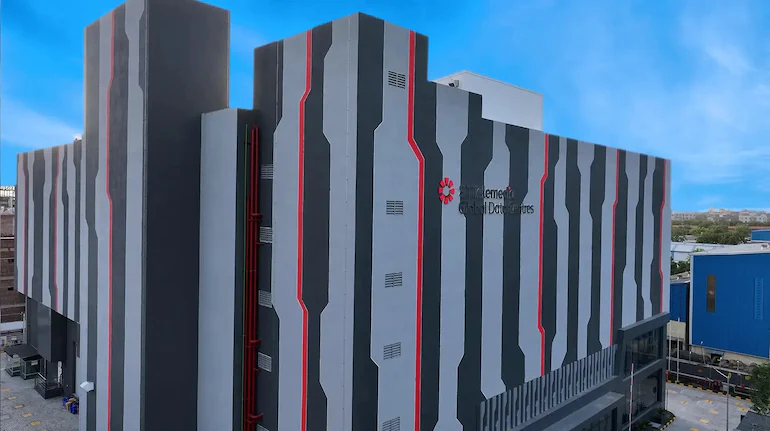
Global infrastructure investors Brookfield and Macquarie are among the potential buyers exploring a stake in ST Telemedia Global Data Centres India (STT GDC India), as its shareholders prepare for a possible ownership reshuffle. Private equity major KKR is looking to reduce its majority holding in the Indian data centre business, with the transaction targeted for completion by the end of January 2027, according to people familiar with the discussions.
Other potential investors who could be approached include Canada’s Caisse de dépôt et placement du Québec (CDPQ), Canada Pension Plan Investment Board (CPPIB) and US-based Digital Realty. Non-binding offers are expected between late November and mid-December, although formal bids have not yet been submitted.
The proposed stake sale comes as demand for data centre infrastructure increases, driven by cloud computing, artificial intelligence (AI) applications and the expansion of digital services. STT GDC India operates 34 data centres across 10 cities, making it an established player in the country’s colocation market.
Key Highlights
- Brookfield and Macquarie are among the investors discussing a potential stake acquisition in STT GDC India.
- CDPQ, CPPIB and Digital Realty could also be approached during the sale process.
- KKR is seeking to reduce its majority holding but may retain a minority stake.
- Non-binding offers are expected between late November and mid-December, with a deal targeted by the end of January.
- STT GDC India operates 34 data centres across 10 cities, with an aggregate capacity of 613 MW.
Brookfield and Macquarie Explore STT GDC India Stake
Brookfield and Macquarie are among the global infrastructure investors in discussions over a potential investment in STT GDC India. The company’s shareholders are exploring options to bring in investors as KKR looks to pare its majority ownership in the Indian business.
CDPQ, CPPIB and Digital Realty are also among the potential investors who could be approached as the process advances. However, discussions remain at an early stage for some of these parties, and formal offers have yet to be submitted.
Infrastructure funds are expected to be the main contenders for the proposed investment. These investors typically have experience in acquiring, developing and operating long-term infrastructure assets, including data centres, telecommunications facilities and digital networks.
Strategic investors are considered less likely to emerge as frontrunners in the current process. The final outcome will depend on investor interest, valuation expectations and negotiations among the existing shareholders and prospective buyers.
KKR Plans to Reduce Its Majority Holding
KKR is seeking to streamline its global data centre investments and sharpen its focus on Southeast Asia. The private equity firm is understood to believe that its Indian operations do not align as closely with its investment priorities in the region.
However, KKR is not necessarily looking for a complete exit from STT GDC India. It could retain a minority stake if the transaction delivers an attractive valuation. This would allow the firm to reduce its exposure while maintaining some participation in the business’s future growth.
The proposed transaction is being pursued by the key shareholders of STT GDC India, including KKR, Singapore Telecommunications (Singtel) and Tata Communications. Tata Communications is also expected to retain a minority investment, although its final decision is likely to become clearer in the coming weeks.
How STT GDC India’s Ownership Structure Works
STT GDC India is part of the wider ST Telemedia Global Data Centres platform, which has operations across several international markets. Its Indian business is structured as a joint venture between ST Telemedia and Tata Communications, with an ownership arrangement of 74:26.
At the global level, KKR and Singtel completed a major transaction involving Singapore-based ST Telemedia Global Data Centres. In February 2026, the consortium announced a $5.2 billion cash buyout to acquire the remaining 82% stake in the global platform, at an implied enterprise value of $10.2 billion.
Following the transaction, KKR holds 75% of the global platform, while Singtel owns the remaining 25%. The proposed Indian stake sale is a separate process focused on the country’s operations.
Tata Communications has also addressed reports about the proposed transaction through a regulatory filing dated November 2. The company said it regularly evaluates strategic opportunities to enhance long-term stakeholder value but does not comment on market speculation, rumours or unverified media reports.
STT GDC India Valuation Could Become a Key Challenge
Valuation is expected to be one of the most important issues in negotiations between the shareholders and potential investors. The proposed transaction could rank among India’s major data centre platform deals, but differences between development costs and valuation expectations may complicate discussions.
According to people familiar with the matter, developing data centre capacity in India costs an estimated $5 million to $6 million per MW. However, valuation expectations of approximately $20 million per MW could prove challenging for prospective buyers.
The gap between development costs and expected valuations could influence how investors assess the company’s existing infrastructure, customer relationships, operating capacity and future expansion opportunities.
For potential buyers, the investment decision will involve more than the cost of constructing data centre facilities. Factors such as the quality of existing assets, customer commitments, power availability, operating performance and expansion pipeline will also matter when determining an acceptable valuation.
STT GDC India Had Considered an IPO
The proposed stake sale follows an earlier evaluation of an initial public offering (IPO) for STT GDC India. The shareholders had begun examining a potential listing around July 2026 and appointed advisers to assist with the process.
The proposed IPO was targeting a valuation of approximately $6 billion to $7 billion. However, an immediate listing is considered unlikely because of regulatory discussions involved in the process.
People familiar with the discussions indicated that a potential listing could be more realistic in the third or fourth quarter, rather than in the immediate term. The ongoing stake-sale discussions could therefore provide an alternative route for shareholders to adjust their ownership before pursuing a public-market listing.
Whether the company ultimately moves ahead with a private transaction or an IPO will depend on market conditions, regulatory requirements and the valuation that investors are willing to accept.
STT GDC India’s Financial Performance
STT GDC India has reported growth in revenue from operations, although its net profit declined in FY26. According to disclosures in Tata Communications’ annual report, the data centre business recorded revenue of Rs 2,747.5 crore in FY26, compared with Rs 2,331.8 crore in the previous financial year.
This represented revenue growth of 17.8%. However, net profit fell 22.9% to Rs 126 crore from Rs 163.5 crore a year earlier. The company’s net assets increased 30.7% to Rs 5,760.5 crore from Rs 4,406.2 crore.
The financial figures highlight an important consideration for prospective investors: while the company has expanded its revenue and asset base, its lower net profit will also need to be assessed during valuation discussions.
STT GDC India’s Data Centre Network and Capacity
STT GDC India operates 34 data centres across 10 cities, with an aggregate capacity of 613 MW and a pipeline of customer orders. Its presence across major Indian data centre markets gives the company an established operating network in the country’s colocation industry.
Colocation providers offer businesses space, power, cooling and connectivity to host their IT infrastructure. Customers use these facilities to operate servers and other computing equipment without having to build and manage their own data centres.
The company’s wider international platform also provides significant scale. Beyond India, STT GDC operates more than 100 data centre facilities across Asia and Europe, with cumulative capacity exceeding 2 GW.
Why Global Investors Are Interested in India’s Data Centre Market
India’s digital infrastructure requirements are expanding as businesses adopt cloud services, digital platforms and data-intensive technologies. Artificial intelligence is adding another source of demand because AI applications require substantial computing power and specialised data centre infrastructure.
These developments have increased investor interest in data centre operators that already have established facilities, power capacity and customer relationships. Acquiring an existing platform can provide investors with an opportunity to participate in the market without developing an entire network from the beginning.
For infrastructure funds such as Brookfield and Macquarie, a potential investment in STT GDC India could offer exposure to a large operating data centre business. However, the final investment decision will depend on the company’s valuation, financial performance and long-term expansion potential.
What Happens Next in the STT GDC India Stake Sale?
The immediate focus is on the expected non-binding offers between late November and mid-December. These proposals will help the shareholders assess investor interest and determine which parties may move forward in the process.
KKR and its partners are targeting the completion of a transaction by the end of January 2027. However, the timeline could depend on negotiations, valuation differences, due diligence and regulatory requirements.
Investors will also watch whether Tata Communications retains its minority investment and whether KKR decides to keep a smaller stake in the Indian business. Any final agreement will clarify the future ownership structure of one of India’s established data centre platforms.
Conclusion
The potential stake sale in STT GDC India has attracted interest from major global infrastructure investors, including Brookfield and Macquarie, as KKR looks to reduce its majority holding. With non-binding offers expected by mid-December and a transaction targeted for January-end, the process could become a significant development in India’s digital infrastructure sector.
However, valuation differences, the company’s financial performance and the future ownership plans of Tata Communications and KKR will remain important factors. The outcome will also offer an indication of how global infrastructure investors are assessing the value of India’s growing data centre market.
For breaking news and live news updates, like us on Facebook or follow us on Twitter and Instagram. Read more on Latest Business on thefoxdaily.com.






COMMENTS 0