China’s rare earth industry could be heading toward another major consolidation as state-owned China Rare Earth Group is reportedly in talks to acquire Shenghe Resources, a move that could further strengthen Beijing’s control over a strategically important part of the global minerals supply chain.
According to sources familiar with the matter, discussions between the two companies have been underway since earlier this year. China Rare Earth Group is seeking a controlling stake in Shenghe, although the sources said they did not know when a transaction might be announced or completed. The companies and China’s Ministry of Commerce did not respond to requests for comment. 0
The potential transaction is significant because Shenghe has international assets and investments, including a roughly 3% stake in U.S.-based MP Materials. That company is strategically important to the United States because it operates the country’s leading rare earth mine and has received major U.S. government investment. 1
Why the Shenghe Resources Deal Matters
A takeover of Shenghe by China Rare Earth Group would represent another step in China’s long-running effort to consolidate its rare earth mining, refining and processing industry under stronger state control.
Shenghe has been one of the notable Chinese rare earth companies with private ownership interests. Bringing it under the control of a major state-owned group would reduce the number of significant companies operating outside direct state ownership in China’s rare earth sector.
The importance extends beyond corporate ownership. Rare earth elements are essential inputs for powerful permanent magnets and are used across electric vehicles, wind turbines, electronics, advanced manufacturing and defense-related technologies.
That makes control over mining, separation and refining capacity strategically important for both China and countries attempting to develop alternative supply chains.
China Rare Earth Group Seeks Controlling Stake
The discussions reportedly involve China Rare Earth Group seeking a controlling interest rather than simply purchasing a minority investment in Shenghe Resources.
If completed, the transaction could transfer control of Shenghe’s overseas investments and other strategic assets to a state-owned entity. The sources said it remains unclear what would happen to Shenghe’s overseas assets and stakes as part of any eventual transaction.
One particularly important issue is Shenghe’s stake in MP Materials. A completed acquisition could result in a Chinese state-owned rare earth company becoming the indirect holder of that interest.
That situation could attract additional scrutiny because the U.S. Department of Defense is also the largest shareholder of MP Materials following an investment made last year, according to the Reuters report. 2
MP Materials and Its Strategic Importance
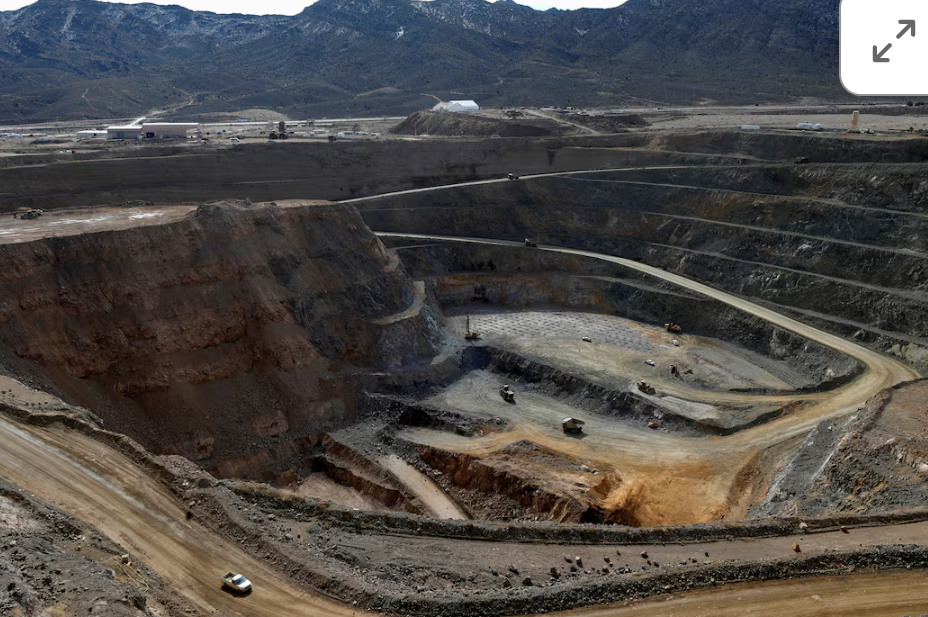
MP Materials operates the Mountain Pass rare earth mine in California, one of the most important rare earth production assets in the United States.
The company has historically relied on Chinese processing capacity for part of its rare earth supply chain, although it has been developing domestic processing capabilities. In 2025, MP Materials stopped shipping its critical mineral material to China amid rising U.S.-China trade tensions and tariffs. 3
Reuters previously reported that MP had sent rare earth concentrate to Shenghe for processing for years. The company subsequently expanded efforts to process more material in the United States as Washington sought to reduce dependence on Chinese processing infrastructure. 4
MP has repeatedly said that neither Shenghe nor the Chinese government controls its operations. That distinction could become particularly important if Shenghe itself comes under the control of a major Chinese state-owned enterprise.
China’s Long-Term Rare Earth Consolidation
China Rare Earth Group was established in 2021 after the reorganization of five state-linked rare earth companies. It has become China’s largest supplier of heavy rare earth elements, according to Reuters. 5
The creation of the group was part of China’s broader effort to organize the industry into larger and more strategically coordinated entities.
Rare earth mining and processing are technically complex. Simply possessing mineral deposits does not guarantee control of the finished supply chain. Separation and refining capacity are particularly important because mined material must undergo multiple processing stages before it can be converted into usable materials and components.
This is one reason China’s position in rare earth processing has attracted significant international attention. Reuters reported in 2025 that China accounted for around 90% of global rare earth refining capacity and about 70% of mined output at that time. 6
Potential Impact on Rare Earth Quotas
Another important element of the potential transaction is access to China’s rare earth production quotas.
According to one source, Shenghe could gain improved access to quotas if it comes under China Rare Earth Group’s control. Beijing uses quotas to manage mining, smelting and separation activity, and those allocations are closely watched by the market as an indicator of potential rare earth supply.
China does not publicly disclose all of the details of these quota allocations, making changes in the structure of major producers particularly important for industry participants.
Greater access to quotas could strengthen Shenghe’s position within China’s domestic supply chain. It could also increase the strategic value of the company if the proposed transaction moves forward.
Shenghe’s Overseas Expansion
Shenghe’s significance is not limited to its Chinese operations. The company has also pursued international assets.
In 2025, Shenghe acquired Australia’s Peak rare earths, expanding its involvement in an overseas rare earth project.
The transaction illustrates how China’s rare earth companies have developed interests beyond domestic mining and refining. International assets can provide access to resources and processing opportunities while also creating connections between different parts of the global rare earth supply chain.
If China Rare Earth Group acquires Shenghe, the state-owned group could gain exposure to these overseas interests, although the exact treatment of Shenghe’s international assets would depend on the final transaction structure and any applicable regulatory approvals.
China’s Rare Earth Dominance and Global Supply Chains
The potential Shenghe acquisition comes at a time when governments and manufacturers around the world are attempting to diversify rare earth supply chains.
Rare earths have become particularly important because demand is growing across clean-energy technologies, advanced electronics and defense-related applications. Permanent magnets made using rare earth materials are especially important for electric motors and wind turbines.
China’s influence is concentrated not only in mining but also in refining and processing. This creates a challenge for countries seeking to build independent supply chains because establishing mines alone does not eliminate dependence on overseas processing.
Recent developments demonstrate the scale of the challenge. Reuters reported that investments by the United States and Malaysia helped reduce China’s share of global rare earth refining from more than 90% in 2023 to about 85% in 2025. However, the International Energy Agency projected that China’s share could still remain around 70%-73% by 2035 even if planned rare earth refining projects outside China are completed as scheduled. 7
Rare Earths Have Become a U.S.-China Trade Issue
Rare earth materials have increasingly become part of the broader economic relationship between the United States and China.
China expanded rare earth export controls in 2025, adding additional elements and imposing further scrutiny on certain foreign users. The measures highlighted the importance of China’s position in critical-mineral supply chains and increased pressure on other countries to develop alternative sources. 8
The United States has responded by supporting domestic mining, processing and refining capacity. MP Materials has therefore become strategically significant beyond its status as a mining company because it represents an important part of the U.S. effort to build a domestic rare earth supply chain.
The potential change in ownership of Shenghe therefore comes against a much larger backdrop of competition over critical minerals.
What the Deal Could Mean for MP Materials
The potential acquisition creates an unusual corporate situation because Shenghe owns a stake in MP Materials while the U.S. Department of Defense is also a major shareholder.
At this stage, it is not clear how a transaction involving Shenghe would affect its MP Materials stake or whether any regulatory action would be required. The sources cited by Reuters said they did not know what would happen to Shenghe’s overseas assets and investments.
MP Materials has maintained that Shenghe and the Chinese government do not control its operations. Therefore, ownership of Shenghe and operational control of MP Materials should not automatically be treated as the same thing.
Any potential implications would depend on the final ownership structure, shareholder rights, applicable regulations and decisions by the companies and relevant authorities.
Why Rare Earth Processing Is More Important Than Mining Alone
A major misconception about rare earth supply chains is that access to ore automatically provides access to finished rare earth products.
In reality, the supply chain involves several stages, including mining, concentration, separation, refining and, in many cases, magnet manufacturing. Each stage requires specialized facilities, technology and investment.
This is why China’s processing capacity has remained a major source of influence even as other countries invest in new mines.
For companies outside China, building a complete supply chain can take years. New mines also require substantial capital, environmental approvals, infrastructure and long-term customers.
As a result, diversification is generally a gradual process rather than something that can be achieved immediately by opening a single new mine.
Global Efforts to Reduce Dependence on China
The United States, Australia, Malaysia and other countries have been working to expand rare earth mining and processing outside China.
MP Materials has pursued domestic processing in California, while other producers and governments are developing projects intended to strengthen non-Chinese supply chains.
Reuters reported that MP Materials also signed an agreement with Saudi Arabia’s Maaden to explore development of a rare earth supply chain covering mining, separation, refining and magnet production. 9
Such projects demonstrate that the global response is increasingly focused on creating complete supply chains rather than simply increasing mining output.
What Investors and Manufacturers Will Watch Next
Several developments will determine the significance of the reported China Rare Earth Group-Shenghe discussions.
- Deal structure: Whether China Rare Earth Group obtains full control or a different ownership position will be important.
- Overseas assets: The treatment of Shenghe’s international investments could affect several rare earth projects outside China.
- MP Materials stake: The future of Shenghe’s roughly 3% interest in MP Materials will receive particular attention.
- Quota access: Changes in Shenghe’s access to Chinese mining and processing quotas could influence its domestic position.
- Regulatory review: The involvement of a Chinese state-owned company and a U.S. defense-related shareholder could attract scrutiny.
- Rare earth export policy: Future Chinese controls could continue to influence global prices and supply-chain planning.
Rare Earth Supply Chains Enter a More Strategic Phase
The reported talks illustrate how rare earth companies are increasingly being viewed as strategic assets rather than ordinary commodity businesses.
Rare earth elements are relatively small markets compared with commodities such as oil or iron ore, but their importance to specific technologies makes supply disruptions potentially significant. A shortage of particular magnet materials can affect manufacturers even when the overall quantity involved is relatively small.
This has encouraged governments to support domestic production, establish strategic partnerships and encourage recycling and alternative sources.
At the same time, China’s existing processing infrastructure gives its companies an advantage that new competitors will need time to challenge.
Conclusion
China Rare Earth Group’s reported talks to acquire Shenghe Resources could represent another major step in the consolidation of China’s rare earth industry. If the state-owned group takes control, it could gain influence over Shenghe’s domestic operations as well as international assets, including its stake in U.S.-based MP Materials.
The potential transaction also highlights the strategic importance of rare earth supply chains at a time when the United States and other countries are trying to reduce dependence on Chinese mining and processing.
For global manufacturers, the key issue is not simply who owns a particular mining company. The broader question is who controls the complete chain from mining and separation to refining and magnet production. China’s established processing capacity means that supply-chain diversification remains a long-term challenge.
Until the companies confirm the terms of any transaction, important questions remain unanswered, including the treatment of Shenghe’s overseas assets, its MP Materials stake and its access to Chinese production quotas. Nevertheless, the reported discussions underline the growing strategic importance of rare earths to technology, clean energy, manufacturing and national supply-chain policy.
“`10
For breaking news and live news updates, like us on Facebook or follow us on Twitter and Instagram. Read more on Latest Business on thefoxdaily.com.

COMMENTS 0