China Rare Earth Group is in talks to acquire Shenghe Resources, according to two people familiar with the matter, potentially bringing another major Chinese rare-earth producer under tighter state control and giving China Rare Earth Group indirect control over Shenghe’s interests in overseas companies.
If completed, the proposed transaction would include Shenghe’s roughly 3% stake in U.S. rare-earth producer MP Materials. The development is particularly significant because the U.S. Department of Defense became MP Materials’ largest shareholder following a major investment in the company in 2025. 0
The talks come at a time when rare earths have become strategically important to global manufacturing and a major issue in U.S.-China trade relations. Rare-earth materials are used in electric vehicles, wind turbines, electronics and defense-related applications, while China remains a dominant force in mining, processing and refining.
China Rare Earth Group Seeks Control of Shenghe Resources
China Rare Earth Group, a state-owned company, has been discussing a controlling investment in Shenghe Resources since earlier in 2026, according to the Reuters sources. The sources said they did not know when an agreement might be announced or whether the transaction would ultimately be completed.
The potential acquisition would represent another step in China’s long-running consolidation of its rare-earth industry. Shenghe is notable because it has retained some private ownership and has interests in overseas rare-earth assets.
China Rare Earth Group was established in 2021 after the restructuring of five state-linked rare-earth companies. Reuters describes it as China’s largest supplier of heavy rare-earth elements. 1
A successful transaction would therefore change the ownership structure of one of the remaining significant Chinese rare-earth companies with private-sector influence.
Why Shenghe Resources Matters
Shenghe has developed interests beyond China’s domestic rare-earth industry. Last year, it acquired Australia’s Peak Rare Earths, expanding its international exposure.
Its relationship with MP Materials is even more strategically sensitive. Shenghe owns approximately 3% of MP Materials, according to the Reuters report, although MP Materials has repeatedly said that neither Shenghe nor the Chinese government controls its operations. 2
That distinction is important because ownership of a minority stake does not necessarily mean operational control. Any future change in Shenghe’s ownership would therefore need to be evaluated separately from questions about MP Materials’ management and operations.
What Happens to Shenghe’s MP Materials Stake?
One of the biggest unanswered questions is what would happen to Shenghe’s overseas holdings if China Rare Earth Group acquires the company.
Under the proposed transaction, China Rare Earth Group would effectively take control of Shenghe and, consequently, its existing interests in foreign companies. That could place a Chinese state-owned rare-earth company in the shareholder structure of MP Materials alongside the U.S. Department of Defense.
Reuters sources said it was unclear how the potential ownership change would affect Shenghe’s overseas assets or stakes. The companies involved and China’s Ministry of Commerce did not respond to Reuters requests for comment. 3
The situation is especially noteworthy because MP Materials has been at the centre of U.S. efforts to expand domestic rare-earth production and reduce dependence on Chinese processing.
MP Materials and the U.S. Defense Department Connection
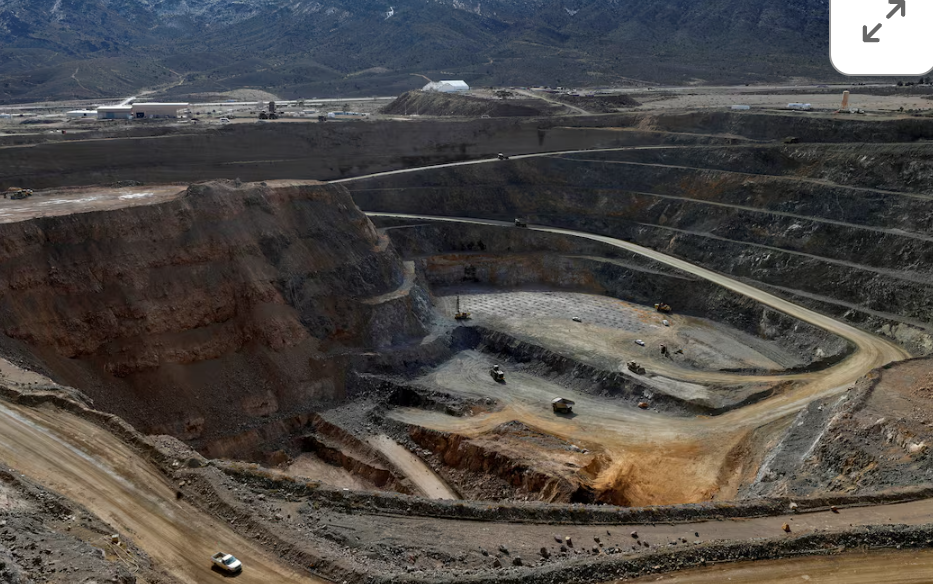
MP Materials operates the Mountain Pass rare-earth mine in California, the only major rare-earth mine in the United States. In 2025, the U.S. Department of Defense made a multibillion-dollar investment in the company and became its largest shareholder.
The agreement was designed to expand U.S. production of rare-earth materials and magnets while reducing reliance on Chinese supply chains. The U.S. government also agreed to a price-support mechanism for certain rare-earth products as part of the investment. 4
The potential change in Shenghe’s ownership therefore comes against a background of competing efforts by Washington and Beijing to strengthen their positions in strategically important mineral supply chains.
| Company or institution | Role in the rare-earth supply chain | Relevance to the proposed deal |
|---|---|---|
| China Rare Earth Group | Chinese state-owned rare-earth producer | Potential buyer of Shenghe Resources |
| Shenghe Resources | Chinese rare-earth mining and processing company | Potential acquisition target |
| MP Materials | U.S. rare-earth mining and processing company | Shenghe owns about 3% |
| U.S. Department of Defense | U.S. government investor in critical minerals | Largest shareholder of MP Materials |
| Peak Rare Earths | Australian rare-earth company | Acquired by Shenghe in 2025 |
Why Rare Earths Have Become a Strategic Commodity
Rare earths are a group of 17 metallic elements used in technologies that require specialized magnetic, electronic or material properties. Permanent magnets made from rare-earth materials are particularly important for electric motors and other advanced technologies.
Demand comes from several major industries, including electric vehicles, renewable-energy equipment, consumer electronics and aerospace applications. Some rare-earth materials also have important defense applications.
This combination of civilian and strategic demand has made rare-earth supply chains increasingly important to governments.
China has built a particularly strong position in rare-earth mining and, more importantly, processing and refining. Reuters has previously reported that China’s dominance in refining remains substantial even as the United States and other countries invest in alternative supply chains. 5
Mining Is Only One Part of the Supply Chain
Rare-earth supply security is not determined simply by where minerals are extracted. Ore must also be processed, separated and converted into materials that manufacturers can use.
This distinction has been important in the development of MP Materials. The company has been working to expand processing and magnet manufacturing in the United States rather than relying entirely on overseas processing.
MP Materials previously shipped much of its rare-earth concentrate to China for processing, but it halted China-bound shipments during the U.S.-China tariff dispute and has been increasing domestic processing capacity. 6
Potential Impact on China’s Rare-Earth Industry
If China Rare Earth Group completes the acquisition, the transaction would further consolidate China’s rare-earth industry under state ownership.
For Beijing, consolidation could potentially make it easier to coordinate production, processing capacity and access to rare-earth resources. It would also bring Shenghe’s domestic and overseas interests under a larger state-owned corporate structure.
One Reuters source said the acquisition could improve Shenghe’s access to rare-earth production quotas. China uses quotas covering mining, smelting and separation, although the government does not publicly disclose all of the details surrounding those allocations.
Those quotas are closely watched by the market because they can provide an indication of the amount of rare-earth material that may enter global supply chains. 7
How the Deal Could Affect Global Rare-Earth Supply Chains
The potential acquisition comes as governments and companies around the world are attempting to diversify rare-earth supply.
The United States, Australia, Saudi Arabia and other countries have pursued projects intended to expand mining, separation, refining and magnet manufacturing outside China.
MP Materials, for example, announced a partnership with Saudi Arabia’s Ma’aden in 2025 to explore a rare-earth supply chain covering mining, separation, refining and magnet production. 8
At the same time, Western governments continue to face the challenge of building alternative processing capacity at commercially competitive costs. Mining a rare-earth deposit is not enough if the material still has to be sent to an established foreign processing network.
Supply-Chain Diversification Takes Time
Developing alternative rare-earth supply chains requires mines, separation plants, refineries, magnet factories, specialized equipment and long-term customers. Each part of the chain can take years to develop.
That makes existing producers strategically important even when new projects are announced.
The potential Shenghe transaction could therefore matter beyond the ownership of a single company. It could affect how investors and governments assess the concentration of rare-earth production and processing capacity.
Could the MP Materials Shareholding Become a U.S.-China Issue?
The presence of a Chinese state-owned company and the U.S. Department of Defense in the shareholder structure of the same U.S. rare-earth company could attract regulatory and national-security scrutiny.
However, the precise implications remain unclear. Reuters reported that its sources did not know how the proposed acquisition would affect Shenghe’s foreign assets or MP Materials stake.
MP Materials has also maintained that Shenghe and the Chinese government do not control its operations. That means the potential acquisition should not automatically be interpreted as a transfer of operational control of MP Materials.
Any regulatory response would depend on the ownership structure, applicable U.S. rules, the nature of Shenghe’s stake and how authorities evaluate the transaction.
China’s Rare-Earth Consolidation Strategy
The proposed Shenghe transaction fits into a broader history of consolidation in China’s rare-earth industry.
China Rare Earth Group was created in 2021 through the restructuring of five state-linked companies. The creation of a large state-owned group was part of a broader effort to reorganize the industry around major producers.
Consolidation can give large producers greater scale and potentially improve coordination between mining, processing and downstream activities.
It can also make the structure of China’s rare-earth sector easier to manage from a national industrial-policy perspective.
The possible acquisition of Shenghe would extend that consolidation further by bringing one of the remaining companies with meaningful private ownership under the control of a major state-owned group.
Rare Earths and the U.S.-China Trade Relationship
Rare earths have become an important part of the wider economic relationship between Washington and Beijing. Export restrictions and supply concerns have repeatedly demonstrated how critical minerals can become part of broader trade negotiations.
Reuters reported on September 18 that rare-earth supply remains one of the issues under discussion as U.S. and Chinese officials prepare for further high-level engagement. The material is strategically important to U.S. industries, while Chinese exporters remain central to global supply. 9
The potential Shenghe acquisition therefore arrives at a sensitive moment. It could deepen China’s domestic consolidation at the same time that the United States is attempting to develop alternative sources of critical minerals.
What Investors and Manufacturers Will Watch Next
- Deal announcement: The two sources did not know when an acquisition might be announced or completed.
- Ownership structure: Investors will want to know exactly what stake China Rare Earth Group would acquire.
- Foreign assets: Shenghe’s overseas investments, including its MP Materials stake, could become an important focus.
- Regulatory response: Authorities may examine implications involving critical minerals and national security.
- Rare-earth quotas: Any change in Shenghe’s access to Chinese production quotas could affect its position in the domestic market.
- MP Materials: The company’s position regarding Shenghe’s potential ownership change will be closely watched.
- Global supply diversification: Alternative mining, refining and magnet projects outside China will remain important to manufacturers seeking supply security.
What the Potential Shenghe Acquisition Means for MP Materials
The most sensitive part of the proposed transaction is the intersection between Shenghe’s minority ownership of MP Materials and the U.S. government’s investment in the company.
MP Materials is already a central part of the United States’ effort to establish a domestic rare-earth supply chain. Its Mountain Pass operation provides domestic mining capacity, while the company is expanding processing and magnet manufacturing.
The potential change in Shenghe’s ownership would therefore create an unusual shareholder structure involving a Chinese state-owned rare-earth company and the U.S. Department of Defense.
However, the practical consequences cannot yet be determined. The transaction remains under discussion, and the Reuters sources said they did not know what would happen to Shenghe’s foreign investments if the acquisition proceeds. 10
Conclusion: A Potential New Step in China’s Rare-Earth Consolidation
China Rare Earth Group’s reported talks to acquire Shenghe Resources could become an important development in the global rare-earth industry if they lead to a completed transaction. The proposed deal would consolidate another major Chinese rare-earth company under state ownership and potentially transfer control of Shenghe’s overseas holdings, including its approximately 3% stake in MP Materials.
The timing makes the talks particularly significant. The United States is investing heavily in domestic rare-earth mining, processing and magnet production, while China remains a major force across the global supply chain. MP Materials’ U.S. government-backed expansion is one example of Washington’s effort to strengthen domestic capacity. 11
For now, several important questions remain unanswered, including whether the acquisition will be completed, what will happen to Shenghe’s foreign assets and how any ownership change could affect its MP Materials stake.
The outcome will be watched not only by rare-earth investors but also by manufacturers in electric vehicles, renewable energy, electronics and other industries that depend on reliable supplies of critical minerals.
“`12
For breaking news and live news updates, like us on Facebook or follow us on Twitter and Instagram. Read more on Latest Business on thefoxdaily.com.

COMMENTS 0