The sharp fall in international Crude Oil prices is offering India some relief from energy-cost pressures, with the possibility of easing inflation and improving the competitiveness of domestic exports. However, the benefits may take time to reach exporters, who are still waiting for lower input costs to translate into more affordable production.
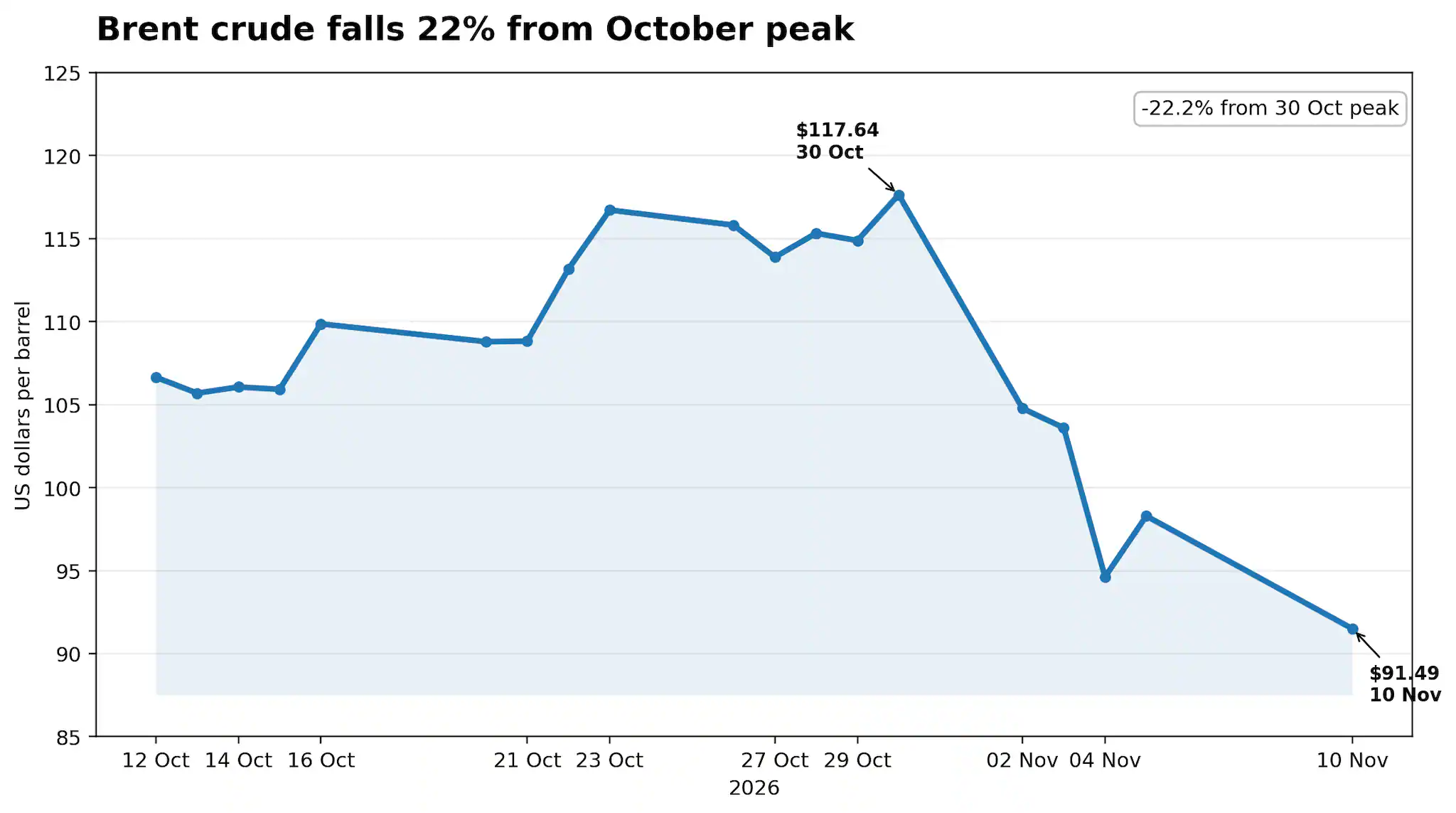
Brent crude, the international benchmark, declined from its October 30 peak of $118 a barrel to around $92 on November 10, amid hopes that tensions in the US-Iran conflict could ease. The movement has brought some relief to oil-importing economies such as India, where crude prices influence the cost of fuel, transportation, manufacturing and a wide range of other economic activities.
The outlook, however, remains uncertain. A fall in benchmark oil prices does not automatically translate into immediate savings for businesses or consumers. The extent of the benefit will depend on how long prices remain lower, how quickly domestic fuel and industrial costs adjust, and whether global supply conditions remain stable.
Why Falling Crude Oil Prices Matter for India
India is a major importer of crude oil, making international price movements an important factor in its economic outlook. When oil prices rise, the cost of importing energy increases, putting pressure on the country’s import bill and potentially affecting inflation, businesses and household budgets.
A sustained decline can ease some of these pressures. Lower crude prices may reduce the cost of petroleum products and energy-related inputs, helping limit expenses across sectors that depend on fuel for production, transportation and distribution.
The potential impact extends beyond petrol and diesel. Oil is an important input in several industrial value chains, including chemicals, plastics, synthetic materials and other petroleum-based products. Lower crude prices can therefore create opportunities for businesses to reduce operating costs, although the timing and scale of those savings vary by industry.
For the broader economy, cheaper imported energy can also help moderate cost pressures. If lower crude prices are sustained and passed through the supply chain, they may support a more favourable inflation environment.
Brent Crude Falls From $118 to Around $92
Brent crude fell from approximately $118 a barrel on October 30 to around $92 on November 10. The decline came amid expectations that the US-Iran conflict could move towards de-escalation, reducing concerns about further disruption to global energy supplies.
Geopolitical developments are closely watched by oil markets because conflict involving major energy-producing regions can affect supply expectations, shipping routes and the willingness of traders to take on risk. Even when physical production has not been interrupted, fears about potential disruption can push prices higher.
Conversely, signs of diplomatic progress or a reduced risk of escalation can ease some of the uncertainty reflected in oil prices. The recent decline suggests that expectations about the conflict have influenced market sentiment, although it does not guarantee that prices will continue falling.
Oil markets remain sensitive to changes in the geopolitical situation. Any renewed escalation, disruption to supply routes or change in production expectations could alter the direction of prices.
Why Exporters Are Still Waiting for Cheaper Inputs
While lower crude prices could improve India’s cost outlook, exporters may not experience the benefits immediately. Businesses often purchase raw materials through contracts, maintain existing inventories and operate under supply arrangements that do not adjust instantly when international commodity prices decline.
This means that a fall in crude oil prices may take time to pass through to the prices of industrial inputs. Companies that purchased materials when oil prices were higher could continue using more expensive inventory before they benefit from cheaper replacement supplies.
There can also be differences between international benchmark prices and the actual costs faced by Indian manufacturers. Import expenses, currency movements, transportation charges, processing costs and supplier pricing decisions all influence the final price of an input.
For exporters, the timing of these adjustments matters. Lower production costs can improve profit margins, allow businesses to offer more competitive prices to overseas buyers and provide greater flexibility when negotiating contracts. But those advantages become meaningful only when input prices actually decline.
The gap between falling crude benchmarks and lower factory-level costs is therefore an important part of the current outlook. Exporters may welcome the reduction in oil prices while continuing to wait for tangible savings across their supply chains.
Lower Energy Costs Could Support Export Competitiveness
Energy and transportation expenses influence the competitiveness of Indian exports. Manufacturers need fuel and electricity to operate facilities, while logistics companies depend heavily on petroleum products to move raw materials and finished goods.
When crude prices decline, businesses may eventually benefit from lower transportation and energy-related expenses. This can be particularly relevant for industries with significant fuel requirements or substantial dependence on petroleum-based raw materials.
Lower input costs can help exporters in several ways. Companies may be able to protect their margins, manage pricing pressure from international competitors and maintain more predictable production budgets. Businesses operating with tight margins could find even a gradual reduction in operating expenses useful.
However, cheaper crude alone cannot determine whether Indian exports become more competitive. Exchange-rate movements, overseas demand, freight costs, trade policies, tariffs and the availability of raw materials also influence export performance.
The benefits will consequently differ across sectors. Businesses that are highly exposed to oil-linked inputs may experience a more direct impact than companies whose costs are driven by other materials, labour or specialised components.
Will the Oil Price Decline Ease Inflation in India?
Lower international crude prices can help ease inflationary pressures in an oil-importing economy. Energy costs affect transportation, manufacturing, agriculture and distribution, meaning that changes in oil prices can influence the cost of goods and services across the economy.
If the decline is sustained, it could reduce some of the pressure on businesses that rely on fuel and petroleum-based inputs. Lower transportation expenses may also help moderate the cost of moving essential goods between production centres, warehouses and markets.
There is, however, a difference between lower international crude prices and an immediate reduction in retail prices. Domestic fuel prices are influenced by several factors, including taxes, refining and distribution expenses, currency movements and pricing decisions.
Similarly, the impact on broader inflation depends on how much of the cost reduction businesses pass on to customers. Some companies may use lower input costs to improve their margins, while others may reduce selling prices or absorb increases elsewhere in their operations.
As a result, the decline in Brent crude offers the possibility of inflation relief rather than a guarantee of an immediate fall in the prices consumers pay.
India Needs to Diversify Energy and Supply Routes
The recent movement in crude prices also highlights the importance of reducing India’s exposure to geopolitical disruptions. Dependence on international energy markets means that conflict, shipping interruptions and changes in global supply conditions can have consequences for domestic businesses and consumers.
Diversifying energy sources and supply routes can help reduce the risks associated with relying too heavily on particular regions or transportation corridors. A broader range of suppliers and more resilient logistics arrangements can give importers greater flexibility when global conditions change.
Energy diversification is also important over the longer term. Expanding the role of alternative energy sources and improving energy efficiency can help limit the impact of fluctuations in international oil markets.
For businesses, supply-chain diversification can provide an additional layer of protection. Companies that depend on imported raw materials may benefit from developing alternative sourcing arrangements and monitoring changes in international freight and commodity markets.
Such measures cannot eliminate exposure to global price movements, but they can help businesses and the wider economy respond more effectively when geopolitical tensions disrupt trade.
What Exporters and Businesses Should Watch Next
The decline in Brent crude provides a more favourable backdrop for India, but businesses will need to assess whether the reduction is sustained before making long-term decisions based on lower energy costs.
Several factors will influence how quickly the improvement reaches the domestic economy:
- International oil prices: Whether Brent crude remains near its November 10 level or rises again will determine how durable the relief may be.
- US-Iran developments: Any progress towards de-escalation could reduce geopolitical uncertainty, while renewed tensions may put pressure on oil markets.
- Domestic fuel pricing: Changes in retail fuel costs will influence the extent of relief available to transport operators, businesses and households.
- Industrial input costs: Exporters will need to see lower prices for raw materials and petroleum-linked products before the full benefit becomes visible in production expenses.
- Supply-chain conditions: Freight charges, currency movements and supplier contracts will affect how international price changes translate into actual savings.
These factors will help determine whether the recent fall in crude prices becomes a broader cost advantage for Indian businesses or remains a temporary improvement in the international market.
Lower Crude Prices Offer Relief, but the Benefits May Take Time
The decline in Brent crude from $118 a barrel on October 30 to around $92 on November 10 offers India some relief at a time when geopolitical tensions have kept energy markets under pressure. Lower oil prices could help moderate inflation, reduce energy-related expenses and improve the cost position of businesses that depend on imported petroleum products.
For exporters, however, the immediate priority is seeing those savings reflected in the prices of raw materials, industrial inputs and transportation. Until that happens, the improvement in international crude benchmarks may not translate into a substantial reduction in production costs.
The broader message from IIFT Vice Chancellor K Rangarajan’s assessment is that cheaper oil could create an opportunity for India, but the gains will depend on how effectively lower global prices reach businesses and the wider economy. Diversifying energy sources and supply routes will also remain important in reducing vulnerability to future geopolitical shocks.
For now, India’s potential relief from falling crude prices is encouraging, but exporters will be watching the next stage of the price adjustment closely. A sustained decline, combined with lower input costs, would provide a stronger basis for improved competitiveness.
For breaking news and live news updates, like us on Facebook or follow us on Twitter and Instagram. Read more on Latest Business on thefoxdaily.com.






COMMENTS 0