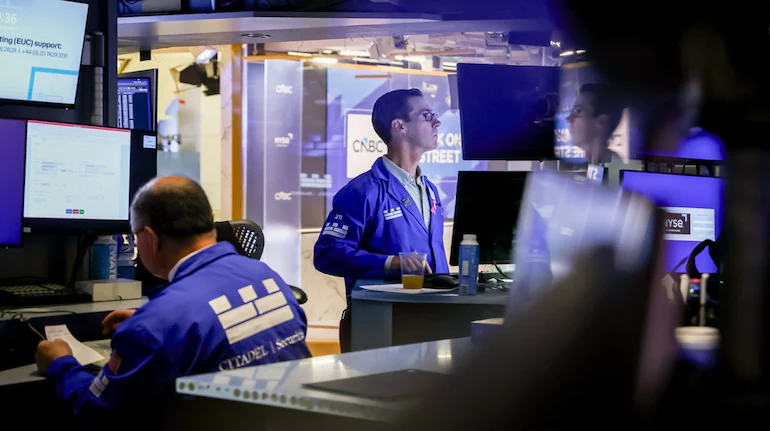
Wall Street‘s post-election rally reversed sharply on Thursday, November 5, as a massive selloff in Artificial Intelligence stocks wiped out approximately $2.5 trillion in market value from the Nasdaq 100. Technology shares came under heavy pressure amid growing concerns about AI infrastructure spending, potential restrictions on data centre construction and the profitability of large-scale investments in artificial intelligence.
The Nasdaq Composite plunged 5.52%, entering correction territory after falling nearly 12% from its October 6 record high. Semiconductor companies, including Nvidia and Advanced Micro Devices (AMD), led the declines as investors reassessed the outlook for the AI industry following the US midterm elections.
Key Highlights
- Wall Street lost approximately $2.5 trillion in Nasdaq 100 market value during Thursday’s selloff.
- The Nasdaq Composite fell 5.52% to 24,315, entering correction territory.
- Nvidia declined around 9%, while AMD plunged approximately 17%.
- Concerns over possible restrictions on data centre construction affected AI-related stocks.
- The S&P 500 and Dow Jones recorded their steepest daily declines since April 2025.
Nasdaq Plunges 5.52% as AI Stocks Face Heavy Selling
The Nasdaq Composite closed at 24,315 on November 5, falling 5.52% in its steepest single-day decline since April 2025. The technology-heavy index has now dropped nearly 12% from its October 6 record, crossing the 10% threshold commonly used to define a market correction.
The selloff spread across the broader US Stock Market. The S&P 500 declined 4.36% to close at 7,353.73, while the Dow Jones Industrial Average dropped 1,833 points, or 3.44%, to finish at 51,523.06.
Both indexes recorded their worst trading sessions since April 2025, when US President Donald Trump’s sweeping tariff announcements triggered a major market downturn.
Why Did Wall Street’s Post-Election Rally Reverse?
The sharp decline came just one day after US stocks rallied following the midterm elections. On Wednesday, the Dow Jones surged 1,569 points, while the Nasdaq gained 1.44% as investors responded positively to the election results.
However, the optimism faded on Thursday as investors reconsidered the potential impact of Democratic gains in Congress and several state elections on the technology industry.
Market participants became particularly concerned about possible restrictions on data centre construction. These facilities are essential to the expansion of artificial intelligence because they provide the computing capacity required to train and operate advanced AI systems.
The possibility of slower infrastructure development has raised questions about future demand for semiconductors, servers, computing equipment and other products linked to AI expansion.
Texas Data Centre Restrictions Put AI Investment Plans Under Scrutiny
Texas emerged as a major focus of investor attention following the election. Governor-elect Gina Hinojosa campaigned on temporarily restricting new data centre construction and reviewing tax incentives offered to developers, according to CNN.
The state has become an important destination for AI infrastructure investment by major technology companies, including Google, Meta, Oracle and OpenAI. These companies depend on large-scale computing facilities to support their artificial intelligence operations.
Any slowdown in new data centre projects could affect the companies building these facilities as well as semiconductor manufacturers and other technology suppliers.
However, the election results do not automatically mean that new restrictions will be implemented. Investors are assessing the possibility of policy changes and their potential impact on future infrastructure spending.
Nvidia and AMD Lead the Semiconductor Stock Selloff
Semiconductor companies suffered some of the steepest losses during Thursday’s trading session as investors reassessed the outlook for AI-related demand.
- Nvidia: Shares fell approximately 9%.
- Advanced Micro Devices: The stock plunged around 17%.
- Broadcom: Shares declined approximately 10%.
- Oracle: The stock lost nearly 7%.
The Philadelphia Semiconductor Index also slumped approximately 12%, highlighting the scale of selling across the chip industry, according to Reuters.
The declines were not limited to semiconductor manufacturers. Companies providing computing capacity and infrastructure for AI applications also faced significant selling pressure.
CoreWeave shares fell roughly 10%, while Nebius declined around 15%. These companies are closely connected to the expanding demand for computing resources used in artificial intelligence development.
AI Profitability Concerns Add to Market Pressure
Concerns about AI infrastructure spending and the financial returns from large technology investments had already been weighing on parts of the market before the elections.
Developing AI infrastructure requires substantial capital investment in data centres, advanced chips, computing systems and energy-related facilities. Investors are increasingly examining whether the revenue generated by AI services will justify the scale of this spending.
Financing costs are another concern. Companies that depend on borrowing to fund infrastructure expansion may face greater pressure if interest and financing expenses remain high or expected returns take longer to materialise.
The latest selloff therefore reflects more than uncertainty surrounding election outcomes. It also highlights broader questions about the sustainability of AI investment and the valuations of companies that have benefited from strong expectations of future technology demand.
Market Volatility May Not Signal a Long-Term Technology Trend
Keith Lerner, chief investment officer at Truist Advisory Services, told CNN that the week’s sharp market movements appeared more like an immediate reaction than a reliable indication of how Technology Stocks would perform under Democratic control of Congress.
His assessment highlights the uncertainty surrounding the market reaction. While investors are responding to possible policy changes, the longer-term performance of AI stocks will also depend on business results, infrastructure demand and the ability of companies to generate sustainable returns.
What the AI Stock Crash Means for Investors
The November 5 selloff demonstrates how quickly investor sentiment can change when political developments and concerns about technology spending combine. Companies associated with AI infrastructure faced significant pressure as markets reassessed the possibility of slower data centre expansion and weaker future demand for computing equipment.
Investors will be watching developments around data centre policies, AI infrastructure spending, financing costs and revenue growth across the technology sector. The performance of major semiconductor companies will also remain important in assessing whether demand for AI computing continues to support their valuations.
Conclusion
Wall Street’s sharp decline on November 5 reversed the post-election rally and erased approximately $2.5 trillion in Nasdaq 100 market value. The Nasdaq Composite fell 5.52%, while Nvidia, AMD and other AI-linked companies recorded steep losses.
Concerns about potential data centre restrictions, rising financing pressures and the profitability of AI investments contributed to the selloff. Although the election results intensified uncertainty, the broader market reaction also reflects growing scrutiny of the financial returns expected from the global artificial intelligence boom.
For breaking news and live news updates, like us on Facebook or follow us on Twitter and Instagram. Read more on Latest Business on thefoxdaily.com.






COMMENTS 0