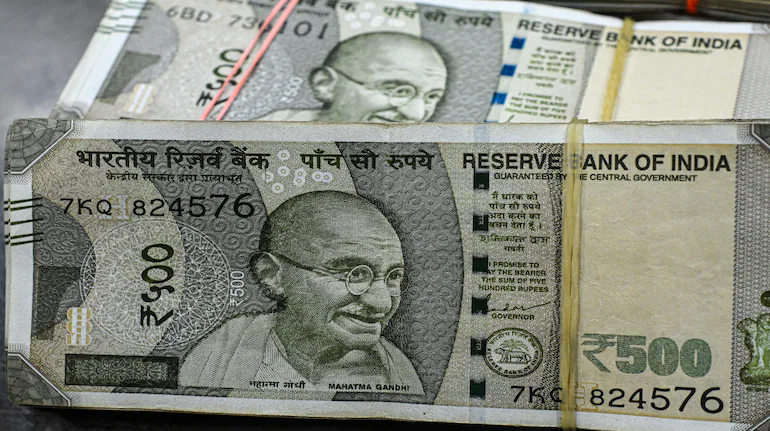
The Indian Rupee opened higher against the US Dollar on Friday, November 20, supported by Foreign Investment inflows into domestic equities despite mixed movements across Asian currencies. The rupee gained 9 paise to open at 93.20 per dollar, compared with its previous close of 93.29.
The currency’s early strength came as foreign portfolio investors (FPIs) made substantial purchases of Indian shares in the previous trading session. These inflows could generate dollar selling in the domestic foreign exchange market, potentially providing support to the rupee.
However, pressure from a stronger US dollar and uncertainty in global financial markets remained important factors for currency traders. The dollar was heading towards a fourth consecutive weekly gain, supported by expectations of further Federal Reserve interest-rate hikes, elevated US Treasury yields and demand associated with the planned initial public offering (IPO) of Anthropic PBC.
Rupee Opens at 93.20 Against the Dollar
The rupee opened at 93.20 per dollar on November 20, gaining 9 paise from its previous closing level of 93.29. The appreciation reflected support from foreign investment flows into Indian financial assets.
According to Finrex, foreign portfolio investors purchased shares worth Rs 7,411 crore in the previous session. The dollar proceeds associated with these investments could be sold in the domestic market, creating additional demand for the rupee.
Foreign investment inflows can support a currency because overseas investors generally need to convert foreign currency into rupees when purchasing Indian assets. The resulting dollar supply can help offset demand from importers and other market participants seeking foreign currency.
However, the impact depends on the timing and scale of actual conversions. Not every foreign investment transaction immediately results in dollar selling in the domestic market, so the effect on the rupee can vary.
Finrex Sees Cautious Outlook for Rupee Flows
Despite the previous session’s foreign investor purchases, Finrex indicated that the resulting currency flows might not be sufficient to provide strong support to the rupee.
The brokerage noted that the IPO had not received strong subscription interest, raising uncertainty about whether related flows would provide meaningful support to the domestic currency. This highlights the importance of distinguishing between confirmed investment activity and expectations about future foreign currency transactions.
Market participants will also monitor whether foreign investors continue buying Indian equities. Sustained inflows could help improve dollar supply, while a slowdown in overseas investment may reduce this source of support.
Dollar Heads Towards Fourth Consecutive Weekly Gain
The US dollar remained firm in international markets and was on course for a fourth consecutive weekly gain. Demand associated with the Anthropic PBC IPO provided an additional source of support for the currency.
Expectations of further Federal Reserve interest-rate increases and elevated US Treasury yields have also supported the dollar. Higher US interest rates can make dollar-denominated assets more attractive to global investors, potentially encouraging capital flows towards the United States.
When the dollar strengthens, emerging-market currencies can face additional pressure. Investors may become more selective about holding assets in developing economies, particularly when returns on US investments appear more attractive.
For the Indian rupee, this creates a competing set of forces. Foreign investment into domestic equities can support the currency, while a stronger dollar and higher US yields can push it in the opposite direction.
Asian Currencies Trade Mixed Against the US Dollar
Asian currencies traded on a mixed note against the US dollar on Friday, with most regional currencies recording losses. The Philippine peso was the weakest performer, declining 0.31%.
The Taiwan dollar fell 0.27%, while the Chinese renminbi weakened 0.18%. The South Korean won and Indonesian rupiah declined 0.15% and 0.12%, respectively. The Malaysian ringgit edged lower by 0.03%.
Some regional currencies moved in the opposite direction. The Japanese yen gained 0.19%, making it the strongest performer among the currencies listed. The Thai baht advanced 0.06%, while the Singapore dollar rose 0.04%.
The mixed performance indicates that regional currencies were responding to a combination of global dollar strength and individual market factors. The rupee’s opening gain stood out against the weakness recorded by several other Asian currencies.
Gold and Silver Decline Amid Higher US Rate Expectations
Precious metals experienced significant losses in the previous trading session, according to Finrex. Gold touched $3,560 per ounce, declining 1.80%, while silver fell 6% to $41.75 per ounce.
The decline in precious metals came amid expectations of higher Federal Reserve interest rates and continued weakness in the AI trade on Wall Street. These developments contributed to pressure on gold and silver prices.
Higher interest rates can weigh on precious metals because gold and silver do not generate regular interest income. When yields on interest-bearing assets rise, the relative attractiveness of holding non-yielding metals can decline.
The sharp fall in silver also reflected the broader weakness in the precious metals market. Such movements can influence currency sentiment indirectly through changes in commodity prices and investor demand for safe-haven assets.
Finrex’s Guidance for Exporters and Importers
Finrex highlighted different currency strategies for exporters and importers based on the rupee’s trading levels.
According to the brokerage, exporters could consider selling dollars if the rupee weakens beyond the 93.50-per-dollar level. A weaker rupee generally increases the amount of domestic currency received when exporters convert their foreign currency earnings.
Importers, meanwhile, may consider waiting for the rupee to approach the 93.00-per-dollar level before purchasing dollars, according to Finrex. A stronger rupee can reduce the domestic currency cost of importing goods and services priced in dollars.
These levels represent market guidance rather than guaranteed trading outcomes. Actual currency movements can differ depending on global developments, domestic dollar demand and supply, and broader financial market conditions.
Global Political Developments Offer Limited Market Direction
Finrex also noted that the US-Russia-China summit held the previous day did not provide much that could influence currency markets. The assessment suggests that traders remained more focused on monetary policy expectations, dollar demand, foreign investment flows and movements in global assets.
Geopolitical developments can influence currency markets by changing investor confidence and demand for safe-haven assets. However, their impact depends on the nature of the announcements and whether they lead to changes in economic or trade expectations.
What Could Influence the Rupee Next?
The rupee’s near-term direction will depend on the balance between foreign investment inflows and external pressure from the US dollar. Continued purchases of Indian equities could increase dollar supply and help the domestic currency maintain its strength.
At the same time, expectations of further Federal Reserve rate increases and elevated US Treasury yields could keep the dollar supported. Developments surrounding the Anthropic IPO and global technology stocks may also influence international investor positioning.
Currency traders will additionally watch movements in Asian currencies and precious metals for signs of changing risk sentiment. The mixed performance across the region shows that emerging-market currencies are not moving uniformly despite broader dollar strength.
For now, the rupee’s opening gain reflects support from foreign investment activity, but the currency remains exposed to global monetary policy expectations and changes in capital flows. Whether it can sustain its early advance will depend on how these competing forces develop during the trading session.
For breaking news and live news updates, like us on Facebook or follow us on Twitter and Instagram. Read more on Latest Business on thefoxdaily.com.






COMMENTS 0