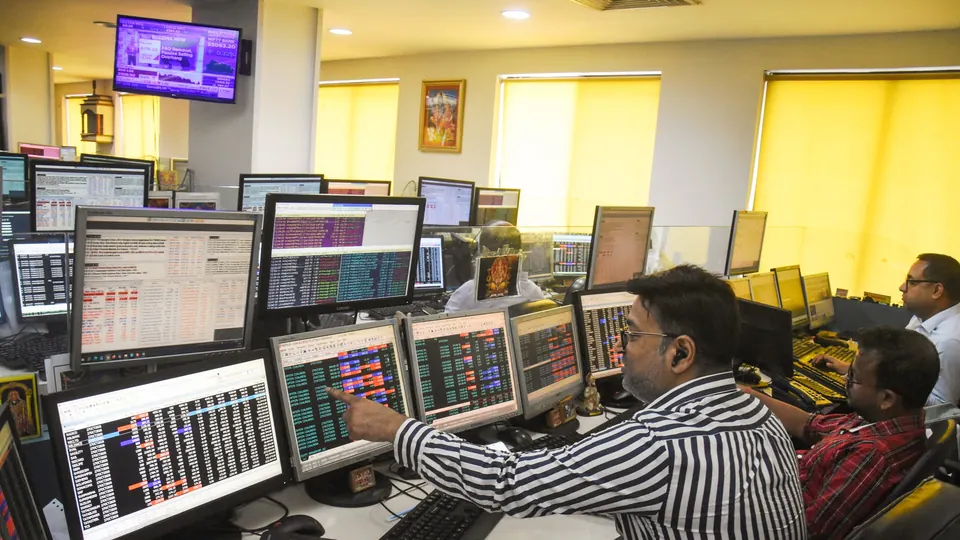
Indian stock markets opened higher on Monday, supported by falling crude oil prices, improving foreign investor sentiment and gains across Asian markets. However, investors remained cautious after a strong rally in the previous week, with possible profit booking likely to limit further gains.
The BSE Sensex climbed 302.27 points, or 0.37%, to open at 81,301.67. The NSE Nifty 50 gained 25.8 points, or 0.1%, to begin trading at 25,012.20.
Key Highlights
- Sensex opened 302.27 points higher at 81,301.67, gaining 0.37%.
- Nifty 50 started the session at 25,012.20, up 25.8 points.
- Foreign investors purchased more than $4.1 billion worth of Indian shares in November so far.
- Brent crude prices declined nearly 1% to around $97.5 per barrel.
- Asian markets advanced 0.8%, supporting positive sentiment in Indian equities.
Why Did the Sensex and Nifty Open Higher?
Three major factors supported the positive opening of Indian equities: lower crude oil prices, strong foreign portfolio investor buying and improving sentiment across international markets.
Falling oil prices are particularly important for India because the country depends heavily on imported crude to meet its energy requirements. Lower international oil prices can reduce import costs and ease pressure on inflation, the current account balance and corporate expenses.
At the same time, foreign investors have increased their purchases of Indian equities, providing additional support to domestic stock market sentiment.
Foreign Investors Buy Indian Shares Worth Over $4.1 Billion
Foreign investors have purchased Indian shares worth more than $4.1 billion so far in November. According to the provided market data, this represents their biggest monthly inflow since September 2024.
The return of foreign capital is an encouraging development for the Indian stock market. Foreign institutional investor activity can influence market liquidity, trading volumes and the direction of major benchmark indices.
Continued buying could help support the Sensex and Nifty, although Foreign Investment flows can change depending on global interest rates, currency movements, geopolitical developments and valuations.
Crude Oil Prices Fall After Trump’s Comments on Iran
Lower crude oil prices also contributed to the positive market opening. Brent crude futures declined nearly 1% to approximately $97.5 per barrel after US President Donald Trump said he was highly unlikely to order fresh attacks on Iran as discussions to end the conflict continued.
Any reduction in geopolitical tensions involving major oil-producing regions can ease concerns about possible supply disruptions. This can influence international crude prices and improve sentiment in oil-importing economies such as India.
For Indian companies, lower crude prices may reduce input and transportation costs. Oil marketing companies, airlines and other fuel-sensitive businesses can benefit from a more favourable energy-price environment, although the actual impact depends on individual company costs and pricing conditions.
Asian Markets Rise 0.8% as Global Sentiment Improves
Asian equity markets gained around 0.8% on Monday, providing additional support to Indian shares. The positive movement followed a volatile week in which concerns about chip demand triggered some of the sharpest declines in years across technology-heavy markets in the region.
Investors had become cautious about the outlook for technology companies, particularly businesses linked to the semiconductor industry and artificial intelligence infrastructure. The latest recovery in Asian markets helped improve overall investor sentiment at the start of the week.
Developments in international markets remain important for Indian equities because global investment decisions, risk appetite and movements in overseas indices can influence domestic trading.
Profit Booking Remains a Key Risk After Recent Rally
Despite Monday’s positive opening, investors may remain cautious because Indian benchmark indices had already recorded substantial gains in the previous trading sessions.
The Sensex and Nifty declined slightly during Sunday’s special Diwali trading session as investors consolidated recent gains. The market weakness followed a seven-session winning streak through Friday, during which both benchmark indices had advanced approximately 10.5%.
The seven-session rally was the longest winning streak recorded by the benchmarks this year. Strong foreign inflows, easing crude oil prices and a shift away from global artificial intelligence-linked stocks had supported the gains.
After such a sharp rise, some investors may choose to book profits, potentially limiting the market’s upward movement. Traders are therefore likely to monitor foreign investment activity, crude oil prices and global market trends for further direction.
What Should Investors Watch Next?
Market participants will closely track international crude prices, foreign portfolio investor flows and developments in the Middle East. These factors could influence market sentiment and determine whether the recent rally in Indian equities continues.
Global technology stocks and Asian market performance will also remain important indicators. Any fresh concerns about semiconductor demand or artificial intelligence-related investments could affect international risk appetite and indirectly influence Indian markets.
Investors should also watch how the Sensex and Nifty behave after their recent strong gains. A period of consolidation would not necessarily indicate a reversal, but sharp movements could emerge if global developments change market expectations.
Conclusion
Sensex and Nifty opened higher on Monday as falling crude oil prices, strong foreign investor inflows and positive Asian market trends supported buying interest. Foreign investors have purchased more than $4.1 billion in Indian shares so far in November, while Brent crude prices eased to around $97.5 per barrel.
However, the possibility of profit booking remains an important concern after the benchmarks gained approximately 10.5% during their previous seven-session winning streak. The near-term direction of the Indian stock market will depend on foreign capital flows, oil prices, geopolitical developments and global investor sentiment.
For breaking news and live news updates, like us on Facebook or follow us on Twitter and Instagram. Read more on Latest Business on thefoxdaily.com.






COMMENTS 0