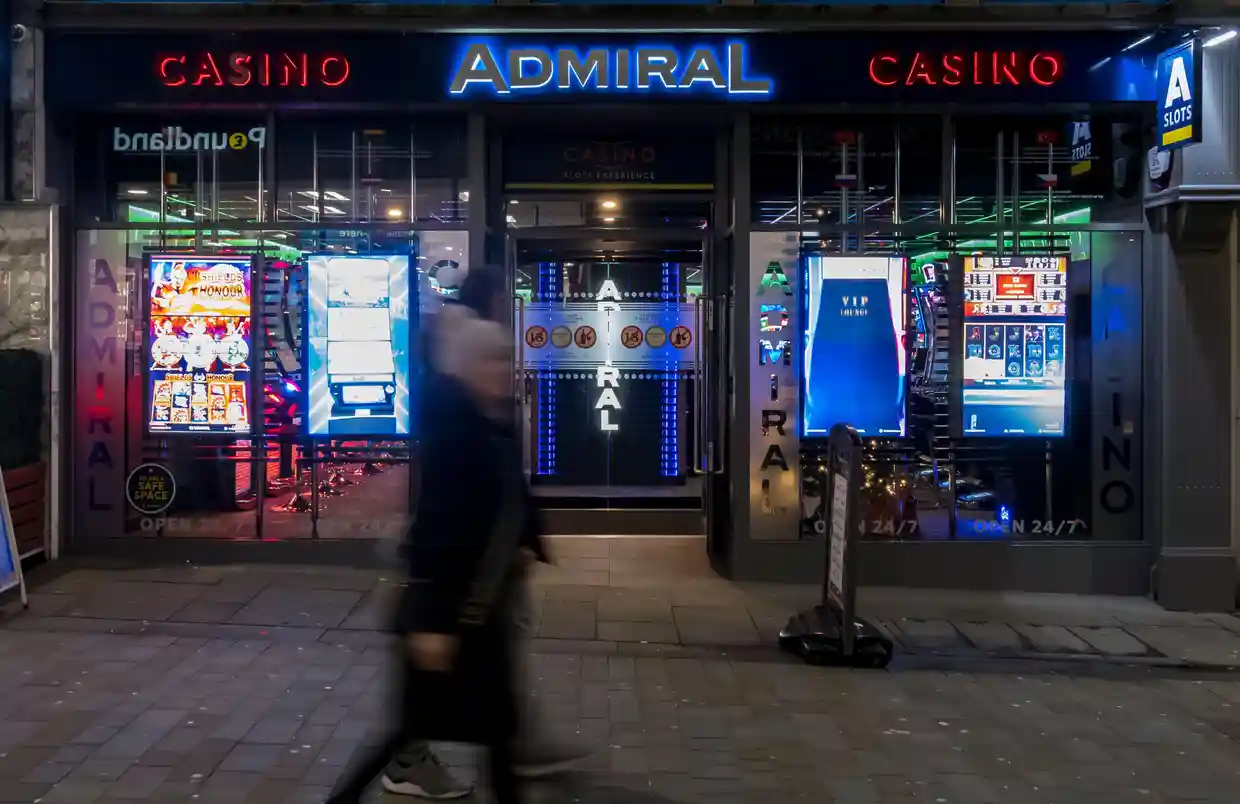
Hundreds of high street gambling venues in England could potentially avoid parts of the UK government’s latest tax changes by operating under bingo licences, raising concerns about a loophole in business rates rules. Adult gaming centres (AGCs) that primarily offer slot machines may continue receiving discounted business rates if they are classified as bingo venues rather than gambling arcades.
The issue has emerged after the government announced higher taxes on gambling businesses in its latest budget. Although the measures are intended to increase the tax burden on slot machine operators and remove certain business rates reliefs, an investigation by the Guardian suggests that some of the country’s largest operators may be able to avoid the impact through existing licensing arrangements.
Budget increases gambling duty on slot machine takings
John Healey singled out adult gaming centres in the government’s budget measures, announcing an increase in duty on slot machine takings from 20% to 25%. The higher rate will also affect bookmakers and casinos.
The government has also announced that adult gaming centres and vape shops in England will no longer qualify for a business rates discount designed to support leisure and hospitality businesses.
Healey described the measures as part of an effort to raise taxes on gambling while supporting economic growth on high streets. The policy is intended to change the tax treatment of businesses considered outside the categories targeted by the relief.
Prime Minister Andy Burnham has also publicly supported the policy, making action against adult gaming centres an important part of his wider approach to improving British high streets.
How bingo licences could help gambling venues retain tax relief
Despite the government’s changes, hundreds of gambling venues may remain eligible for discounted business rates because they hold bingo licences. Gambling Commission records indicate that more than 200 arcades are licensed as bingo venues, even though they appear to be primarily designed for slot machine gambling.
The Guardian’s analysis suggests that some venues operated by Merkur and Admiral, two of the UK’s largest slot machine businesses, could benefit from this arrangement.
The distinction matters because the new business rates rules target adult gaming centres. If a venue operates under a bingo licence, its classification could affect whether it remains eligible for the relief. This creates a potential gap between the government’s intended policy and how some gambling businesses are licensed.
However, holding a bingo licence does not automatically settle a venue’s business rates treatment. The final outcome may depend on the government’s definition of an adult gaming centre and how local councils apply the rules.
Investigation raises questions about bingo facilities
The Guardian visited four Merkur-owned venues and one Admiral-owned venue. All five displayed bingo advertising in their shop windows, but the investigation found that most of the available floor space appeared to be dedicated to slot machines.
Bingo facilities were reportedly limited to tablets placed in a small section of the venues. In at least one case, covert filming captured a staff member saying that nobody used the bingo tablets and suggesting that the equipment was not working properly.
The remainder of the venue was occupied by slot machines. The machines reportedly offered £2 spins every 2.5 seconds, with a potential jackpot of £500.
The investigation raises questions about whether some operators are using bingo licences to maintain a formal classification that does not reflect the main activity taking place inside their premises.
Concerns over gambling-related harm
The debate over licensing and taxation also highlights concerns about the potential harm associated with high-stakes gambling machines. The Category B3 machines identified in the investigation have been associated with higher levels of gambling-related harm than many other gambling products, according to studies cited in the report.
The consequences of gambling-related harm were illustrated by the case of Wendy Hughes, who had terminal cancer and lost £2,000 during two visits lasting a combined 16 hours at a Merkur venue in Stockport.
Merkur was fined £100,000 after the Guardian reported details of the company’s treatment of Hughes. She has since died.
The case has added to scrutiny of adult gaming centres and the safeguards used to protect customers. It has also intensified questions about whether licensing arrangements adequately reflect the risks associated with the gambling products offered at these venues.
More venues could switch to bingo licences
The potential loophole may have implications beyond businesses that already hold bingo licences. According to the report, operators could consider converting their remaining adult gaming centre licences to bingo licences in response to the changes.
If that happens, the number of venues potentially affected by the classification issue could increase. It could also make enforcement more complicated for local authorities, which would need to determine whether a venue’s actual operations match the licence under which it trades.
The available Gambling Commission data also contains duplicated records, making it difficult to establish the exact number of venues involved.
MPs call for tighter licensing rules
Labour MP Alex Ballinger, co-chair of the gambling reform all-party parliamentary group, welcomed the increase in gambling duty but warned that the government must prevent operators from using bingo licences to avoid the new business rates rules.
Ballinger said the authorities should ensure that licensing arrangements cannot be used to sidestep the policy. He also called on the Department for Culture, Media and Sport to move forward with proposals to tighten licensing rules as part of an ongoing consultation.
He said the government had already recognised the issue and expressed confidence that ministers would work with the regulator to close loopholes and strengthen enforcement.
Business rates treatment could depend on local enforcement
Paul Turner-Mitchell, a business rates expert at real estate intelligence company Altus Group, said the impact of the changes could depend on how the Treasury defines an adult gaming centre and how local councils enforce the rules.
He cautioned that a bingo licence alone does not determine how a business should be treated for business rates purposes. This distinction is important because licensing status and the actual use of a property may not always point to the same classification.
Clearer definitions and consistent enforcement could therefore become central to ensuring that the government’s tax changes achieve their intended effect.
Merkur and Admiral face scrutiny as industry warns of impact
Merkur and Admiral did not respond to the Guardian’s request for comment on the findings.
Meanwhile, Joseph Cullis, president of the arcade operators’ trade body Bacta, warned that the tax changes would place significant pressure on the industry. He said the decision could force family-run businesses to reconsider investment and make difficult decisions about their future operations.
Cullis added that even larger operators could be forced to scale back their plans as the higher tax burden affects business decisions.
What happens next for the government’s gambling tax changes?
The dispute over bingo licences highlights a wider challenge for the government as it attempts to change the tax treatment of gambling businesses. Increasing gambling duty and removing business rates relief may achieve only part of the intended result if some venues can retain favourable treatment through their licensing arrangements.
The next steps will depend on the government’s response to the licensing consultation, the development of clearer definitions and the enforcement approach adopted by local councils and regulators.
For gambling operators, the changes could affect operating costs, investment plans and the future classification of their venues. For policymakers, the priority will be ensuring that businesses offering substantially similar gambling services are treated consistently under the new rules.
Ultimately, the effectiveness of the budget measures may depend not only on the higher tax rates but also on whether authorities can prevent licensing arrangements from undermining the government’s wider objectives for gambling regulation and high street reform.
For breaking news and live news updates, like us on Facebook or follow us on Twitter and Instagram. Read more on Latest Business on thefoxdaily.com.



COMMENTS 0