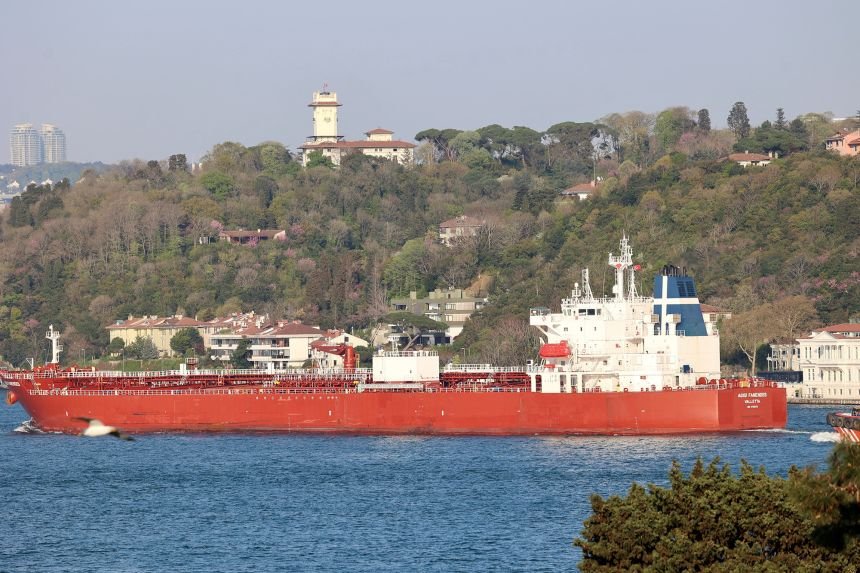
The United States once led an international campaign to isolate Russia economically after its full-scale invasion of Ukraine in February 2022. Washington and its allies imposed sweeping sanctions, restricted Russian oil imports and introduced a price cap to limit Moscow’s energy revenues. However, a Russian diesel shipment heading towards the United States in 2026 is raising questions about a major shift in American policy towards the Kremlin.
The Malta-flagged tanker Agioi Fanendes is carrying approximately 300,000 barrels of Russian diesel towards the United States. The shipment represents a striking development under President Donald Trump, whose administration has shown greater willingness to consider sanctions relief and potential business arrangements with Russian President Vladimir Putin.
The development comes while the war in Ukraine continues, without a ceasefire. It has also triggered debate over whether Washington is moving away from its previous strategy of isolating Russia and whether American companies will be willing to participate in renewed trade with Moscow.
Key Highlights
- A Malta-flagged tanker, Agioi Fanendes, is carrying around 300,000 barrels of Russian diesel towards the United States.
- President Donald Trump’s approach to Russia has raised questions about the future of US sanctions and economic restrictions.
- The shipment is relatively small compared with America’s daily fuel consumption and is unlikely to significantly reduce domestic prices.
- Two other tankers carrying Russian diesel towards the US have reportedly been diverted amid concerns among potential buyers.
- Potential US-Russia business discussions include energy projects, data centres and possible sanctions relief.
Why Is Russian Diesel Heading to the United States?
The shipment reflects a change in the broader US approach to economic relations with Russia. Following the invasion of Ukraine in 2022, Washington sought to reduce Moscow’s access to international markets and limit the revenue Russia could earn from selling energy products.
Under Trump, the administration has shown interest in improving relations with Putin and exploring economic arrangements. The Russian diesel shipment could therefore represent an early indication of a more flexible approach to energy trade between the two countries.
Ben Harris, a former assistant Treasury secretary involved in developing Russia sanctions, said the earlier policy environment strongly opposed Russian oil reaching American shores. He argued that Trump’s actions suggest a reduced willingness to use sanctions against Moscow.
Harris, now vice president and director of economic studies at the Brookings Institution, also expressed concern about what the policy shift could mean for Washington’s response to Russian aggression in Ukraine.
Will Russian Diesel Reduce US Fuel Prices?
The shipment is arriving at a time when American consumers are facing higher fuel costs. Diesel prices have climbed above $6 per gallon for the first time, compared with a national average of $3.76 before the Iran war. Average gasoline prices have also risen above $4 per gallon, up from around $3 a year earlier, according to AAA data cited in the report.
However, the Russian diesel shipment is unlikely to make a meaningful difference to overall US fuel prices.
The approximately 300,000 barrels aboard the Agioi Fanendes represent roughly 10% of the amount consumed by the US transportation sector in a single day, according to the Energy Information Administration.
Even if the United States imported all 2.2 million barrels of Russian diesel under the reported plan, that volume would still be insufficient to meet American requirements for a full day.
This means the shipment’s significance is primarily political and strategic rather than its immediate ability to ease fuel costs for American consumers.
Could US-Russia Business Deals Expand Beyond Diesel?
The diesel shipment could be the beginning of broader commercial engagement between Washington and Moscow. Potential projects reportedly under discussion include Russia-US data centre developments and joint liquefied natural gas ventures in the Arctic.
These possibilities have attracted attention because they are being discussed despite the continuing war in Ukraine and the absence of an apparent ceasefire requirement for such economic cooperation.
Thomas Wright, a senior fellow at the Brookings Institution, described the diesel transaction as a possible early indication of a new US approach towards Russia. He said the development had raised concerns about what further changes might follow.
Another potential transaction involves the international assets of Russian oil major Lukoil. Reuters reported that a deal led by a consortium including American investors was expected within weeks.
Trump Administration Considers Possible Russia Sanctions Relief
Washington and Moscow have also discussed the possible removal of US sanctions on Russia’s multibillion-dollar sovereign wealth fund. The Biden administration originally imposed restrictions on the fund following the invasion of Ukraine, describing it as a known financial resource for Putin and his inner circle.
A US official said the Trump administration was following its normal process to assess potential sanctions relief. The stated objective was to improve relations between the United States and Russia and help bring the war to an end.
Trump also waived sanctions related to Russian fossil fuel sales shortly before the measures were due to take effect last month. The decision attracted criticism from both Republicans and Democrats.
The restrictions were part of the Graham Act, legislation named after Senator Lindsey Graham, who died in July. The proposed measures also included tariffs on the five largest importers of Russian crude oil or gas, including India.
What Does the Shift Mean for India and China?
The possibility of American purchases of Russian energy could have implications for other countries that continue to buy Russian exports, particularly India and China.
According to Elina Ribakova, a senior fellow at the Peterson Institute for International Economics and vice president for foreign policy at the Kyiv School of Economics, Trump’s diesel deal sends an important signal to existing buyers of Russian energy.
If Washington becomes more open to Russian energy imports, countries such as India and China may become less concerned about facing potential repercussions for their purchases.
India has remained an important buyer of Russian energy, making changes in US sanctions policy particularly relevant to its trade and energy relationships. However, the broader impact will depend on the administration’s future decisions and the actual implementation of any sanctions relief.
Will the Russian Diesel Tanker Actually Reach US Ports?
Despite heading towards the United States, the Agioi Fanendes is not guaranteed to unload its cargo at an American port. The shipment faces uncertainty because potential buyers may be concerned about legal and regulatory consequences associated with Russian energy imports.
Matt Smith, director of commodity research at Kpler, said two other sanctioned oil tankers carrying Russian diesel towards the United States had already been diverted. He added that the Agioi Fanendes had been moving slowly in recent days and could also change its destination.
Smith warned that the cargo was not guaranteed to be discharged in the United States amid uncertainty surrounding the transaction.
A Trump administration official told CNN that Russian diesel was on the water and heading towards the market under an agreement reached between Trump and Putin. The official said the shipment would help ease fuel prices for Americans.
New Jersey Warns Against Importing Russian Diesel
The potential arrival of Russian diesel has also triggered opposition from officials in the United States. New Jersey Governor Mikie Sherrill warned port and terminal operators in the state that importing Russian diesel could violate federal law and expose businesses to civil and criminal penalties.
Sherrill criticised Trump’s approach, arguing that the purchases could provide financial support to Russia while its war against Ukraine continues.
Her warning highlights the legal uncertainty facing companies that may be considering buying or handling Russian energy cargoes. Even if the federal administration signals a more flexible approach, private businesses may remain cautious about sanctions exposure and potential penalties.
Why Are US Buyers Hesitant to Purchase Russian Diesel?
One of the biggest challenges facing the shipment is the reluctance of private-sector buyers. Companies involved in international energy trading must consider sanctions rules, legal risks, financial restrictions and reputational concerns before purchasing Russian petroleum products.
Ben Harris argued that private businesses were maintaining a different approach from the White House, suggesting that commercial buyers remained unwilling to take the risks associated with Russian diesel.
This hesitation could determine whether the Agioi Fanendes completes its journey to an American port or follows the other tankers that have already been diverted.
What Happens Next in US-Russia Energy Relations?
The Russian diesel shipment is an important test of how far the Trump administration is prepared to go in restoring economic engagement with Moscow. Potential energy projects, discussions about sanctions relief and the Lukoil asset transaction could provide further indications of the direction of US policy.
However, several uncertainties remain. The tanker may still be diverted, private buyers may avoid the cargo, and legal restrictions could complicate future transactions. The continuing war in Ukraine also remains a major factor in the relationship between Washington and Moscow.
Conclusion
The arrival of a Russian diesel tanker heading towards the United States marks a significant departure from the economic isolation strategy Washington pursued after Russia invaded Ukraine in 2022. Trump’s willingness to explore energy purchases and broader business arrangements with Putin has raised questions about the future of American sanctions policy.
Although the 300,000-barrel shipment is too small to substantially influence US fuel prices, its political significance is considerable. Whether the cargo reaches American shores and whether further deals follow will help determine if this represents an isolated transaction or the beginning of a broader shift in US-Russia economic relations.
For breaking news and live news updates, like us on Facebook or follow us on Twitter and Instagram. Read more on Latest Business on thefoxdaily.com.






COMMENTS 0