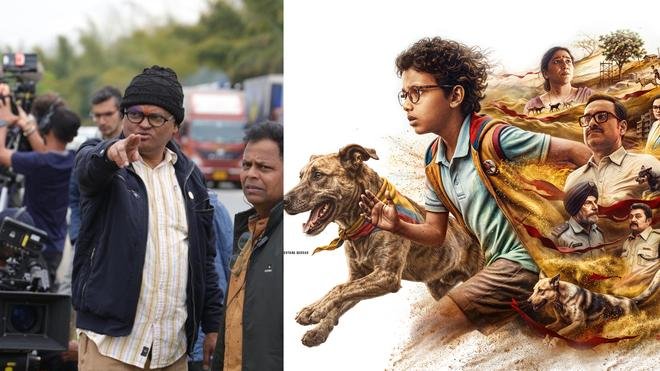
Filmmaker Amit Rai believes Ohh My Dog is about much more than children and animals. At its heart, the film asks a deceptively simple question: what happens when a child learns to see a stray dog not as a nuisance, but as a living being with fear, affection and a need for care? Through that emotional lens, Rai also raises a larger concern about Indian cinema—the sharp decline of films made specifically for children.
Ohh My Dog arrives at an interesting moment for family entertainment in India. Children have access to an enormous amount of international animation, streaming content and short-form video, while films created with their emotional world specifically in mind remain comparatively limited. Rai’s approach attempts to bridge that gap by using an accessible story about a child and a dog to introduce ideas of empathy, responsibility and coexistence.
Why Amit Rai’s Ohh My Dog Is More Than a Film About a Pet
The easiest way to describe Ohh My Dog would be as a children’s film involving a dog. That description, however, misses the larger ambition behind it.
Rai’s interest in the subject is rooted in compassion for stray animals and in the belief that cinema can influence how young audiences understand the world around them. A story involving a dog gives filmmakers an unusually direct route into a child’s emotions. Children can understand friendship with an animal long before they understand complicated debates about animal welfare, urban planning or responsible pet ownership.
That makes the canine character more than a source of comic moments or sentimental scenes. The animal becomes a bridge between entertainment and social learning.
This distinction matters because children’s cinema works differently from adult-oriented social cinema. A film cannot simply tell young viewers what is right. It has to make them feel why something matters. Friendship, fear, loyalty and loss can communicate an ethical idea without turning the movie into a classroom lecture.
The Stray Animal Question Behind the Story
India’s relationship with stray dogs is complicated. Dogs live alongside people in neighbourhoods, markets, residential colonies and public spaces. For some families, community dogs are familiar companions. For others, encounters with stray animals can create genuine concerns about safety, sanitation and conflict.
A meaningful conversation about stray animals therefore cannot be reduced to the idea that every dog is harmless or that every concern about street animals is exaggerated. Responsible coexistence requires empathy alongside practical measures, including humane animal management, vaccination, sterilisation, responsible pet ownership and awareness about safe behaviour around unfamiliar animals.
This is where a children’s film can contribute something different from a news report or public campaign. Instead of beginning with statistics or arguments, it can begin with a relationship.
A child who develops affection for an animal may start asking questions that extend beyond the screen: Why is this dog outside? Does it have a home? What should I do if a frightened animal approaches me? Why should pets not be abandoned? Who is responsible for an animal that lives in a neighbourhood?
Those questions are valuable because compassion does not have to mean ignoring safety. In fact, genuine compassion requires understanding how humans and animals can share public spaces responsibly.
Why People Without Pets Should Watch Ohh My Dog
One of Rai’s most interesting ideas is that the film should not be limited to people who already love animals or own pets.
That argument deserves attention. Pet-oriented stories can easily become an echo chamber: people who already adore dogs watch them, while audiences who are indifferent to animals have little reason to engage. A stronger children’s film can reverse that equation by making the emotional journey accessible even to viewers who have never had a pet.
The central experience does not have to be about owning an animal. It can be about learning to recognise another living being’s vulnerability.
That makes the film relevant to families without pets, particularly because children regularly encounter animals outside the home. The lesson can be as simple as observing rather than provoking, approaching animals carefully, understanding that frightened animals may behave unpredictably and seeking help from responsible adults when necessary.
In that sense, Ohh My Dog can function as a conversation starter between parents and children. The film provides the emotional trigger; the family discussion can provide the practical understanding.
India’s Missing Children’s Cinema Problem
Rai’s concern about the declining number of children’s films points to a broader challenge within the Indian film industry.
India has a huge young audience, but the existence of millions of children does not automatically create a healthy children’s-film ecosystem. A successful children’s movie has to compete for family attention in a marketplace where big-budget spectacles, franchise films, animated imports and streaming platforms dominate the conversation.
There is also a commercial calculation involved. A film marketed specifically to children usually depends on parents deciding that the entire family should watch it. That makes children’s cinema a dual-audience business: the film has to excite children while convincing adults that the experience is worthwhile.
This may partly explain why filmmakers often choose stories that can be marketed across age groups rather than making films exclusively for children.
Yet that creates an important paradox. Children are among the biggest consumers of visual entertainment, but the number of films made directly around their experiences can remain limited.
Children’s Cinema vs Adult Cinema: The Difference Is Not Just Age
| Children’s cinema | Adult-oriented cinema |
|---|---|
| Often builds stories around discovery, friendship and emotional learning | Can explore complex themes through greater psychological and narrative freedom |
| Usually needs to remain accessible to both children and parents | Can target a narrower demographic |
| Entertainment and educational value often overlap | Entertainment can remain the primary objective |
| Animal, family and school settings can provide familiar entry points | Stories can operate across virtually any setting or genre |
The distinction is important because good children’s cinema should not be treated as simplified adult cinema. Children respond to humour, visual storytelling, emotional stakes and memorable characters, but they also deserve stories that respect their intelligence.
The best family films can therefore operate on two levels. A child can enjoy the adventure, while an adult recognises the social question underneath it.
Why Animals Work So Well in Children’s Storytelling
Animals have occupied a special place in children’s storytelling for generations because they allow filmmakers to communicate complicated emotions without relying entirely on dialogue.
A dog can represent loyalty. A rescued animal can represent trust. A frightened animal can introduce the idea of vulnerability. A friendship between a child and an animal can show responsibility without requiring a lengthy explanation of what responsibility means.
There is another storytelling advantage: animals can make adults less central to the emotional core of a story. Children often experience their relationships with pets and animals differently from adults. For a young viewer, a dog is not necessarily a symbol or metaphor. It can simply be a friend.
That emotional honesty can make animal stories especially powerful.
The Unique Opportunity for Ohh My Dog
The most interesting opportunity for Rai’s film lies in what happens after the credits.
A successful children’s film should ideally generate conversations outside the theatre or living room. Ohh My Dog has the potential to encourage parents to discuss responsible pet ownership, safe interaction with unfamiliar animals and the difference between kindness and careless behaviour.
For example, children can learn that helping an animal does not necessarily mean touching it. They can learn to involve adults when an injured or frightened animal needs assistance. They can understand that adopting a pet is a long-term responsibility rather than an impulse created by watching a cute movie.
That final point is especially important. Films that feature adorable animals can unintentionally make pet ownership look effortless. Real animals require food, healthcare, time, patience and commitment. A thoughtful family discussion can transform the emotional message of a film into responsible action.
Why the Decline of Children’s Films Matters
The decline in children’s cinema is not simply an entertainment-industry problem. It can also influence what kinds of stories young Indians encounter about themselves.
When locally made children’s films are scarce, young audiences naturally turn elsewhere. International animation and global streaming content can be excellent, but they do not always reflect the neighbourhoods, languages, social realities and everyday experiences of Indian children.
Indian children’s cinema has an opportunity to tell stories rooted in local environments without becoming overly instructional. A child in a crowded city street, a child growing up around community animals, a school friendship or an ordinary family challenge can become cinematic material when approached with imagination.
This is perhaps the larger challenge Rai’s comments bring into focus: children’s films need to be treated as cinema, not merely as content created to occupy children for two hours.
The Industry’s Commercial Blind Spot
There is a strong case for viewing children’s cinema as a long-term audience-building opportunity rather than a niche category.
Children who develop a relationship with storytelling through films can become lifelong moviegoers. More importantly, family films can create shared cultural experiences across generations. Parents choose the film, children experience it, and both groups discuss it afterwards.
That makes family cinema unusually valuable. It can create an audience relationship that is not based solely on opening-weekend spectacle.
The challenge is discovering stories with enough emotional depth to satisfy adults without losing the immediacy that children need.
What Ohh My Dog Says About Empathy in an Urban India
There is a broader social idea hiding inside Rai’s focus on stray animals: cities are shared spaces.
Humans increasingly design urban environments around human convenience, while animals continue to occupy many of the same spaces. This can create friction. Children encounter animals on their way to school, in parks, near shops and around apartment complexes. Teaching them how to respond calmly and responsibly is therefore a practical life skill.
A film can introduce that idea without taking sides in every complicated policy debate surrounding street animals.
Its most useful contribution may simply be encouraging children to pause before reacting with fear, cruelty or excitement. Empathy begins with recognising that another creature experiences the world differently.
A Prediction for the Future of Indian Family Films
If Indian filmmakers want to rebuild the children’s-film audience, the future is unlikely to belong to stories that merely announce themselves as “children’s movies.” The stronger opportunity lies in films that work as genuine family entertainment while carrying themes children can understand.
That could mean more stories involving animals, environmental responsibility, friendship, technology, school life, family relationships and local communities. It could also mean greater experimentation with genre—children’s mystery films, adventure stories, sports dramas and fantasy films that do not underestimate young viewers.
The comparison with streaming is instructive. Digital platforms have trained children to expect fast pacing, strong visual identities and instantly understandable characters. Indian children’s cinema will have to compete on those terms while offering something streaming algorithms cannot easily provide: a shared family experience.
The Bigger Lesson From Amit Rai’s Approach
The significance of Ohh My Dog ultimately lies in the combination of two concerns that are rarely discussed together: animal compassion and the shortage of children’s films.
Rai’s approach suggests that the two problems can actually intersect. A children’s story can entertain while creating space for conversations about how young people treat animals and how they understand their responsibilities towards the world around them.
That is a more ambitious goal than simply making a film that children enjoy.
The real measure of such cinema may be what a child does after watching it. Does the child become more curious? More careful around animals? More willing to ask questions? Does the film make parents reconsider what kind of entertainment they choose for their children?
If the answer is yes, then the film has achieved something beyond the box office.
Conclusion: Why Ohh My Dog Deserves a Wider Children’s-Cinema Conversation
Amit Rai’s comments around Ohh My Dog open a larger discussion about what Indian children’s cinema can accomplish. The film’s focus on a child and a dog provides an approachable entry point into ideas of empathy, responsibility and coexistence, while Rai’s concern about the shrinking number of children’s films raises questions about the industry’s priorities.
The strongest children’s movies do not talk down to their audience. They entertain first, invite curiosity next and leave viewers with something to think about afterwards. That is particularly valuable when the subject is something as everyday—and as complicated—as living alongside animals.
For families with pets, Ohh My Dog can offer a chance to reflect on companionship and responsibility. For families without pets, it can open an equally important conversation about empathy and safe coexistence. And for the wider film industry, it offers a reminder that India’s children are not merely an audience waiting for the next big franchise. They are an audience deserving stories made specifically for them.
The future of children’s cinema in India may depend on filmmakers recognising exactly that distinction: children do not need smaller stories. They need stories made with greater imagination, emotional intelligence and respect for the way they see the world.
For breaking news and live news updates, like us on Facebook or follow us on Twitter and Instagram. Read more on Latest Entertainment on thefoxdaily.com.

COMMENTS 0