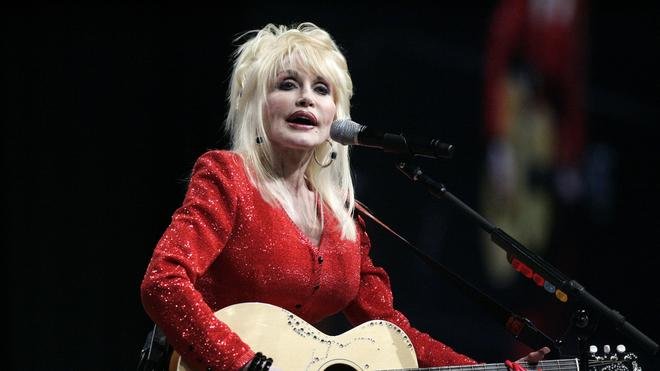
Dolly Parton, the legendary American country singer, songwriter, actress, entrepreneur and philanthropist, has died at the age of 80. Her family announced her death on August 25, 2026, marking the end of one of the most remarkable careers in modern popular culture. Parton died in Nashville after a brief battle with cancer, according to reports. She leaves behind not simply a catalogue of beloved songs, but a cultural legacy that reaches from Appalachian music and Hollywood to children’s literacy, tourism and philanthropy. 0
For generations of listeners, Dolly Parton was much more than the voice behind songs such as “Jolene,” “I Will Always Love You” and “Coat of Many Colors.” She became a symbol of creative independence: a woman who understood how to write songs, control her image, build businesses, cross entertainment industries and turn personal success into institutions designed to help others.
Her death also closes an extraordinary chapter in country music history. Parton’s career lasted for more than half a century, yet her influence repeatedly escaped the boundaries of country music. Her songs were recorded by artists from different genres, her films became cultural touchstones and her distinctive personality made her recognizable even to people who rarely listened to country music.
Why Dolly Parton’s Death Matters Beyond Country Music
Dolly Parton’s importance is difficult to measure through record sales or awards alone. She represented something increasingly unusual in celebrity culture: an artist who managed to become more famous without becoming less personally recognizable.
Her public identity was built around contradictions. She could appear extravagantly glamorous while speaking openly about poverty. She embraced an exaggerated appearance while insisting on being taken seriously as a songwriter and businesswoman. She celebrated her Appalachian roots while becoming an international entertainment figure.
That combination allowed Parton to connect with audiences who might otherwise have little cultural ground in common.
Her nephew Bryan Seaver said in a statement announcing her death that Parton had “opened doors” for generations of singers, songwriters, musicians and dreamers. That description captures an important part of her career: she was not merely successful inside the system. She repeatedly created opportunities and platforms outside it. 1
From Rural Tennessee Poverty to Nashville Stardom
Dolly Rebecca Parton was born on January 19, 1946, near Sevierville, Tennessee, as one of 12 children. Her family lived with very limited material resources in the Great Smoky Mountains region. The household lacked modern conveniences, but music was an important part of family life.
That upbringing became one of the foundations of Parton’s songwriting identity.
She understood poverty not as an abstract social issue but as something experienced through food, clothing, family relationships, work and dignity. That perspective later appeared repeatedly in her songs.
One of her most famous examples was “Coat of Many Colors,” inspired by a coat her mother made for her from pieces of fabric. The song transformed a childhood experience that could have been remembered primarily as humiliation into a story about love and emotional wealth.
That ability to find dignity inside difficult circumstances became one of Parton’s defining artistic strengths.
The Young Performer Who Knew Exactly What She Wanted
Parton’s musical talent appeared early. She began performing as a child and made her debut at Nashville’s Grand Ole Opry at the age of 13. After finishing high school, she moved to Nashville, carrying her belongings in grocery bags and pursuing a career in music.
Her early years were not glamorous. Like many aspiring performers, she faced financial uncertainty and had to establish herself in an industry dominated by established names and powerful gatekeepers.
Her breakthrough accelerated after she began working with country entertainer Porter Wagoner. Their professional partnership helped introduce Parton to a much wider audience, but the relationship eventually became restrictive from her perspective.
Leaving Wagoner’s show became one of the pivotal decisions of her career. Instead of remaining dependent on an established star, Parton chose to build an identity that belonged entirely to herself.
“I Will Always Love You” Was More Than a Hit Song
One of the clearest examples of Parton’s songwriting genius emerged from that professional separation.
She wrote “I Will Always Love You” as an emotional farewell to Wagoner. The song became enormously successful and later gained an entirely new life when Whitney Houston recorded it for the soundtrack of The Bodyguard.
Houston’s version introduced Parton’s composition to a global pop audience, demonstrating the unusual durability of the songwriting itself.
This is an important distinction in understanding Parton’s legacy. She was not simply a performer who had successful recordings. She was a songwriter whose compositions could repeatedly be reinterpreted by artists from different musical worlds.
A Career Built on Reinvention
Parton’s career did not remain confined to country music.
She moved into television and film, becoming one of the most recognizable actresses associated with country music. Her role in 9 to 5 alongside Jane Fonda and Lily Tomlin was particularly significant.
The film combined comedy with a story about workplace discrimination and the frustrations experienced by working women. Parton also wrote and performed the title song, which became one of her signature recordings.
Her film career continued with projects including The Best Little Whorehouse in Texas and Steel Magnolias, expanding her audience beyond music.
The important lesson from this phase of her career is that Parton treated entertainment as an ecosystem rather than a single profession. Music created an audience; film expanded it; television reinforced her personality; and business ventures gave her another way to turn cultural recognition into long-term economic value.
How Dolly Parton Turned Her Image Into a Business Strategy
Parton’s appearance was instantly recognizable: towering blonde hair, rhinestones, elaborate clothing and a deliberately exaggerated glamorous persona.
It would be easy to dismiss this as simply a celebrity image. That would underestimate how intelligently Parton used it.
She understood that recognizability has economic value. Her appearance became a form of branding long before social media made personal branding a mainstream concept.
Rather than trying to fit conventional expectations of what a serious female artist should look like, Parton made her unusual appearance part of her creative identity.
She also used humor to control the conversation around herself. Jokes about her hair, body and appearance often became tools that allowed her to address stereotypes without allowing those stereotypes to define her.
Dollywood: The Country Star Who Built a Destination
In 1986, Parton became involved with the theme park that would become Dollywood in Pigeon Forge, Tennessee.
The park was more than a celebrity side project. It connected Parton’s international fame with her Appalachian roots and helped create a permanent destination associated with her story.
Its success demonstrated another side of Parton’s business intelligence: nostalgia could be transformed into an economic engine without abandoning local identity.
Dollywood became a major tourism attraction in Tennessee, while its association with Parton ensured that the park had something more distinctive than rides and entertainment. It offered visitors a version of the world from which Parton emerged.
The Philanthropy That Became Parton’s Second Legacy
Perhaps the most important part of Dolly Parton’s legacy lies outside entertainment.
In 1995, she launched the Imagination Library, initially providing books to children in her home region. The programme later expanded dramatically, distributing hundreds of millions of books to children around the world. 2
The idea was remarkably simple: give children books early and encourage a relationship with reading.
But its scale turned a personal act of remembrance into a global literacy programme.
Parton’s motivation was closely connected to her father, who she said had struggled with illiteracy. Instead of treating that family experience simply as something painful from her past, she transformed it into a long-term philanthropic project.
That may be one of the clearest examples of the Parton model: take something personal, make it understandable to millions of people and then build an institution around it.
Her Philanthropy Extended Beyond Children’s Books
Parton’s charitable work reached far beyond literacy.
Following devastating wildfires in Tennessee in 2016, she created a relief initiative that provided financial support to affected families. During the COVID-19 pandemic, she donated $1 million to Vanderbilt University Medical Center, supporting research that contributed to development of the Moderna vaccine. 3
Her philanthropic approach was notable because it often combined money with personal connection. She frequently supported causes connected to communities, education, health or disaster relief rather than simply attaching her name to distant institutions.
Dolly Parton’s Legacy Compared With Other Music Icons
| Artist | Core legacy | What made the career distinctive |
|---|---|---|
| Dolly Parton | Music, songwriting, film, business and philanthropy | Combined Appalachian identity with global entertainment and large-scale charitable work |
| Johnny Cash | Country, folk and American roots music | Used storytelling and personal struggle to connect with multiple generations |
| Aretha Franklin | Soul and popular music | Transformed vocal performance into a defining cultural force |
| Elvis Presley | Rock and popular culture | Changed the relationship between music, celebrity and mass media |
The comparison highlights why Parton’s career is difficult to categorize. Many music legends dominated one particular field. Parton repeatedly crossed boundaries while retaining a remarkably consistent identity.
Why Her Songs Still Travel Across Generations
Parton’s songwriting was often deceptively simple.
Her lyrics dealt with love, poverty, family, betrayal, ambition, loneliness, work and survival. These subjects are universal, but she approached them through specific characters and situations rather than abstract declarations.
That storytelling quality made her songs unusually adaptable.
A song such as Jolene can be understood as a country story, a pop song, a character study or a meditation on insecurity. 9 to 5 can function as a catchy anthem while also reflecting workplace frustrations. I Will Always Love You can be performed as a country ballad or transformed into a soaring pop power ballad.
Her strongest compositions therefore survived changes in production, genre and audience because the emotional architecture remained intact.
Dolly Parton and the Unusual Power of Being Universally Approachable
Parton’s public appeal crossed political, cultural and generational boundaries in a way few contemporary celebrities have managed.
She often avoided direct political confrontation and emphasized her desire to appeal to people on different sides of America’s cultural divides.
That did not mean her work lacked social meaning. Her songs and films repeatedly addressed inequality, working women, poverty and the dignity of ordinary people.
Instead, she often delivered those ideas through storytelling, humor and empathy rather than ideological confrontation.
That may help explain why her audience became so broad. People could disagree about politics and still recognize the emotional truth in her music.
The Feminist Legacy Behind the Rhinestones
Parton never fit the conventional image of a feminist icon.
Her deliberately glamorous appearance sometimes appeared to contradict the expectations associated with women’s liberation. Yet her career demonstrated an important principle: empowerment does not have to look a particular way.
She built a career on her own terms, maintained creative control, became a successful businesswoman and repeatedly wrote about women navigating difficult social and economic circumstances.
Her role in 9 to 5 remains particularly relevant because the film placed working women’s frustrations at the centre of a mainstream comedy.
Parton’s version of feminism was therefore less about adopting a prescribed aesthetic and more about insisting that women should have the freedom to decide what their lives and careers look like.
A Seven-Decade Career That Refused to Stand Still
Parton’s career can be understood as a series of reinventions rather than one continuous period of fame.
- 1940s–1950s: Childhood in rural Tennessee and early musical development.
- 1960s: Move to Nashville and emergence as a professional country performer and songwriter.
- 1970s: Major solo success and increasingly independent artistic identity.
- 1980s: Expansion into Hollywood and establishment of Dollywood.
- 1990s: Continued music career alongside the launch of the Imagination Library.
- 2000s–2010s: Renewed recognition across generations and continued philanthropic expansion.
- 2020s: Continued cultural relevance through music, philanthropy and projects inspired by her life and work.
- 2026: Parton dies at 80 in Nashville, leaving behind a legacy spanning music, film, business and charitable work.
What Happens to the Dolly Parton Legacy Now?
Parton’s death does not end the institutions she built.
Her songs will continue to be recorded, streamed and performed. Her films will continue to introduce her to new audiences. Dollywood will remain a physical expression of her connection to Tennessee. The Imagination Library will continue carrying books to children.
That distinction matters.
Some celebrity legacies depend almost entirely on nostalgia. Parton’s is embedded in functioning institutions. Her influence therefore has a better chance of remaining visible even as cultural tastes change.
The biggest test of her legacy will not be whether people remember Dolly Parton. It will be whether the systems she created continue doing the work she wanted them to do.
The Prediction: Dolly Parton’s Influence May Grow After Her Death
Parton’s cultural relevance may actually expand in the years ahead.
Her music already belongs to multiple generations, and younger artists continue to reinterpret classic songs. Her story also fits several contemporary conversations: independent female entrepreneurship, regional identity, creator ownership, literacy, philanthropy and the economics of personal branding.
In an era when celebrities can become globally recognizable overnight, Parton’s career offers an increasingly rare example of something slower and harder to manufacture: trust accumulated over decades.
That may become the most valuable part of her legacy.
Conclusion: Dolly Parton Leaves Behind More Than Music
Dolly Parton died at 80 after a career that began in rural Tennessee and eventually reached virtually every corner of the entertainment industry. She was a country music legend, but that description alone is too small.
She was a songwriter who turned personal experience into universal stories, an actress who crossed into mainstream cinema, an entrepreneur who built a major tourism destination and a philanthropist whose literacy programme reached children around the world.
Her greatest achievement may have been the ability to turn fame into something that outlived fame itself.
Dolly Parton leaves behind songs that people will sing, characters that audiences will remember and institutions that will continue serving communities. The rhinestones, wigs and unforgettable voice made her instantly recognizable. The work underneath them made her enduring.
For an artist who spent her life writing about ordinary people, perhaps that is the most fitting legacy of all: Dolly Parton made millions of people feel that their stories were worth singing about.
“`4
For breaking news and live news updates, like us on Facebook or follow us on Twitter and Instagram. Read more on Latest Entertainment on thefoxdaily.com.

COMMENTS 0