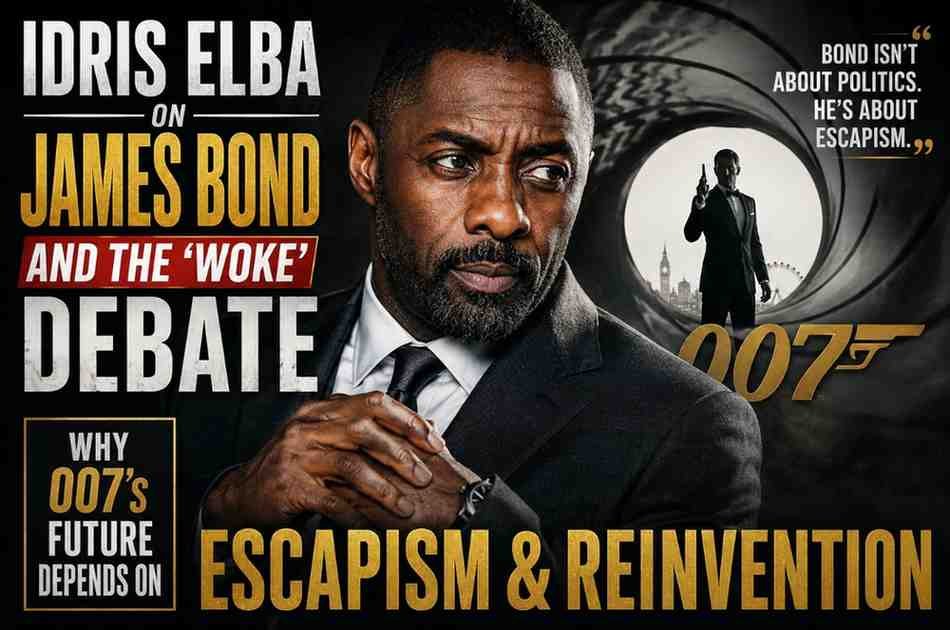
Few casting rumors in modern cinema have lasted as long or generated as much discussion—as the idea of Idris Elba becoming the next James Bond. For more than a decade, fans and industry observers have repeatedly linked the British actor to the role made famous by Sean Connery, Roger Moore, Pierce Brosnan, and Daniel Craig.
Now, amid an ongoing search for the next actor to inherit cinema’s most famous tuxedo, Elba has weighed in on the broader conversation surrounding the franchise. Reflecting on years of speculation, the actor suggested that James Bond should not be made “woke,” emphasizing that the appeal of 007 lies in escapism and entertainment rather than contemporary political or cultural battles.
His comments have reignited debates that have surrounded the franchise ever since Daniel Craig’s tenure ended. But beyond headlines and social media arguments, Elba’s remarks raise bigger questions about what audiences expect from iconic characters and whether long-running franchises should evolve with changing times or preserve the formulas that made them successful.
Why Idris Elba and James Bond Have Been Linked for Years
Since the early 2010s, Idris Elba has frequently appeared in fan discussions surrounding the future of Bond. His charisma, screen presence, and proven action credentials made him one of the most talked-about candidates whenever questions about succession emerged.
However, the speculation became larger than a simple casting rumor.
Discussions surrounding Elba’s candidacy often evolved into broader conversations about representation, tradition, and what qualities define James Bond.
Over time, the actor himself acknowledged that constant speculation sometimes became exhausting, especially as debates moved beyond acting and entered cultural territory.
The End of the Daniel Craig Era Changed Everything
Daniel Craig’s final appearance marked the end of one of the franchise’s most commercially successful periods.
His interpretation modernized Bond by emphasizing emotional vulnerability and psychological complexity while maintaining the character’s trademark sophistication.
With Craig’s departure, producers face a challenge shared by every long-running franchise: how to evolve without alienating loyal audiences.
The search for the next Bond is not merely about selecting an actor. It is about defining what the character represents for a new generation.
Why James Bond Has Always Reflected Its Era
Despite arguments about preserving tradition, Bond has continuously evolved throughout its history.
- Sean Connery introduced charisma and danger.
- Roger Moore embraced humor and charm.
- Timothy Dalton emphasized seriousness.
- Pierce Brosnan combined elegance with blockbuster spectacle.
- Daniel Craig brought emotional realism.
Every era has reshaped Bond to match changing audience expectations.
This adaptability explains why the franchise has survived for more than six decades while many rivals have faded.
The Meaning Behind Idris Elba’s Comments
Idris Elba’s remarks highlight a broader philosophy shared by many moviegoers: audiences often seek escape from everyday controversies when they enter cinemas.
James Bond has historically offered precisely that—a world of exotic locations, gadgets, espionage, and larger-than-life adventures.
For fans who agree with Elba, the franchise’s purpose is entertainment rather than social commentary.
Others argue that cultural shifts naturally influence storytelling and that evolution is essential for relevance.
The debate itself reflects larger conversations taking place across Hollywood.
Timeline: The Evolution of James Bond
| Bond Era | Defining Style | Audience Expectations |
|---|---|---|
| Sean Connery | Classic espionage | Cold War sophistication |
| Roger Moore | Humor and spectacle | Escapist entertainment |
| Timothy Dalton | Serious realism | Darker storytelling |
| Pierce Brosnan | Stylish action | Blockbuster thrills |
| Daniel Craig | Emotional depth | Character-driven narratives |
The Ongoing 007 Casting Search
The search for the next Bond remains one of Hollywood’s most closely watched casting decisions.
The actor ultimately chosen will need to satisfy several expectations:
- Appeal to global audiences.
- Lead multiple films over a decade or more.
- Balance tradition with reinvention.
- Deliver action and emotional depth.
- Preserve the character’s timeless appeal.
Very few roles come with such extraordinary pressure and scrutiny.
An Insight Competitors Often Miss: Bond’s Greatest Strength Has Always Been Reinvention
Much of the debate surrounding James Bond centers on whether the character should change or remain untouched. But history suggests that this is a false choice.
Bond has survived for over sixty years because every generation has reinterpreted him without abandoning the franchise’s core identity.
The elegance, espionage, danger, and glamour remain constants. What changes is the tone, the emotional complexity, and the world around him.
The franchise’s longevity comes not from resisting change, but from understanding how much change audiences are willing to embrace.
Why Escapism Still Matters in Modern Cinema
Audiences today live amid nonstop news cycles, political arguments, and social media controversies. Increasingly, viewers seek entertainment that offers a temporary escape.
Franchises such as James Bond, Mission: Impossible, and Indiana Jones thrive because they promise adventure, spectacle, and excitement.
Elba’s comments resonate with many fans who see movies as spaces where imagination and entertainment take precedence over ideological debates.
Comparison: Escapist Franchises vs Message-Driven Cinema
| Escapist Franchises | Socially Focused Films |
|---|---|
| Adventure and spectacle | Commentary and reflection |
| Broad audience appeal | Issue-driven storytelling |
| Timeless fantasy | Contemporary themes |
| Entertainment-first approach | Discussion-oriented narratives |
| Global commercial appeal | Often culturally specific |
Both approaches have value, and successful franchises often find ways to incorporate elements of each.
Prediction: The Next James Bond Will Blend Tradition With Modern Storytelling
History suggests that the next era of 007 will neither reject tradition nor radically reinvent the character.
Instead, producers are likely to follow the formula that has worked repeatedly throughout the franchise’s history—preserving Bond’s iconic characteristics while adapting to contemporary audiences.
Future installments are likely to maintain the glamour and espionage fans expect while embracing richer emotional storytelling and modern filmmaking techniques.
The Bigger Question Facing Hollywood
The debate surrounding James Bond reflects a broader challenge confronting many legacy franchises.
How much should beloved characters evolve?
Can filmmakers attract younger audiences without alienating longtime fans?
Is escapism itself becoming more valuable in an increasingly polarized world?
These questions extend far beyond Bond and may shape the future of blockbuster filmmaking.
Conclusion
Idris Elba’s latest comments about James Bond and the “woke” debate highlight the delicate balance facing one of cinema’s most enduring franchises. While the actor has long been associated with the role, his observations ultimately speak to a larger issue: the purpose of entertainment itself.
For more than six decades, James Bond has endured by adapting carefully rather than radically. As the search for the next 007 continues, the challenge for producers will not be choosing between tradition and change, but finding the right balance between the two.
Because if history has taught audiences anything, it is that James Bond’s greatest weapon has never been his gadgets or martinis—it has been his ability to evolve without losing his identity.
For breaking news and live news updates, like us on Facebook or follow us on Twitter and Instagram. Read more on Latest Entertainment on thefoxdaily.com.

COMMENTS 0