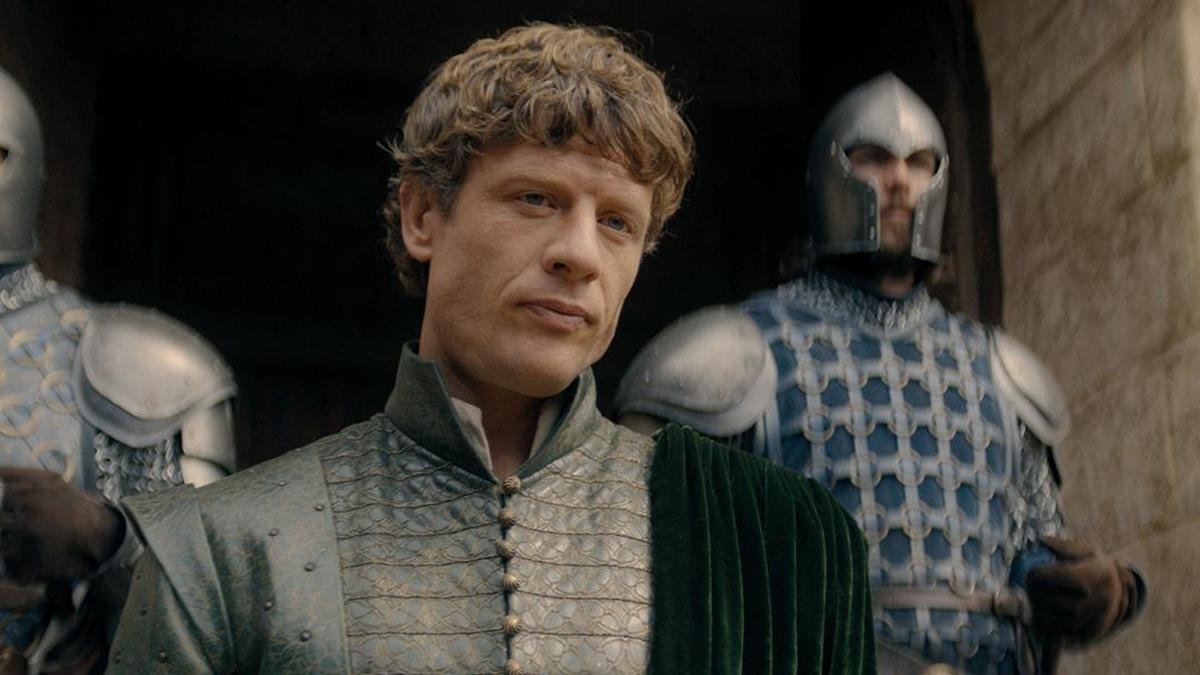
House of the Dragon Season 3 expands the brutal conflict of Westeros with the arrival of Ormund Hightower, a formidable military leader portrayed by acclaimed British actor James Norton. While the series has already introduced audiences to ambitious rulers, scheming nobles and legendary dragon riders, Ormund enters the story with a different kind of authority—one rooted in unwavering conviction, battlefield leadership and psychological intimidation.
Speaking about joining one of television’s biggest fantasy franchises, James Norton revealed that the creative team deliberately chose to make Ormund “big and bold,” while ensuring the character remained grounded in authentic human emotion. Rather than portraying him as a conventional villain, Norton focused on understanding the psychology that drives Ormund’s decisions, making him a compelling addition to the increasingly complex political landscape of Westeros.
His comments also offer fascinating insight into how major fantasy productions balance larger-than-life storytelling with nuanced performances that audiences can emotionally connect with.
Who Is Ormund Hightower?
Ormund Hightower is one of House Hightower’s most influential military commanders during the civil war known as the Dance of the Dragons. As a member of one of Westeros’ oldest and wealthiest noble families, he represents discipline, strategy and unwavering loyalty to his cause.
Unlike characters who rely primarily on political manipulation, Ormund’s influence comes from commanding armies and projecting confidence. His arrival significantly strengthens one side of the conflict and raises the stakes for every major player involved in the war.
Although his direct interactions with several central characters are limited, his growing reputation makes him a looming threat whose presence is felt even before he appears on screen.
James Norton Explains Why Ormund Is So Intimidating
According to James Norton, one of the most fascinating aspects of Ormund Hightower is that fear often grows through distance rather than direct confrontation.
Discussing Ormund’s relationship with Queen Rhaenyra, Norton explained that the two characters rarely occupy the same physical space. Instead, Ormund becomes a symbolic enemy whose reputation allows fear and uncertainty to grow.
“They do not come into contact with each other. He is a bully in Rhaenyra’s abstract awareness. When you meet someone, the sting is often taken out of their bite.”
This psychological dynamic creates an unusual form of tension. Rather than relying solely on physical confrontation, the story builds anticipation by allowing characters—and viewers—to imagine Ormund’s capabilities long before major encounters unfold.
Why the Human Story Matters More Than Fantasy Spectacle
Despite House of the Dragon’s dragons, castles, elaborate costumes and massive battle sequences, Norton believes the series succeeds because it never loses sight of its human core.
Fantasy may provide the setting, but emotions such as ambition, grief, fear, loyalty, betrayal and love continue to drive every important decision.
This approach has become one of the defining strengths of both House of the Dragon and its predecessor, Game of Thrones. Audiences remain invested not because of visual effects alone but because every political decision carries deeply personal consequences.
Norton embraced this philosophy while developing Ormund, focusing on what motivates him as a leader instead of simply portraying him as an intimidating warrior.
‘We Went Big and Bold’ Without Losing Authenticity
One of Norton’s most memorable descriptions of his performance was that the team decided to go “big and bold.”
In a fantasy universe filled with legendary figures, understated performances can sometimes disappear among the scale of the production. However, being bold does not necessarily mean exaggeration.
For Norton, it meant embracing Ormund’s commanding personality while ensuring that every emotional choice felt believable.
The result is a character capable of dominating scenes through confidence, measured intensity and quiet authority rather than constant displays of aggression.
The Danger of Too Much Research
Interestingly, Norton also spoke about one of the unexpected challenges actors face when portraying fictional characters based on rich literary source material.
While research can deepen an actor’s understanding, excessive preparation may also become limiting. Instead of becoming trapped by every detail from books or fan theories, Norton emphasized the importance of remaining flexible during performance.
Actors must ultimately respond to the script, the director’s vision and the emotional truth of each scene rather than attempting to recreate every interpretation that already exists.
This balance allows performances to feel spontaneous while remaining faithful to the larger narrative.
Using Smell as a Gateway Into the Character
Perhaps the most intriguing insight Norton shared was how Ormund’s heightened sensitivity to smell became an unexpected entry point into understanding the character.
Rather than treating it as a trivial detail, Norton used this sensory characteristic to shape Ormund’s awareness of his surroundings.
Every battlefield, room and encounter carries distinct sensory information. By imagining how Ormund experiences these environments, Norton was able to create subtle behavioral choices that add realism without requiring explicit dialogue.
This technique demonstrates how experienced actors often build complex internal worlds from seemingly minor character traits.
Why Ormund Represents a Different Kind of Villain
House of the Dragon has introduced numerous morally ambiguous characters whose motivations rarely fit traditional definitions of hero or villain.
Ormund appears to continue that tradition.
Rather than existing purely to oppose the protagonists, he represents unwavering belief in his own cause. His confidence, discipline and strategic thinking make him dangerous precisely because he rarely questions the righteousness of his actions.
This complexity reflects one of George R.R. Martin’s defining storytelling principles: every major character believes they are justified.
The Growing Conflict in House of the Dragon Season 3
Season 3 continues to expand the devastating civil war that has fractured House Targaryen.
As alliances shift and military campaigns intensify, commanders like Ormund Hightower become increasingly important. Their decisions affect not only individual battles but also the political future of the Seven Kingdoms.
The introduction of experienced military leaders broadens the scale of the conflict beyond palace intrigue, reminding audiences that succession disputes ultimately result in widespread human suffering.
Why James Norton Was a Strong Choice
James Norton has built a reputation for portraying emotionally layered characters across television, film and theatre.
His ability to balance vulnerability with authority makes him particularly suited to a role like Ormund Hightower.
Instead of relying on theatrical intimidation, Norton often communicates internal conflict through subtle facial expressions, controlled dialogue delivery and carefully measured physicality.
Those qualities align well with House of the Dragon’s preference for psychologically complex performances.
What Makes House of the Dragon’s Characters So Compelling?
| Character Element | Why It Matters |
|---|---|
| Political ambition | Creates constantly shifting alliances. |
| Moral complexity | No character is entirely heroic or villainous. |
| Personal relationships | Family loyalties influence major political decisions. |
| Psychological depth | Characters are driven by fear, pride, grief and duty. |
| Military leadership | Strategic decisions shape the outcome of the civil war. |
| Reputation | Fear often spreads long before characters meet in person. |
Lessons for Modern Storytelling
Norton’s approach highlights an important lesson for contemporary filmmaking: audiences respond most strongly to authentic human behavior, even within extraordinary fictional worlds.
Dragons, elaborate visual effects and spectacular battles may capture attention, but memorable performances emerge from believable emotional experiences.
By grounding Ormund in psychological realism rather than theatrical villainy, Norton contributes to the show’s broader commitment to character-driven storytelling.
Why Fans Are Excited About Ormund Hightower
- James Norton’s acclaimed acting credentials.
- A fresh military leader entering the Dance of the Dragons.
- A psychologically layered antagonist rather than a one-dimensional villain.
- Greater focus on large-scale warfare in Season 3.
- Expanded exploration of House Hightower’s influence.
- Potentially significant impact on Rhaenyra’s campaign.
Final Thoughts
James Norton’s portrayal of Ormund Hightower promises to add another compelling layer to House of the Dragon Season 3. His emphasis on human emotion, careful character development and psychological authenticity demonstrates why the series continues to stand apart within the fantasy genre.
By choosing to “go big and bold” without sacrificing emotional realism, Norton introduces a character whose influence extends beyond battlefield strategy. Ormund becomes a symbol of fear, authority and conviction—an adversary whose reputation may prove just as powerful as his actions.
As the Dance of the Dragons escalates, audiences can expect Ormund Hightower to become one of the season’s most closely watched figures, bringing fresh tension, political complexity and dramatic intensity to the ever-expanding struggle for the Iron Throne.
For breaking news and live news updates, like us on Facebook or follow us on Twitter and Instagram. Read more on Latest Entertainment on thefoxdaily.com.


COMMENTS 0